
Last updated November 2, 2026
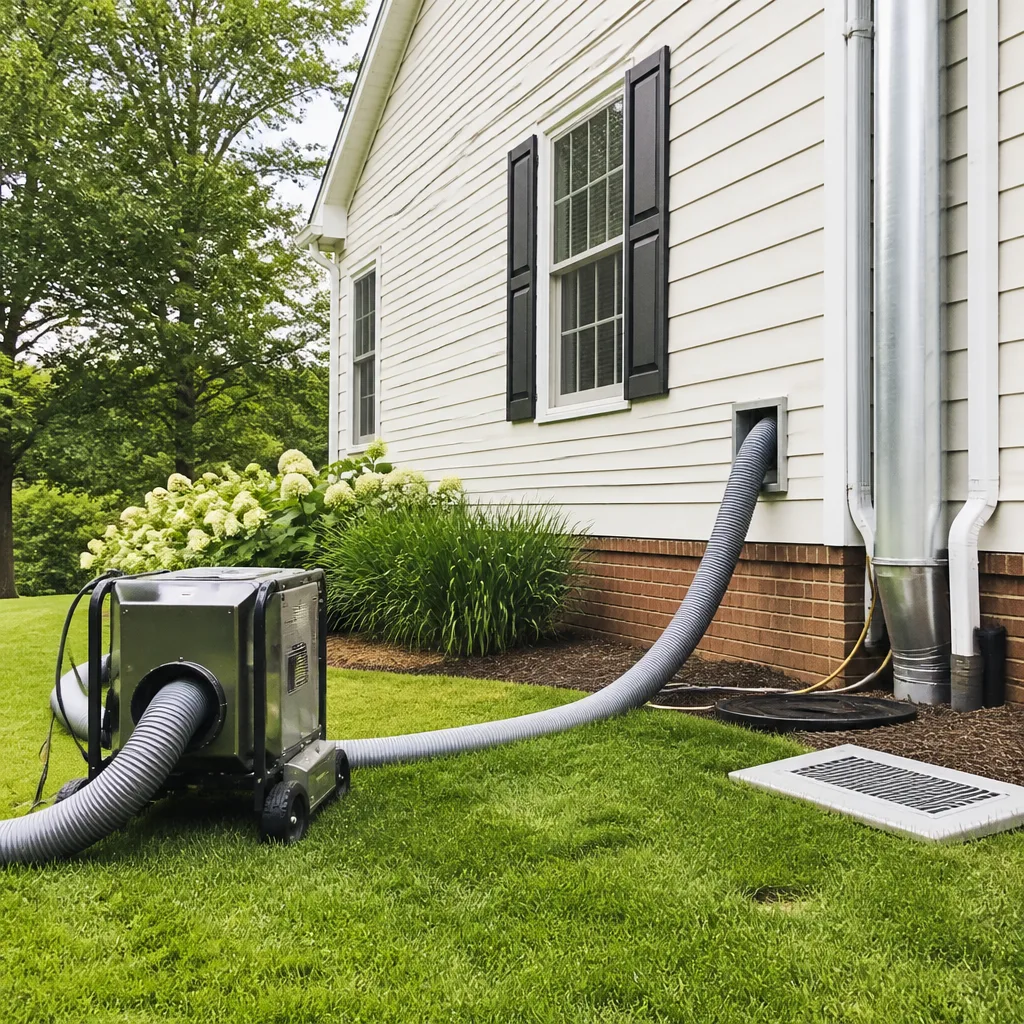 Whole-home duct cleaning
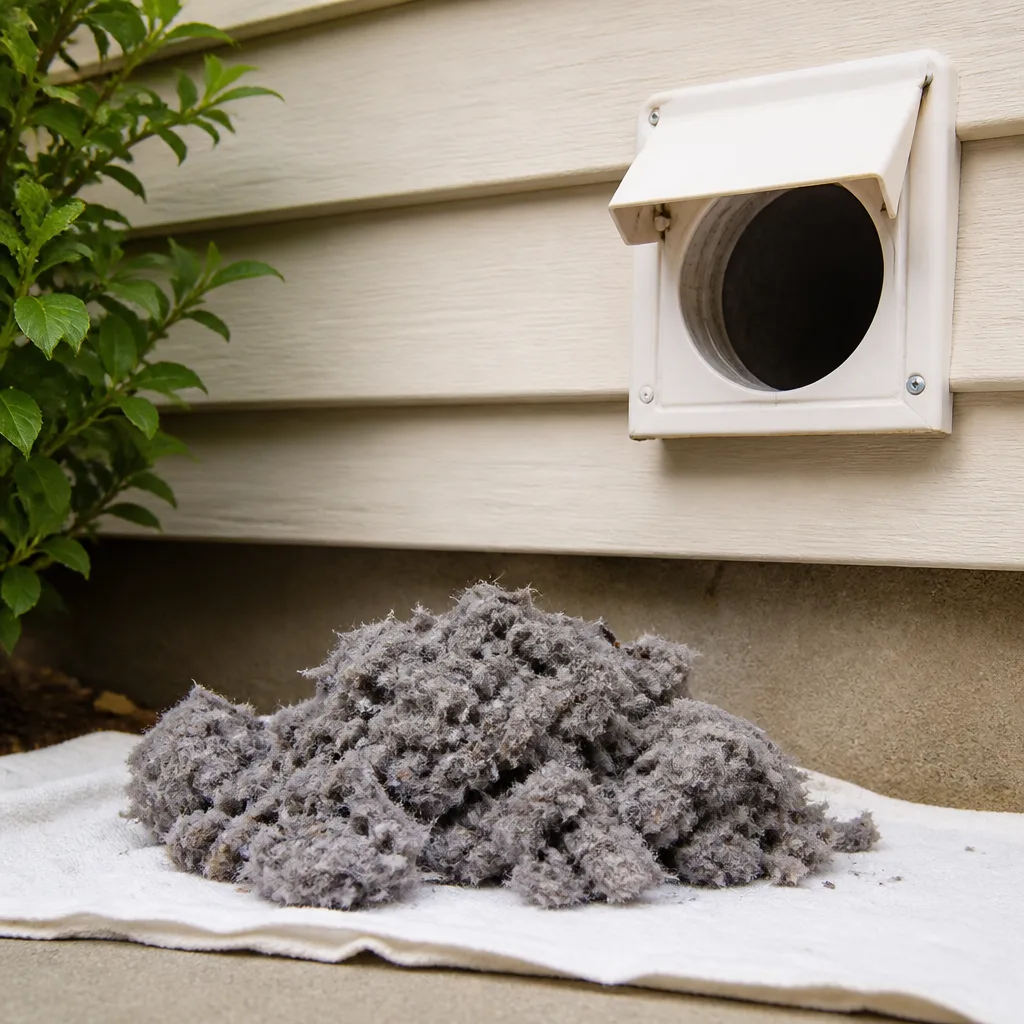 Dryer vent cleaning
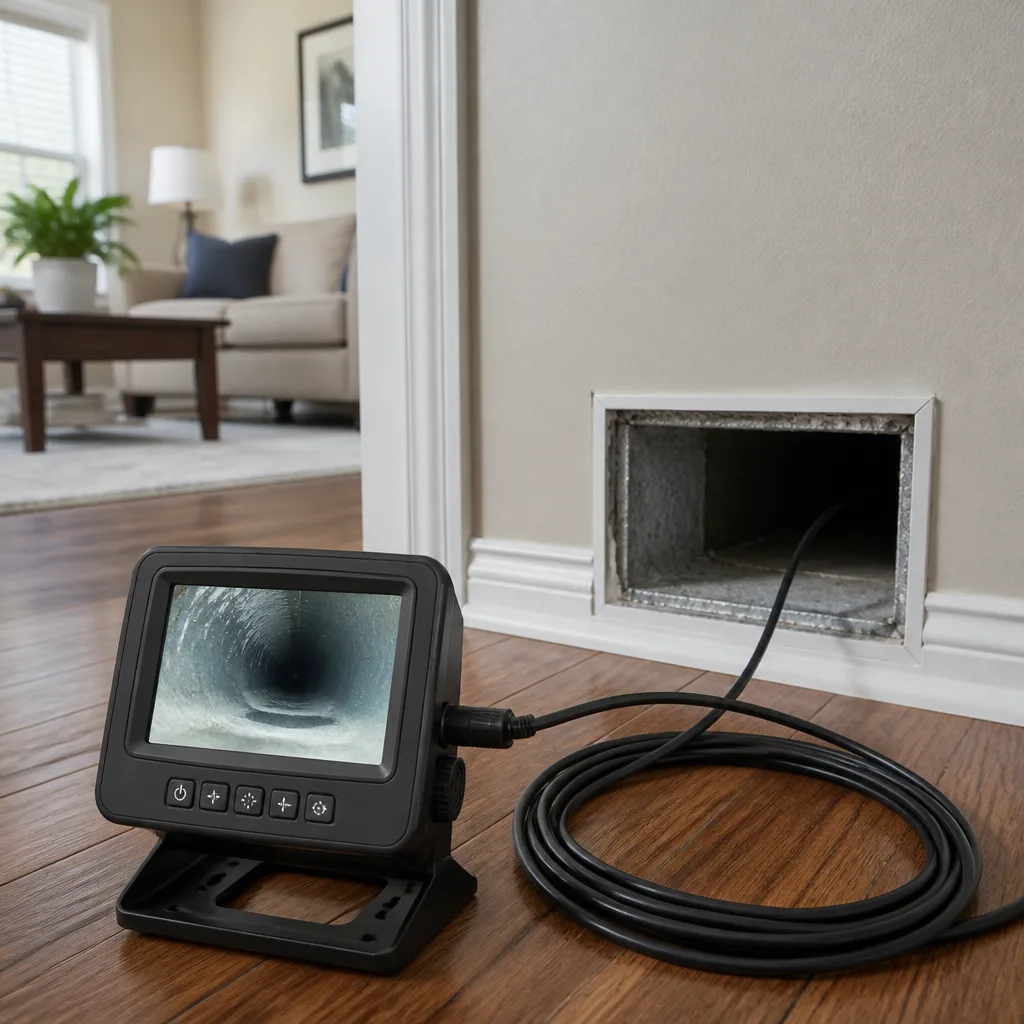 Camera inspection
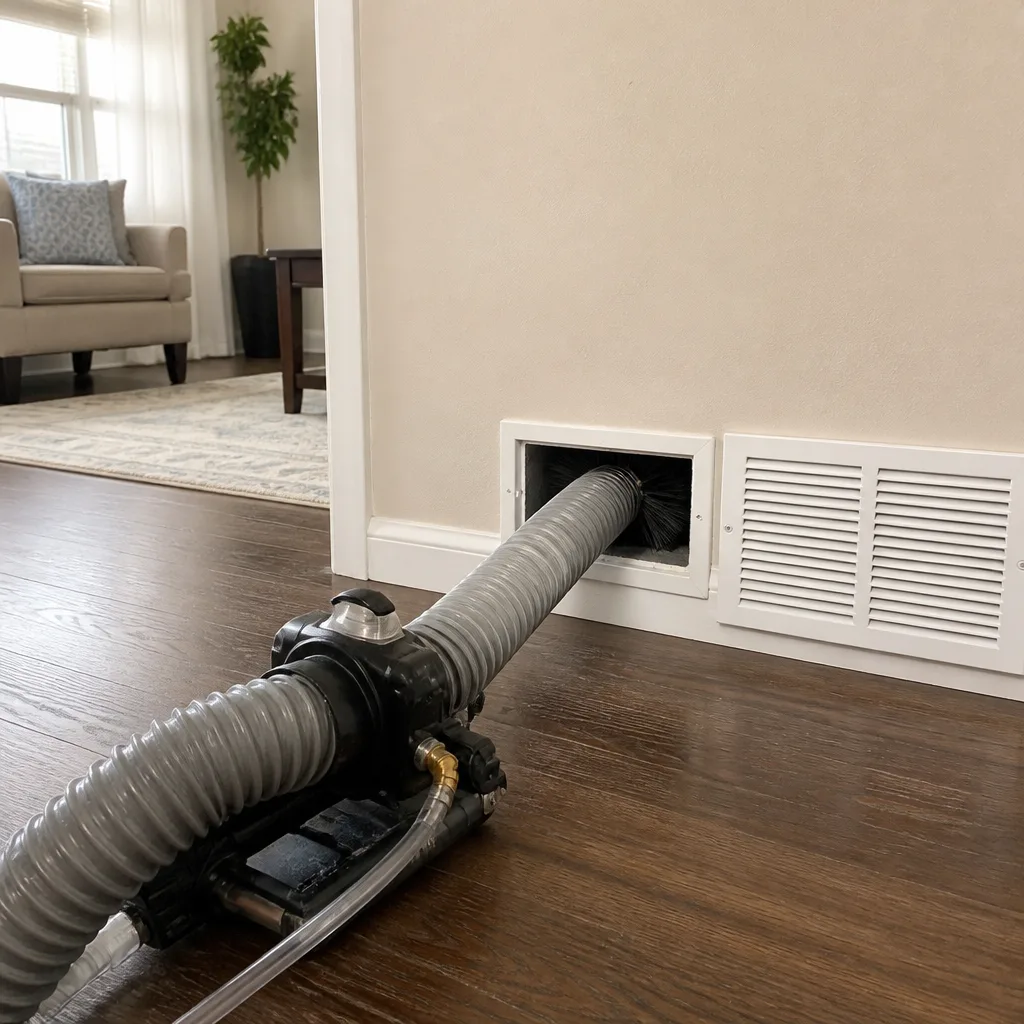 Sanitizing & deodorizing
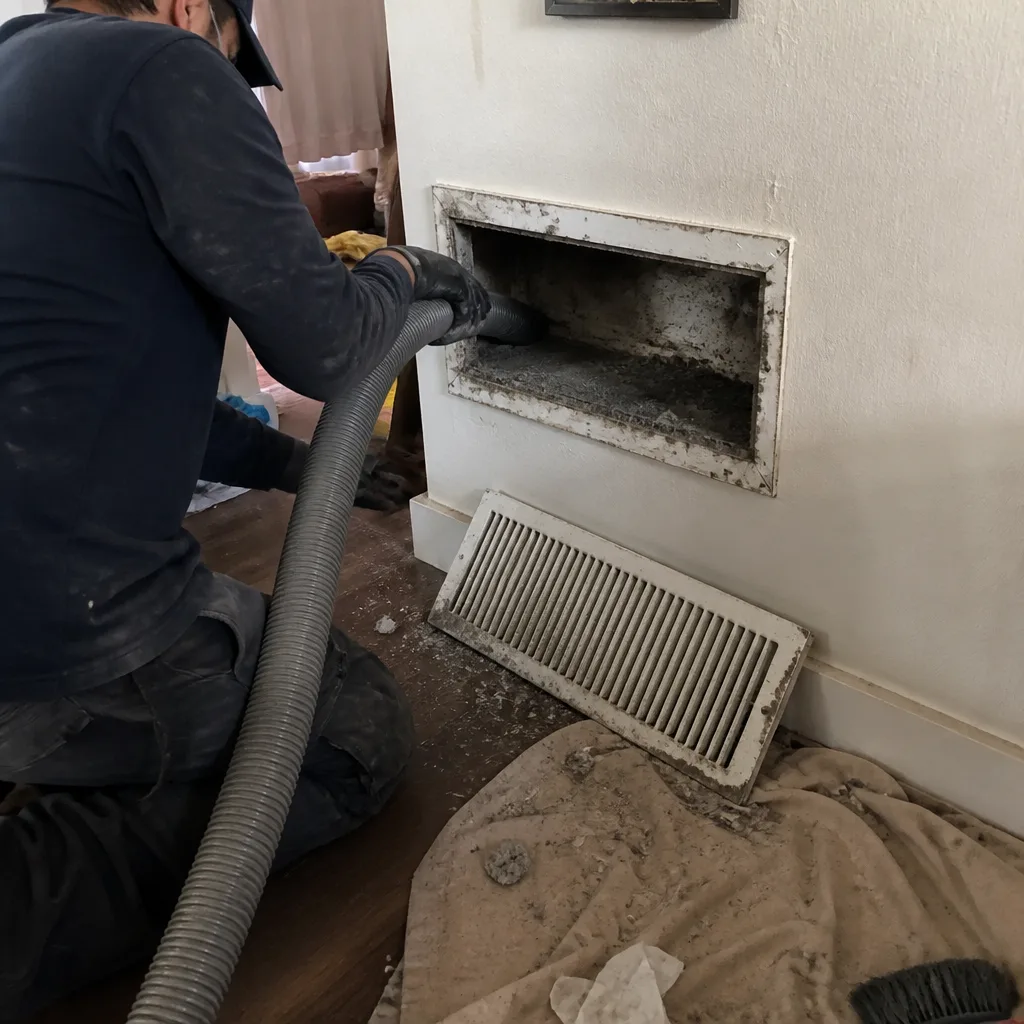
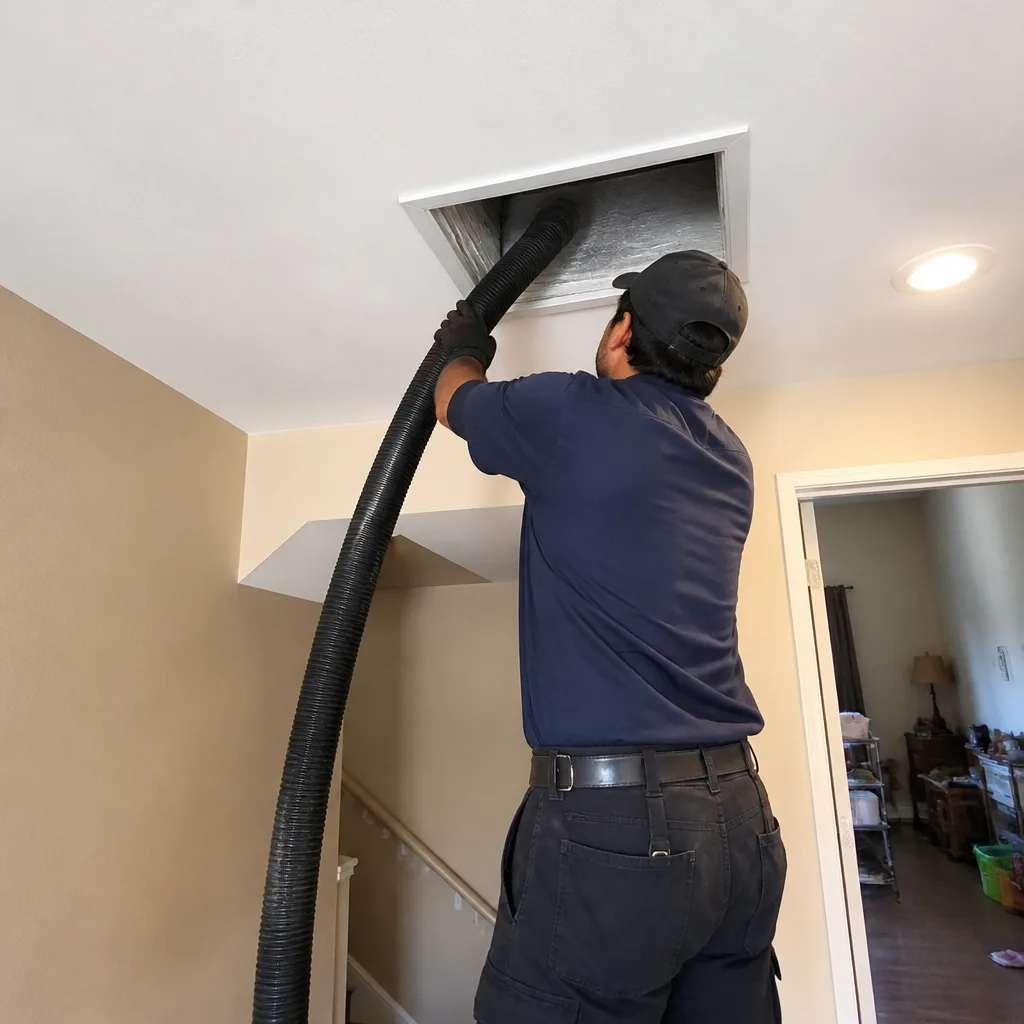
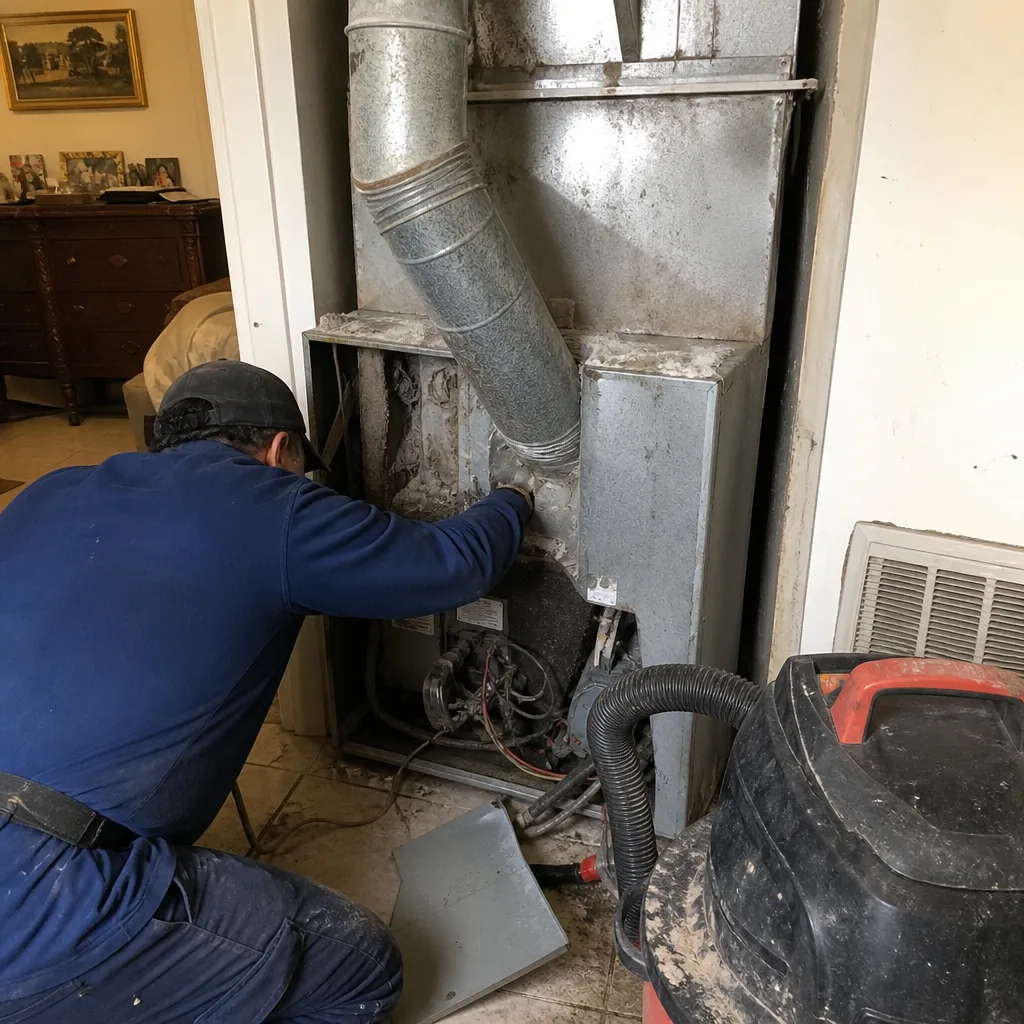
Whole-system duct and dryer vent check with before-and-after photos - you see exactly what came out of your vents
That "$99 whole-house special" is a bait ad - the real number appears once they are in your hallway, or the "clean" is a shop-vac at the register. We photograph the inside of your ducts before and after instead.
DIY vs Professional Air Duct Cleaning: The Fontana Homeowner’s Decision Guide
The average Fontana home moves roughly 1,200 cubic feet of air per minute through its duct system when the AC is running. That air carries dust, but it also carries whatever has settled inside the ducts themselves. Here’s the counterintuitive part: the debris you can see on your vent covers represents maybe 2 percent of what’s actually in the system. The rest is packed into trunk lines, return plenums, and the elbows where airflow slows and particles drop out. By the end of this guide, you’ll know exactly what consumer tools can and cannot do, what Fontana’s specific air quality conditions mean for your ducts, and how to make a decision that doesn’t leave you paying twice.
Styles & brands we work with
- Whole-home duct cleaning
- Dryer vent cleaning
- Camera inspection
- Sanitizing & deodorizing
Quick Answer
DIY duct cleaning works for the first 18 inches of a vent register, but professional equipment is required to reach the main trunk lines and return plenums where most contamination accumulates. In Fontana, where wildfire smoke and desert dust introduce fine particulate under 2.5 microns into home duct systems, the gap between DIY results and professional negative-pressure extraction is even wider. If your system hasn’t been cleaned in 5+ years or you’re dealing with post-renovation debris, skip the shop vac and call a professional for Air Duct Cleaning.
Table of Contents
- What DIY Duct Cleaning Actually Does (And What It Can’t Reach)
- The Physics of Negative-Pressure Extraction: Why CFM and Reach Matter
- Fontana’s Air Quality Problem: Wildfire Smoke and Desert Dust
- The DIY Tasks That Are Genuinely Worth Doing
- When DIY Is a Reasonable Bridge (And When It Isn’t)
- The Real Cost Comparison: DIY vs Professional in Fontana
- How to Verify a Professional Job Is Done Right (On-Site Checklist)
- Common Mistakes to Avoid
- When to Call a Professional
- Frequently Asked Questions
- The Bottom Line
What DIY Duct Cleaning Actually Does (And What It Can’t Reach)
A standard homeowner approach looks like this: remove the register cover, vacuum what you can see, maybe use a brush attachment or a dryer vent cleaning kit to reach in a little further. You’ll pull out some lint, some dust bunnies, maybe a toy a child dropped through the vent. That’s real work, and it’s not worthless. But it’s addressing the wrong part of the system.
Here’s the mechanical reality. Your duct system is not a series of straight tubes. It’s a network of trunk lines (the large rectangular or round ducts running through the attic, crawlspace, or between floors), branch ducts that split off to feed individual rooms, register boots that transition from the branch to the floor or wall opening, and a return plenum that pulls air back to the furnace. The total linear footage in a typical Fontana home is between 80 and 150 feet. A consumer-grade brush kit reaches 2 to 3 feet. A shop vac hose, even with extension wands, reaches 6 to 8 feet before friction and hose diameter kill the suction.
What gets left behind lives in the main trunk lines. In our experience working on Fontana homes, the heaviest accumulation is almost always in the return side of the system, not the supply side. That’s because return air is unfiltered until it hits the main filter at the furnace, so everything from your living room carpet fibers to the fine silt that blows through open windows gets pulled into the return plenum and deposited where airflow slows. None of that is accessible with DIY tools.
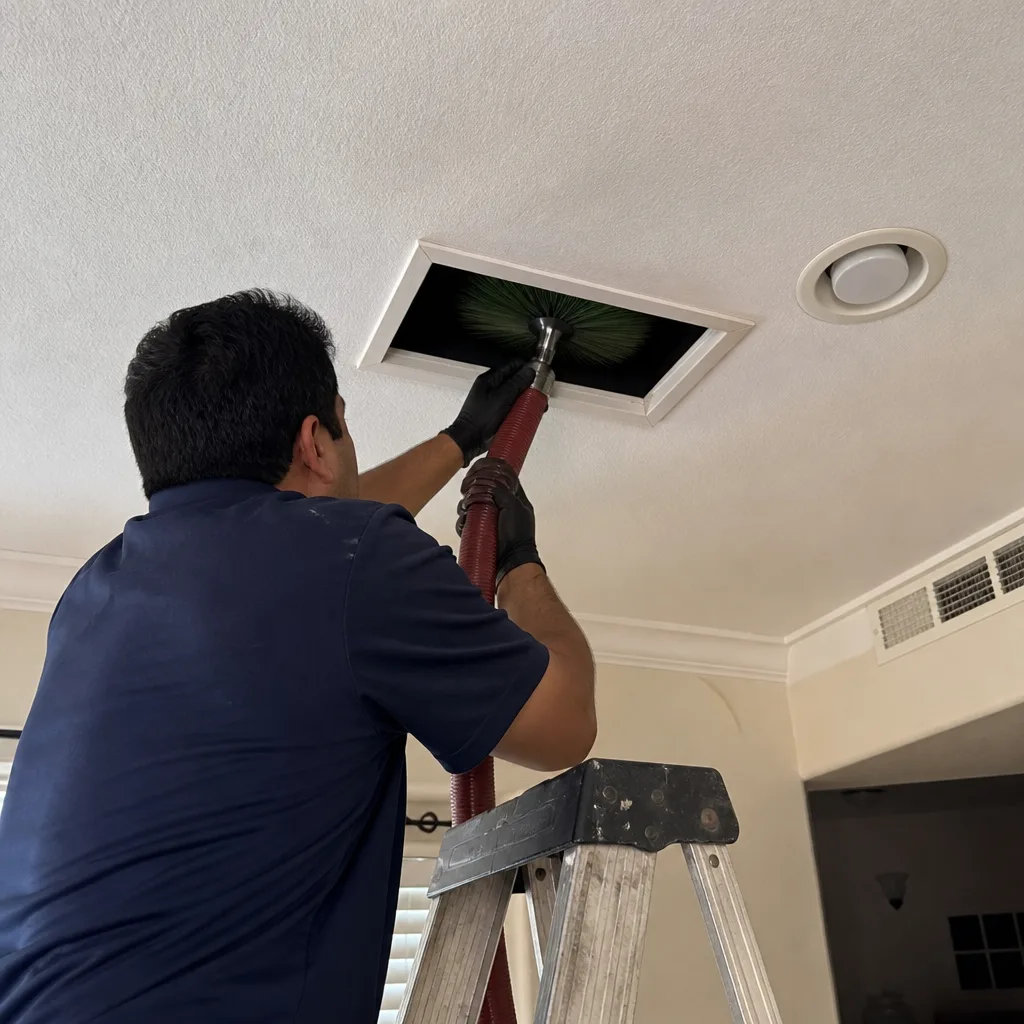
The second blind spot is elbows and transitions. Every 90-degree turn in a duct run is a deposition zone. Air can’t corner like a car; it slows, and the particulate it carries drops out. A flexible brush from the register can’t push through tight elbows. A professional Air Duct Cleaning in Fontana service uses rotating agitation brushes on a flexible shaft that follows the duct geometry, dislodging debris from these corners before the vacuum extraction pulls it out.
The Physics of Negative-Pressure Extraction: Why CFM and Reach Matter
If you take one technical point away from this guide, make it this: duct cleaning is not about brushing. It’s about airflow. Specifically, it’s about creating negative pressure strong enough to pull dislodged debris out of the system rather than recirculating it into your home.
Here’s how the numbers work. A powerful shop vac generates maybe 180 to 200 CFM (cubic feet per minute) of airflow at the nozzle. A professional Rotobrush or Nikro system generates 2,000 to 4,000 CFM at the point of extraction, often more. That’s not a modest difference; it’s an order of magnitude. At 200 CFM, you can pick up loose dust from a surface. At 3,000 CFM, you can suspend and transport heavy debris including drywall dust, sawdust from construction, and desiccated organic material from a 20-foot trunk line back to the collection unit.
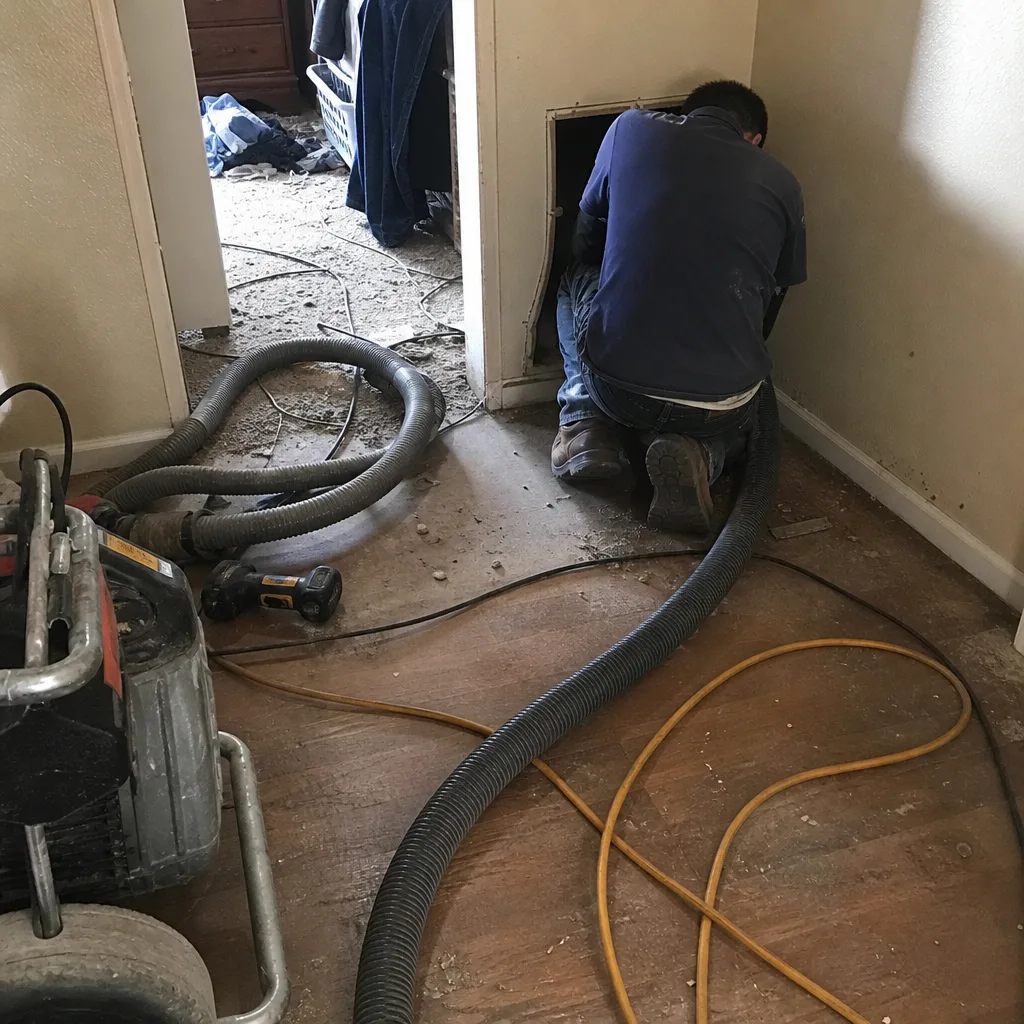
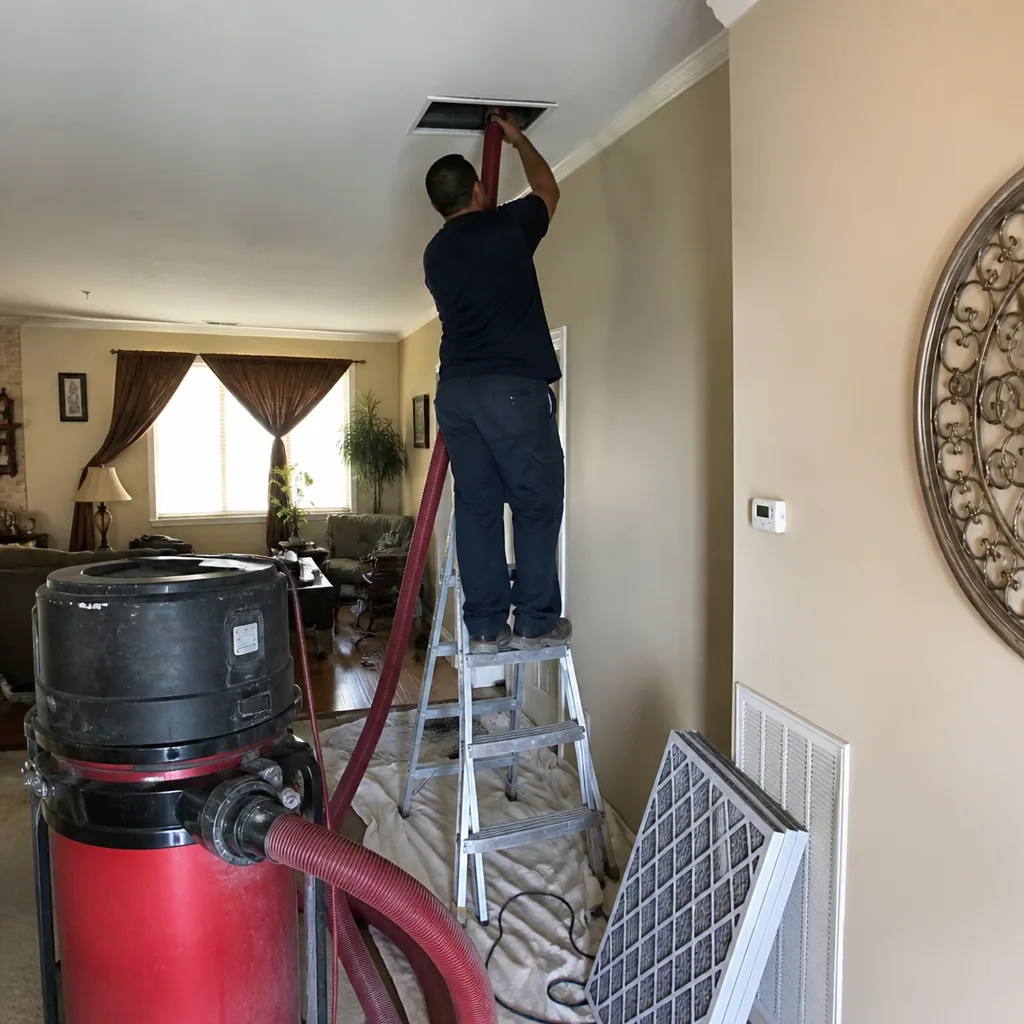
The second factor is containment. Professional duct cleaning in Fontana uses the HVAC system itself as the containment vessel. The technician seals a high-power vacuum to the system, usually at the furnace or main plenum, then opens registers one at a time and agitates the interior. Because the entire system is under negative pressure, nothing escapes into the living space. The debris that gets dislodged has exactly one path: out through the vacuum. A shop vac operated at a single register creates localized negative pressure that drops off rapidly with distance, which is precisely why debris beyond 6 to 8 feet doesn’t move. The CFM simply isn’t there.
This is also why the “blow and go” services that some generalist companies offer are a real concern. A truck-mounted blower that pushes air through the system without adequate extraction on the other end just relocates debris from the ducts into the house. It looks impressive; it makes the problem worse.
Fontana’s Air Quality Problem: Wildfire Smoke and Desert Dust
Fontana sits at the eastern edge of the San Bernardino Valley where the Santa Ana winds push dry, particulate-heavy air through the Cajon Pass and into residential neighborhoods. Add to that the seasonal wildfire smoke that settles into the valley from the San Bernardino National Forest and the Angeles National Forest, and you get a specific type of contamination that generic duct cleaning advice doesn’t address.
The issue is particle size, not just particle volume. Fontana’s ambient air carries a lot of PM2.5, meaning particulate matter under 2.5 microns in diameter. That’s small enough to stay suspended in air for hours or days, penetrate deep into the respiratory system, and pass through standard household filters. It’s also small enough to travel deep into duct systems and deposit in places where airflow is slowest: return plenums, trunk line joints, and filter housings.
Here’s what that means for the DIY question. Coarse household dust, the visible stuff, has particles in the 10 to 100 micron range. It’s heavy, it settles quickly, and a brush or vacuum can physically remove it from the first few feet of ductwork. PM2.5 is different. It behaves almost like a gas in terms of how it moves through a system. It doesn’t just settle; it gets compressed into the film that lines the interior of ductwork over years. Removing that film requires agitation that reaches the full surface of the duct, not just the center of the airway, plus enough extraction airflow to carry the suspended particles out. That combination is exactly what commercial-grade negative pressure systems are designed for.
If you moved into a Fontana home during or after a major wildfire season, the existing duct system likely contains a significant load of this fine particulate even if the house was cleaned before you took possession. Smoke particles infiltrate return air intakes and settle throughout the system, and they’ll re-enter the living space every time the blower runs until the ducts are professionally cleaned.
The DIY Tasks That Are Genuinely Worth Doing
We’re not going to tell you that everything requires a professional. That’s not honest, and it doesn’t serve Fontana homeowners. There are DIY maintenance tasks that produce real results and extend the interval between professional cleanings. Here’s what actually helps.
- Register and grille face cleaning. Remove supply registers and return grilles, wash them with warm water and mild detergent, and dry them completely before reinstalling. Vacuum the visible interior of the register boot with a brush attachment. This prevents the aesthetic buildup that makes vents look dirty, and it keeps the first 6 inches of each run clear. It does not address the trunk lines.
- Filter replacement, on schedule. The single most impactful DIY task is also the simplest. For a Fontana home with central air running 6 to 8 months per year, a standard 1-inch pleated filter should be replaced every 30 to 60 days during cooling season, and every 60 to 90 days the rest of the year. A dirty filter increases pressure drop across the system, which increases the deposition velocity of particulate in the ducts. Simply put: a clean filter keeps your ducts cleaner between professional cleanings. If your system uses a Honeywell or Aprilaire media filter or electronic air cleaner, follow the manufacturer’s replacement interval, usually 6 to 12 months.
- Accessible dryer vent lint removal. If your dryer is on an exterior wall with a short, straight vent run of 4 to 6 feet, a DIY vent brush can remove the accessible lint near the outside termination. This is a genuine fire-safety task, and it’s worth doing between professional Dryer Vent Cleaning in Fontana visits. What you cannot do with a homeowner brush kit is reach lint accumulated at a mid-run elbow or where the vent passes through a roof or long interior chase, which is where most restrictions actually occur.
- Visual inspection of accessible duct sections. In homes where the furnace is in a garage or utility closet, you can often see the first few feet of the main plenum and return drop. Keeping this area clean and checking for obvious gaps, disconnected sections, or signs of rodent activity is a useful early-warning habit. If you find a disconnected joint or a visible gap, that’s not a cleaning issue; that’s a repair issue, and it’s covered by a professional Air Duct Repair in Fontana service.
When DIY Is a Reasonable Bridge (And When It Isn’t)
There are honest scenarios where DIY maintenance is the right call_for now. For deeper context, see our Seasonal Air Duct Cleaning Care for Fontana: Year-Round Homeowner’s Guide.
DIY is a reasonable bridge when:
- Your home is newer and the system was professionally cleaned recently. A Fontana home built within the last 3 to 5 years with a professionally cleaned duct system within the last 2 years is a candidate for DIY maintenance between professional visits. Focus on filters, register faces, and accessible inspection.
- You’re renting and the duct system is visibly clean inside the register boots. In this situation, keep filters changed and document any visible duct concerns for the landlord. You don’t own the system, and you shouldn’t be paying for professional cleaning on a rental property unless it’s part of your lease agreement.
- Your system is small and simple. A 1,000-square-foot Fontana condo with a single return, short duct runs, and the air handler in a reachable closet has less duct system than a 3,000-square-foot single-family home. The reach limitations of DIY tools matter less, and regular filter discipline can keep a small, simple system in acceptable condition for longer.
DIY is not a reasonable bridge when:
- You just completed any renovation. Drywall dust, sawdust, tile grinding fines, and paint overspray all get pulled into the return side of the system during construction. This debris is heavy, abrasive, and impossible to remove without full-length agitation and professional extraction. If you renovated, you need professional cleaning. Full stop.
- Your dryer has been taking longer to dry clothes. This is the classic symptom of a restricted dryer vent, and if the restriction is beyond reach of your brush kit, the risk isn’t inefficiency; it’s fire. Dryer lint is among the most combustible materials in a home, and a restricted vent causes the dryer to run hotter while blocking the path that’s supposed to carry heat and lint outside. Professional dryer vent cleaning is a fire-safety service.
- You can smell something when the air runs. Musty odors when the blower starts, a persistent “hot dust” smell, or any odor that gets worse with airflow indicates material in the ducts that should not be there. Odors are not a DIY situation.
- You moved into a home with unknown duct maintenance history. In Fontana’s active real estate market, many buyers move into homes where the previous owners never cleaned the ducts. If you can’t document a professional cleaning within the last 5 years, assume the system has years of accumulated contamination and treat it accordingly.
- Someone in your home has significant allergies or a respiratory condition. We won’t make medical claims about duct cleaning, because the science doesn’t support universal claims. But we will say this: if indoor air quality matters for health reasons in your household, the margin of error for a DIY partial cleaning is too wide. You want the system genuinely clean, confirmed with visual verification, not “better than it was.”
The Real Cost Comparison: DIY vs Professional in Fontana
Let’s talk actual numbers, because the DIY conversation usually starts with cost. Here’s what a conscientious DIY approach on a typical Fontana home actually costs, versus a professional service.
DIY One-Time Setup Costs (First Year)
- Shop vac with brush attachments: $80 to $150 (consumer grade)
- Dryer vent brush kit: $25 to $40 (cleans accessible runs only)
- Extended flexible duct brush (20-foot with drill attachment): $60 to $120
- Inspection camera for a smartphone (to see what you’re actually doing): $50 to $150, if you want to verify results
- Replacement filters for the first year: $60 to $120 depending on filter grade
- Total realistic DIY investment: $275 to $580
Professional Duct Cleaning in Fontana (Whole-System)
- Typical single-family home up to 2,500 sq ft: $325 to $550, depending on system complexity, number of returns, and contamination level
- Larger homes or systems with significant construction debris: $550 to $800
- Professional dryer vent cleaning: often bundled with duct cleaning or priced separately at $75 to $150
- Total typical professional scope: $400 to $750
Here’s the part most cost comparisons miss. The DIY approach doesn’t actually clean the system. It cleans the visible portions and leaves the trunk lines, plenums, and elbows untouched. You can spend $300 on DIY equipment and still have a duct system that’s 80 percent uncleaned. The comparison isn’t really “$300 DIY versus $500 professional.” It’s “$300 for partial visible cleaning versus $500 for full-system extraction.” Paying for the professional service actually costs less per linear foot of duct actually cleaned.
And the Fontana-specific factor is longevity. Our climate means high dust loading year-round, which means a professionally cleaned system starts re-accumulating immediately. A system that’s truly clean, with no existing film for new dust to adhere to, stays cleaner longer than a system with 15 years of hardened debris film that catches every new particle. Professional cleaning resets the clock. DIY partial cleaning doesn’t.
How to Verify a Professional Job Is Done Right (On-Site Checklist)
Hiring a professional doesn’t mean handing over control. For help choosing the right company, read How to Hire an Air Duct Cleaning Contractor in Fontana: A Step-by-Step Guide. A legitimate duct cleaning company will welcome these questions. If a company dodges them, that’s your answer.
- Confirm the equipment before work starts. Ask what system they’re using for agitation and extraction. A professional operation will name the equipment: Rotobrush, Nikro, or an equivalent contractor-grade brand. If the answer is “a big vacuum,” that’s a red flag.
- Verify containment is in place. Before agitation starts, the extraction unit should be sealed to the system and pulling negative pressure. You should be able to feel air moving toward the registers if you hold a tissue near an open one. The technician should also be using surface protection on floors and around the work area. If your home has Aprilaire filtration installed, the technician should acknowledge it and account for it in the service approach.
- Ask about the return side. The return plenum and return drop are where Fontana homes typically accumulate the most debris. If the technician’s plan doesn’t include opening and cleaning the return side, that’s not a complete service.
- Request before-and-after photos of the interior. Any professional-grade duct cleaning company has inspection camera equipment. You should be able to see the trunk line interior before cleaning and after. This is the verification that separates a real service from a surface wipe-down.
- Walk the system after. Open a few registers and visually check what you can see. The register boots should be visibly cleaner, not just the register faces. If dust remains packed around the boot interior, the agitation didn’t reach that area.
- Ask about repair findings. A focused duct specialist will tell you if they found disconnected sections, crushed flex ducts, or deteriorated joints during the cleaning. If they found issues and didn’t mention them, that’s a problem. A company that offers Air Duct Repair in Fontana can address these findings on the spot rather than leaving you with a follow-up problem.
Common Mistakes to Avoid
- Using a leaf blower to “blow out” the ducts. This pushes contamination from the ducts into the living space, embedding fine particulate in carpet, furniture, and upholstery. It’s one of the most damaging things a homeowner can do, and we see the aftermath in Fontana homes where a well-intentioned weekend project created a worse air quality problem than existed before.
- Buying a cheap duct cleaning “kit” and assuming the system is clean. The kit gives the physical sensation of cleaning because you see debris coming out of the first few feet, but the trunk lines remain untouched. This creates a false sense of completion that delays professional cleaning by months or years.
- Ignoring the return side entirely. Many homeowners only look at the supply registers in each room because those are the visible ones. The return side typically carries more debris because it pulls unfiltered air, and in Fontana’s dust-heavy environment, return plenums are where the real accumulation lives.
- Falling for a “$49 whole-house special” without verifying scope. Extremely low advertised prices in duct cleaning usually mean a restricted scope: a limited number of vents, no trunk line cleaning, no return side work, and aggressive upsell pressure once the technician arrives. The “price to get in the door” model is common in this industry. Honest specialists quote a flat system price up front.
- Repainting a register instead of cleaning the boot behind it. If a register shows visible staining, the problem is usually not the register; it’s the boot and branch duct behind it. Painting or replacing the face plate is cosmetic. Cleaning what’s behind the opening is the actual fix.
- Assume a duct cleaning alone will solve every air quality problem. A professional duct cleaning removes accumulated contamination from the system. It doesn’t maintain filter discipline, address humidity problems, seal duct leaks, or replace worn-out filtration. These are separate tasks, and treating cleaning as a magic fix leads to disappointment and repeated service calls.
When to Call a Professional
The threshold is simpler than most people think. If your system hasn’t been professionally cleaned in 5 years or more, if you’re seeing visible dust coating the register boots despite regular filter changes, if you’ve renovated, if your dryer has slowed down, or if you bought the home without documented maintenance history, stop evaluating and make the call. The DIY tools in your garage cannot reach the contamination that matters, and every month of delay means more accumulation on top of what’s already there. Duct Cleaning Fontana home services the entire Fontana area with commercial-grade Rotobrush and Nikro extraction systems, and offers free estimates at (855) 501-3681.
Frequently Asked Questions
Professional air duct cleaning for a typical single-family home in Fontana ranges from $325 to $550 for a complete system clean including trunk lines, branch ducts, registers, and the return side. Larger homes or systems with significant construction debris can run $550 to $800. This assumes a legitimate full-system service using professional extraction equipment, not a limited-scope promotional package. Call (855) 501-3681 for a flat system quote with no per-vent pricing.
Extremely cheap duct cleaning quotes usually reflect restricted scope. The low price covers a limited number of vents, bypasses the trunk lines and return plenum, or skips agitation entirely in favor of a quick vacuum pass. Once the technician arrives, aggressive upsell pressure adds the actual costs. The opposite model is a flat system price quoted up front with a defined scope in writing. When comparing quotes, ask specifically whether trunk lines and the return side are included.
Request before-and-after photos of the trunk line interior from the service provider’s inspection camera. A legitimate professional duct cleaning company in Fontana has this equipment and will provide visual verification without hesitation. After service, you should also be able to look into the register boots and see visibly cleaner surfaces, not just clean register faces. If a company cannot or will not provide interior photos, that’s a signal to look elsewhere.
In Fontana’s specific climate, with desert dust loading most of the year and seasonal wildfire smoke events, a duct system in a typical home benefits from professional cleaning every 3 to 5 years. Homes with pets, smokers, recent renovations, or occupants with respiratory concerns often warrant more frequent service. Homes with whole-house filtration from Honeywell or Aprilaire systems may extend that interval somewhat because the filtration reduces what enters the ductwork in the first place. The honest answer depends on filter discipline and what your specific system accumulates, not an arbitrary calendar.
Yes, and yes in specific ways. A heavily contaminated duct system recirculates accumulated particulate through the living space every time the blower runs. DIY cleaning is risky in a different way: using a leaf blower or reverse airflow without professional extraction sends the accumulated contamination into the house at high velocity. The specific danger in Fontana is fine wildfire and desert particulate under 2.5 microns, which is invisible, easily suspended, and the hardest material for a consumer vacuum to capture. Professional extraction with containment prevents this release.
We don’t make medical claims about duct cleaning because the research doesn’t support universal outcomes. What a professional duct cleaning does objectively is remove accumulated particulate from the system that otherwise recirculates through the home. If that particulate is a trigger for someone in the household, removing it can reduce the indoor source. The more accurate way to think about it is that duct cleaning removes a variable from the indoor air quality equation. It won’t replace proper filtration, humidity control, and source reduction, but it addresses one specific contributor. For Fontana homes dealing with dust-sensitive occupants, it’s one step in a broader indoor air quality strategy, and it’s easiest to evaluate after a visual inspection confirms what’s actually in the system.
The Bottom Line
The DIY versus professional question for Fontana air duct cleaning isn’t about willingness to work or even fundamentally about cost. It’s about physics. The contamination that matters in a forced-air system lives in the trunk lines, return plenums, and elbows that consumer tools structurally cannot reach or extract from. You can clean the visible 18 inches, and you should. Change your filters, wash your register faces, and clear accessible dryer vent lint. But understand what those tasks are: maintenance, not remediation. When a Fontana home’s duct system carries years of desert dust, wildfire smoke particulate, or renovation debris, only professional negative-pressure extraction with contractor-grade equipment physically removes it. If you haven’t had a professional cleaning in the last five years, the honest answer is that it’s time.
Written by the team at Duct Cleaning Fontana, serving Fontana since 2017. Explore more guides & resources.
See the difference
 Before
 After
 Before
 After
 Before
 After