
Last updated November 2, 2026
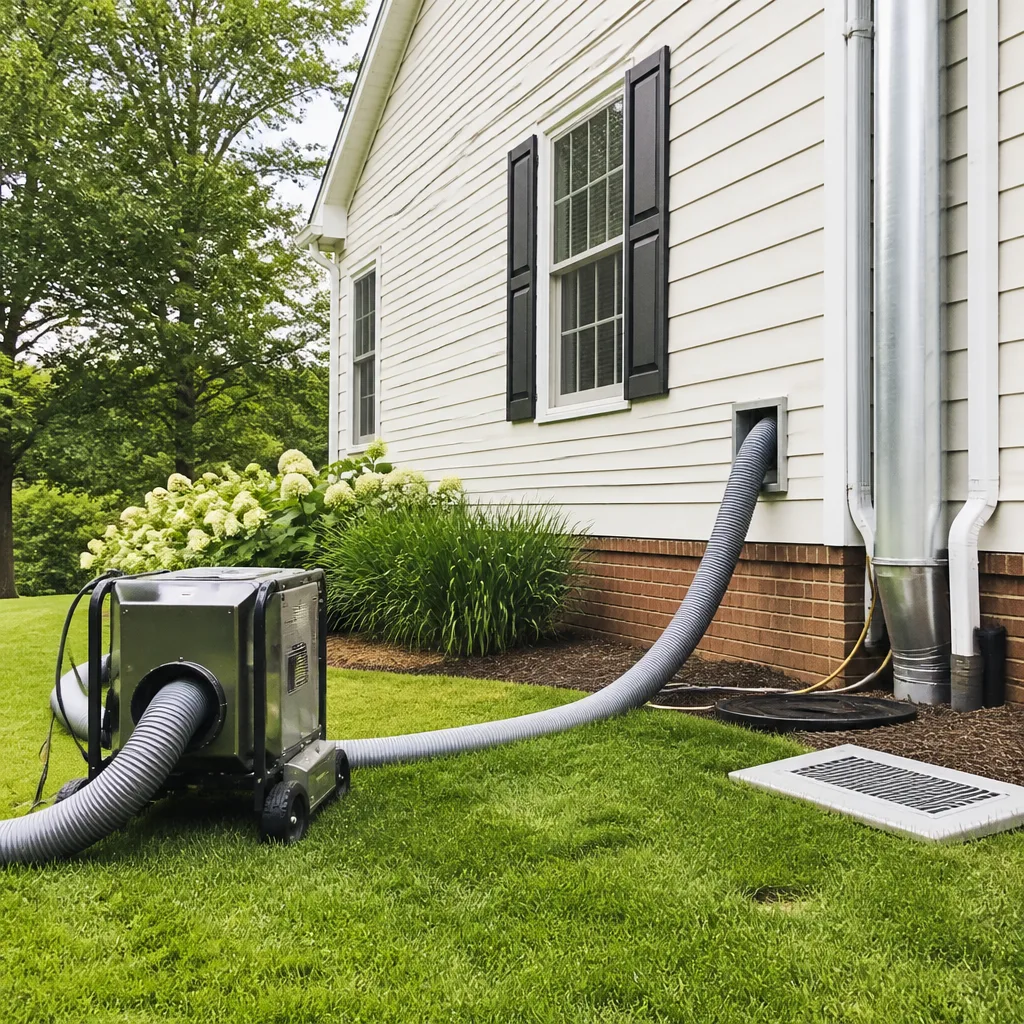 Whole-home duct cleaning
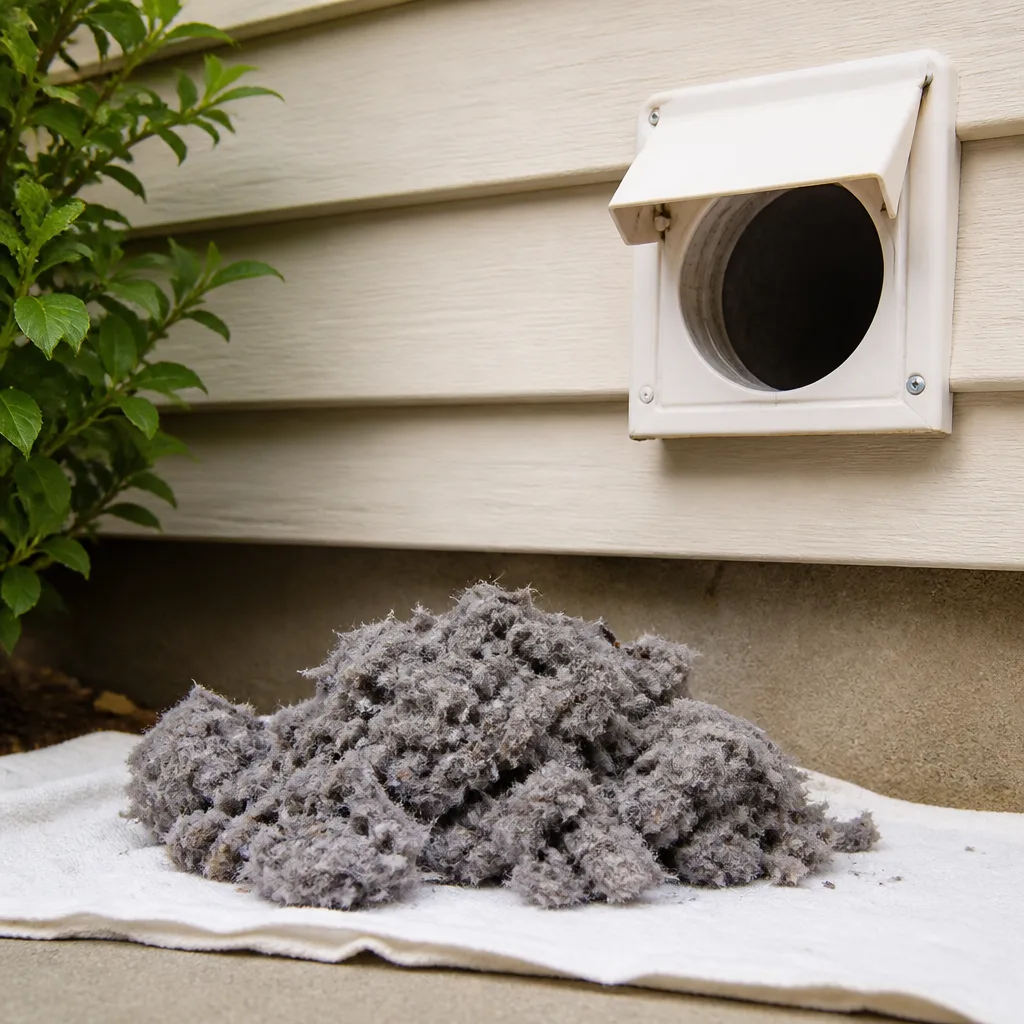 Dryer vent cleaning
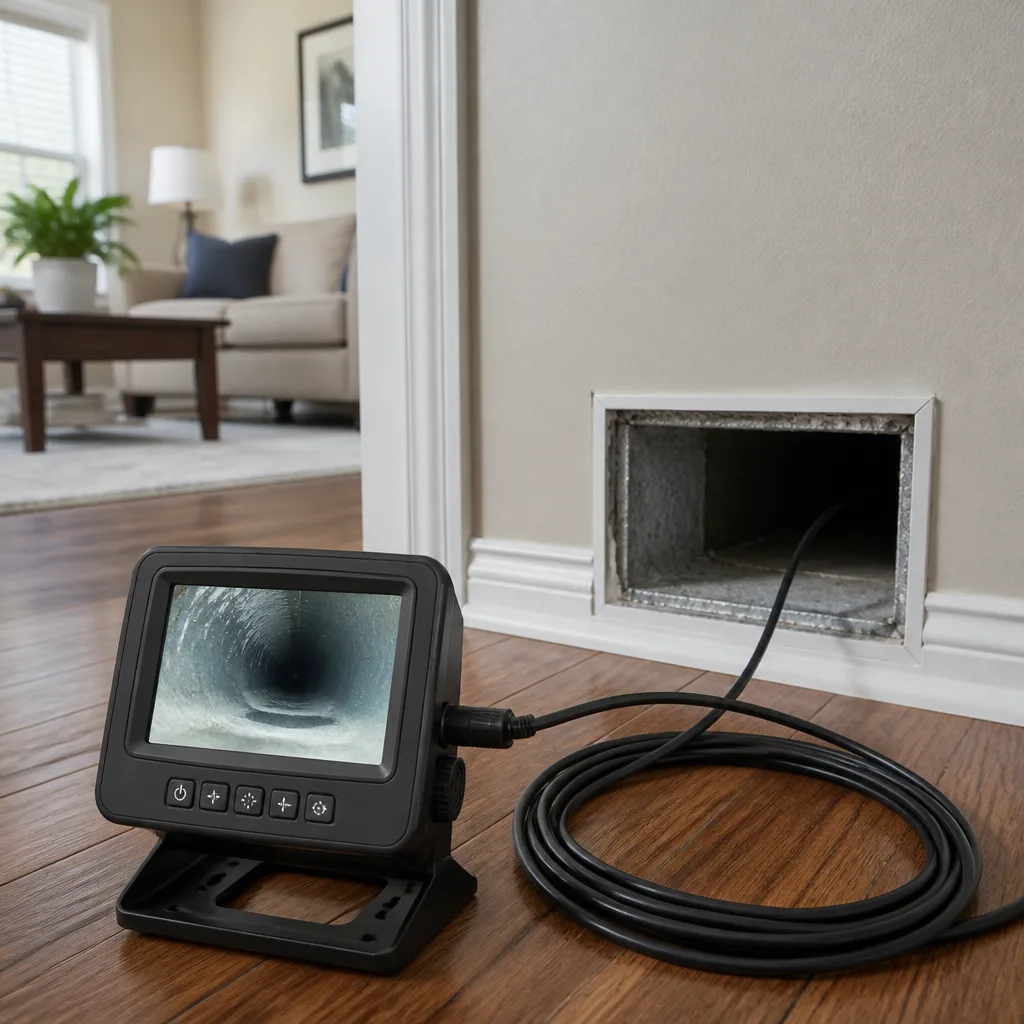 Camera inspection
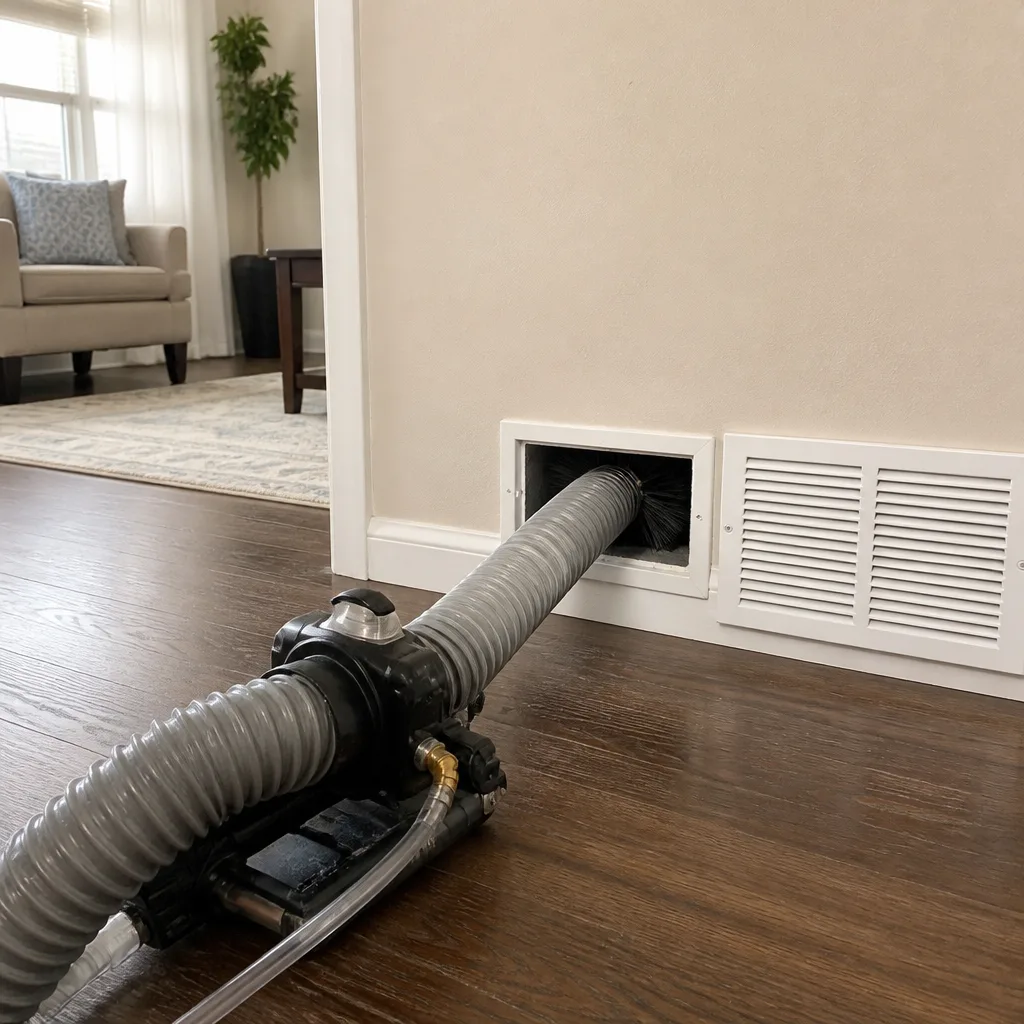 Sanitizing & deodorizing
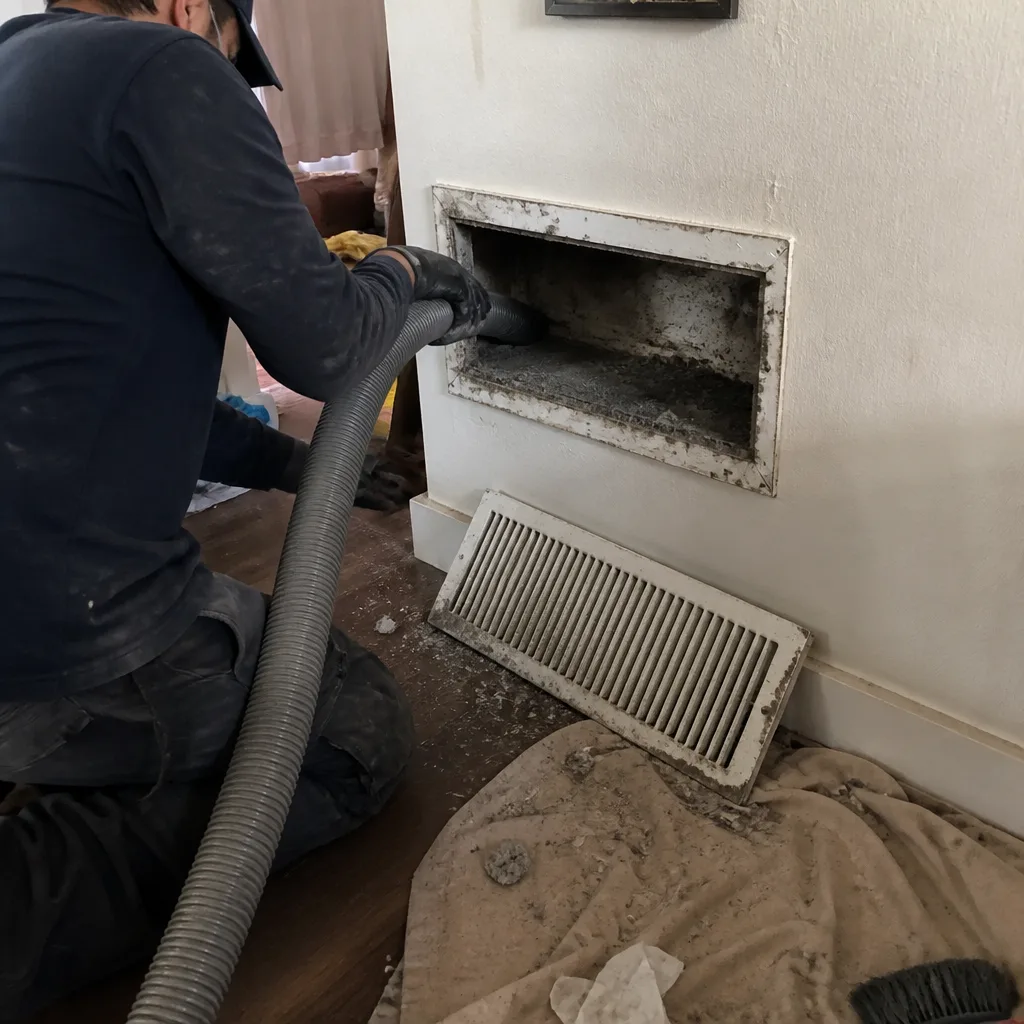
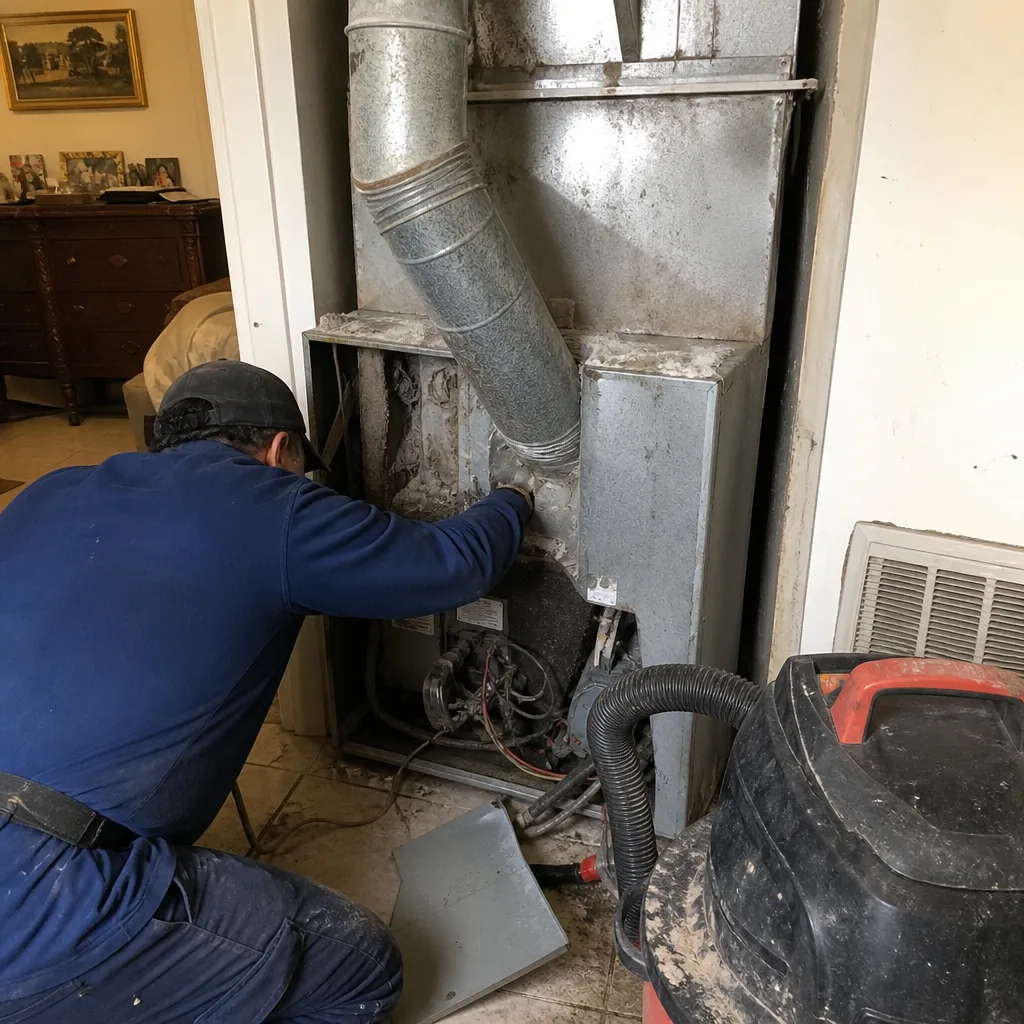
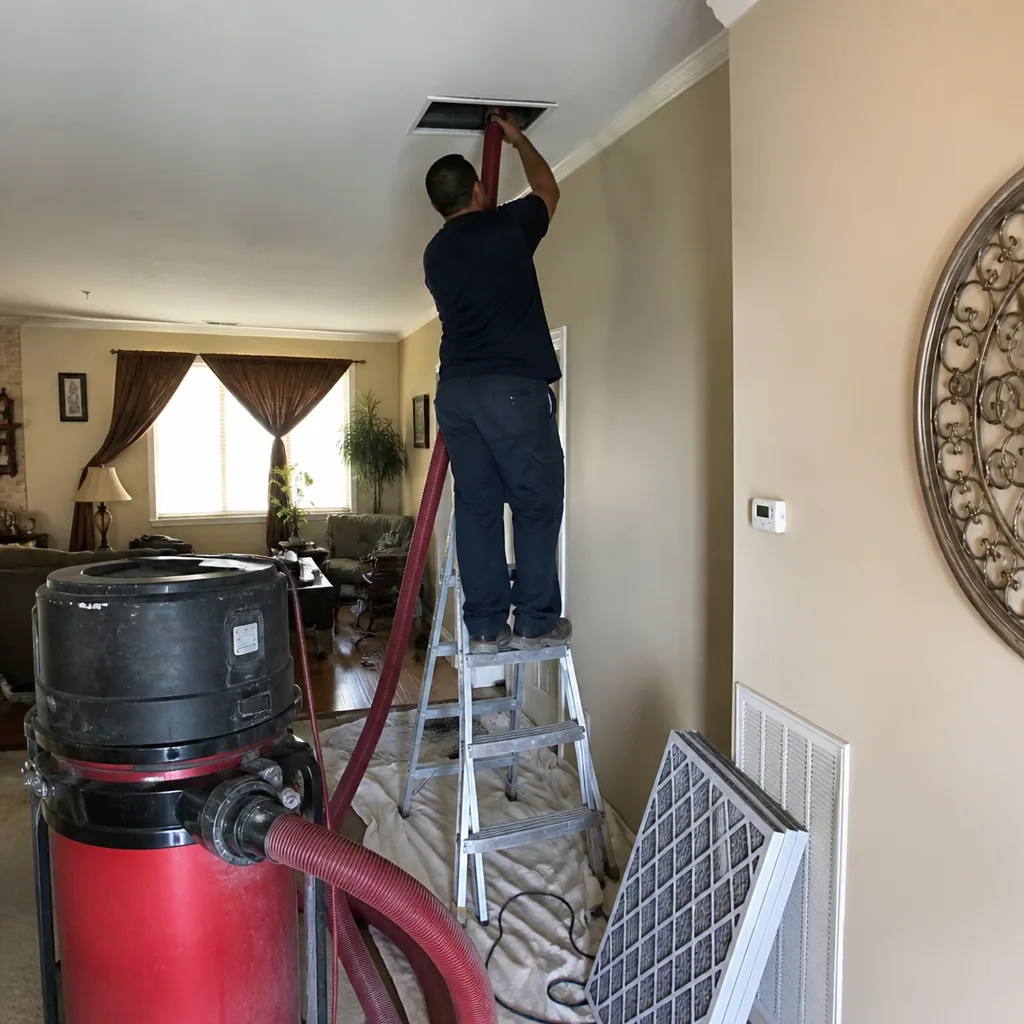
Whole-system duct and dryer vent check with before-and-after photos - you see exactly what came out of your vents
That "$99 whole-house special" is a bait ad - the real number appears once they are in your hallway, or the "clean" is a shop-vac at the register. We photograph the inside of your ducts before and after instead.
Seasonal Air Duct Cleaning Care for Fontana: Year-Round Homeowner’s Guide
Fontana’s HVAC systems run an average cooling season that starts in April and doesn’t meaningfully end until October – nearly twice the active load period of a northern California home. That extended cycle means your ductwork accumulates dust, debris, and wear on an accelerated schedule, and a generic “clean it every few years” approach leaves most Fontana homes operating with compromised airflow for months at a time. This guide lays out a month-by-month calendar built around Fontana’s actual climate: two high-HVAC-load periods bookended by Santa Ana wind events and wildfire smoke season. By the end, you’ll know exactly when to inspect, when to schedule professional air duct cleaning in Fontana, and when to leave the system alone and let it work.
Styles & brands we work with
- Whole-home duct cleaning
- Dryer vent cleaning
- Camera inspection
- Sanitizing & deodorizing
Quick Answer
For most Fontana homes, the highest-value window for professional Air Duct Cleaning services is October through December – after the summer cooling load winds down and before heating season kicks in. This timing removes seven months of accumulated summer dust, skin cells, and HVAC particulate before you close windows and recirculate heated air all winter. Dryer vent cleaning should happen before fire season escalates (ideally by May, again in October if you run heavy laundry loads), and any Santa Ana wind event above 30 mph is a trigger for a duct inspection within two weeks.
Table of Contents
- Why Fontana’s Climate Demands a Different Duct Care Calendar
- The Fontana Month-by-Month Duct Care Calendar
- Why October – December Is the Highest-Value Cleaning Window
- Santa Ana Wind Events: Your Post-Event Inspection Trigger
- Summer Prep Steps Before Peak Cooling Demand
- Wildfire Smoke: A Different Response Than Standard Dust
- Dryer Vent Cleaning Has Its Own Fontana Calendar
- Common Mistakes to Avoid
- When to Call a Professional
- Frequently Asked Questions
- The Bottom Line
Why Fontana’s Climate Demands a Different Duct Care Calendar
A duct care calendar written for Seattle or Chicago doesn’t transfer to Fontana. Those climates cycle through four roughly equal seasons, and their HVAC systems alternate between heating and cooling on a predictable schedule. Fontana runs a compressor-heavy load from April through October, then a shorter heating cycle from November through March, and the transitions between those two modes are where duct problems surface. Here’s what actually drives duct contamination in Fontana specifically:
- Extended cooling season: Air conditioners dehumidify as they cool, and that condensation cycle pulls airborne dust through return vents and onto coil surfaces and duct walls. Seven months of this leaves a measurable residue.
- Santa Ana wind events: These dry, gusty northeast winds – typically October through March – push fine particulate through every exterior wall penetration. Attic duct runs and crawlspace returns pick up this dust even when windows stay shut.
- Wildfire smoke intrusions: When smoke settles over the Inland Empire, HVAC systems without adequate filtration pull that particulate into ductwork, where it lingers long after outdoor air clears.
- Construction dust from ongoing development: Fontana’s north-side growth means active construction zones within blocks of established neighborhoods. Earth-moving and grading produce silica-heavy dust that finds its way into return vents.
The practical takeaway: your duct system’s contamination timeline is compressed compared to milder coastal climates, and waiting for a visual problem to appear means you’ve waited too long. In our experience, Fontana homes that go more than three years between professional cleanings show measurable airflow restriction, regardless of filter quality at the return.
The Fontana Month-by-Month Duct Care Calendar
Here’s the calendar we train our techs around, and the one we’d hand a homeowner who wants to stay ahead of duct contamination rather than react to it. Each month has one primary task; none of them take more than 20 minutes unless noted.
January – Post-Holiday Filter Replacement
Holiday baking, more indoor cooking, candles, and closed windows all add particulate to your air. Replace or clean your HVAC filter by January 10. If you run a 1-inch fiberglass filter, this should have happened monthly since November. Check return vents for visible dust buildup while the system is running.
February – Inspect Return Grilles and Visible Duct Runs
Cold mornings mean your furnace cycles more. Walk the house while the blower runs and put a tissue near each return to confirm suction. Wipe down return grilles with a damp cloth. In crawlspaces and attics, look for separated duct segments or sagging flex duct – winter is when heat-related material contraction shows up as gaps.
March – Pre-Cooling-Season System Evaluation
This is your last low-demand month before the AC runs daily. If you notice weak airflow from any register, a burning-dust smell on startup, or rooms that never quite reach temperature, schedule an inspection now. Contractors are less backed up in March than in May, and you’re not competing with emergency calls.
April – Cooling Season Begins: Filter Strategy Shift
Your system will start running daily within weeks. If you’ve been using a 1-inch filter, switch to a 2-inch or 4-inch high-MERV filter rated 8 – 11 (check your system’s static pressure tolerance first). This single change reduces what reaches the coil and duct walls throughout the long Fontana cooling season.
May – Dryer Vent Check Before Fire Season Weather Arrives
Fontana’s driest, windiest conditions typically build from late spring into summer. A clogged dryer vent under those conditions is a fire hazard, not a performance annoyance. Schedule dryer vent cleaning in Fontana by Memorial Day if you haven’t had it done in 18 months, or if your dryer takes more than 45 minutes to dry a standard load.
June – Mid-Summer Dust Assessment
Your AC has been running for 60 days. Inspect visible registers. If you see dust streaking on wall surfaces near supply vents – sometimes called “ghosting” – that indicates particulate bypassing the filter and moving through the duct system. Note it, and plan for a professional cleaning in the fall window.
July and August – Let the System Run; Don’t Disturb Ductwork
Peak cooling demand months are the wrong time for elective duct cleaning in Fontana. Systems are running 10 – 14 hours daily, and scheduling work that interrupts cooling during 100-degree weeks creates discomfort and risks component failure under load. Replace filters monthly, keep return vents unobstructed, and wait for the fall window.
September – Post-Summer Inspection and Cleaning Booking
The system has just finished its longest continuous run of the year. This is the moment to schedule your professional cleaning for October or November – slots fill quickly, and waiting until December often means waiting until January. Inspect the area around outdoor condenser units for weeds, debris, and restricted airflow before the heating season shifts airflow patterns.
October – Prime Cleaning Window Opens
Cooling demand is dropping, and heating demand hasn’t ramped up. This is the ideal month to have a full-system professional cleaning completed. Ducts have accumulated June – September particulate, and you’re about to spend months with windows closed and air recirculating through those same ducts.
November – Post-Cleaning Verification and Heating Startup
If you had ducts cleaned in October, run the heater now and verify every register has strong, clean airflow. Listen for rattles or new noises, which may indicate disconnected sections. This is also the right time to check your furnace’s own filter and confirm the blower compartment is clean before heavy winter use.
December – Second Dryer Vent Check Before Deep Winter
After summer’s light loads and fall’s increased laundry (school clothes, heaters, blankets), a December dryer vent inspection catches lint accumulation before the holidays add more. With windows fully closed and the home sealed tight, a compromised dryer vent also recirculates humid lint-laden air back into the laundry space.
Why October – December Is the Highest-Value Cleaning Window
If you only budget for one professional duct cleaning every three to five years, and you want that cleaning to deliver maximum measurable benefit, book it between October and December. Here’s the reasoning, based on how Fontana homes actually operate:
- Summer particulate has stopped accumulating. By October, seven months of cooling-season dust, pollen, and insect debris has settled. Cleaning now removes the largest possible deposit rather than interrupting an active accumulation cycle.
- Windows are closing for winter. Fontana’s mild winters mean some homes keep windows cracked, but most seal up by November. From that point forward, your indoor air is recirculated through the duct system. Cleaning before that seal-up means cleaner air for four to five months of closed-window living.
- Contractor availability is better than summer. HVAC techs shift from emergency cooling calls to scheduled maintenance in the fall. You’re more likely to get a thorough job on your schedule rather than a rushed slot between AC failures.
- Heating-season startup smells are avoided. That burning-dust odor on the first furnace cycle of winter is accumulated dust and debris burning off the heat exchanger and duct walls. A fall cleaning eliminates most of that first-week smell.
A word on frequency: if your Fontana home has pets, is within a mile of active construction, or includes allergy-sensitive residents, a three-year cleaning interval is appropriate. If your home is newer (built after 2015), has no pets, and you run high-MERV filters consistently, you can stretch to five years. But the October – December window holds either way.
Santa Ana Wind Events: Your Post-Event Inspection Trigger
Santa Ana winds are Fontana’s most predictable source of unexpected duct contamination. These northeast-to-southwest wind events, typically strongest from October through March, drive fine desert dust and construction particulate through every gap in a home’s envelope. Your duct system is the collection point for a lot of that dust, because return-side negative pressure actively draws it through attic and crawlspace returns.
Here’s our post-event protocol, and what we recommend to homeowners:
- Trigger for action: Winds over 30 mph sustained for more than six hours. Fontana sees several of these every fall and winter.
- What to do within 48 hours: Check your HVAC filter. If a filter that was changed two weeks ago is visibly darkened or caked, that’s direct evidence of wind-driven particulate infiltration.
- What to do within two weeks: Inspect accessible registers and return grilles with a flashlight. Look for new dust streaking inside supply boots or on register vanes.
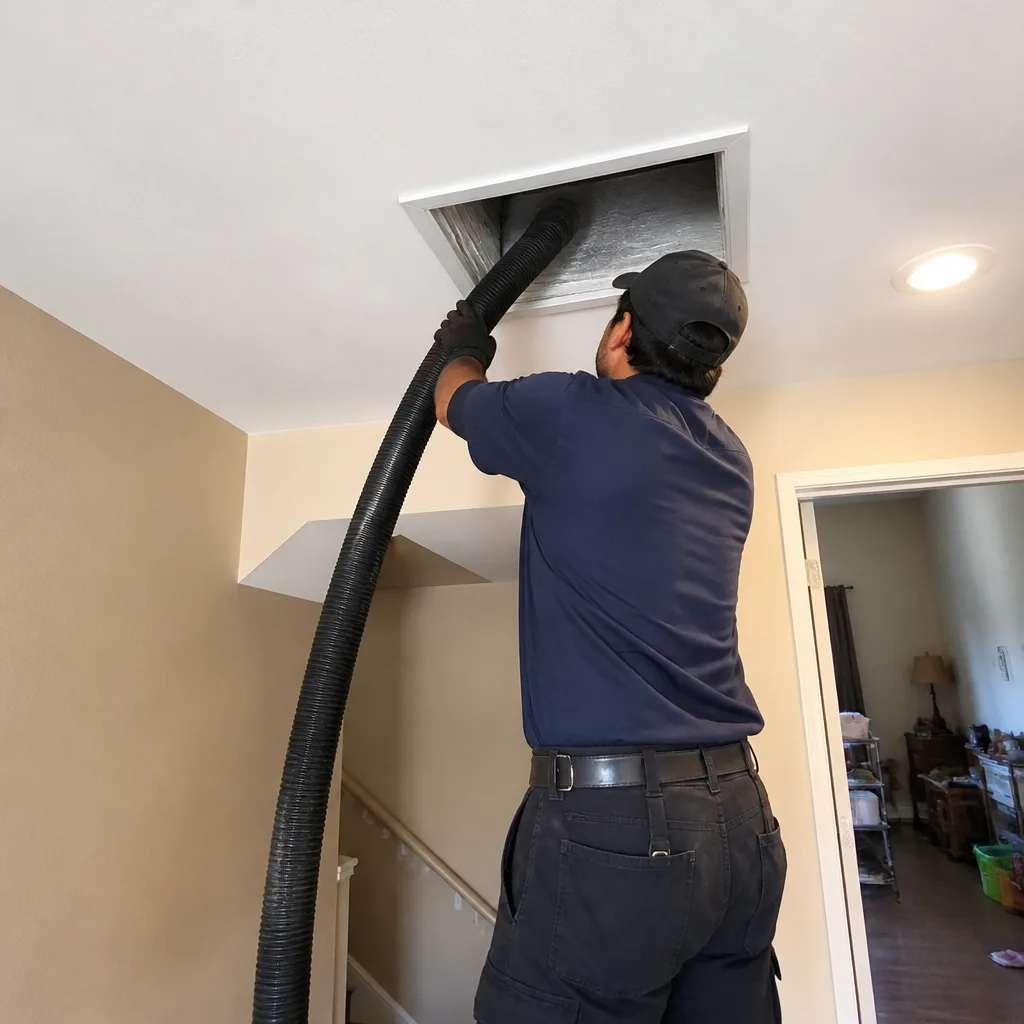
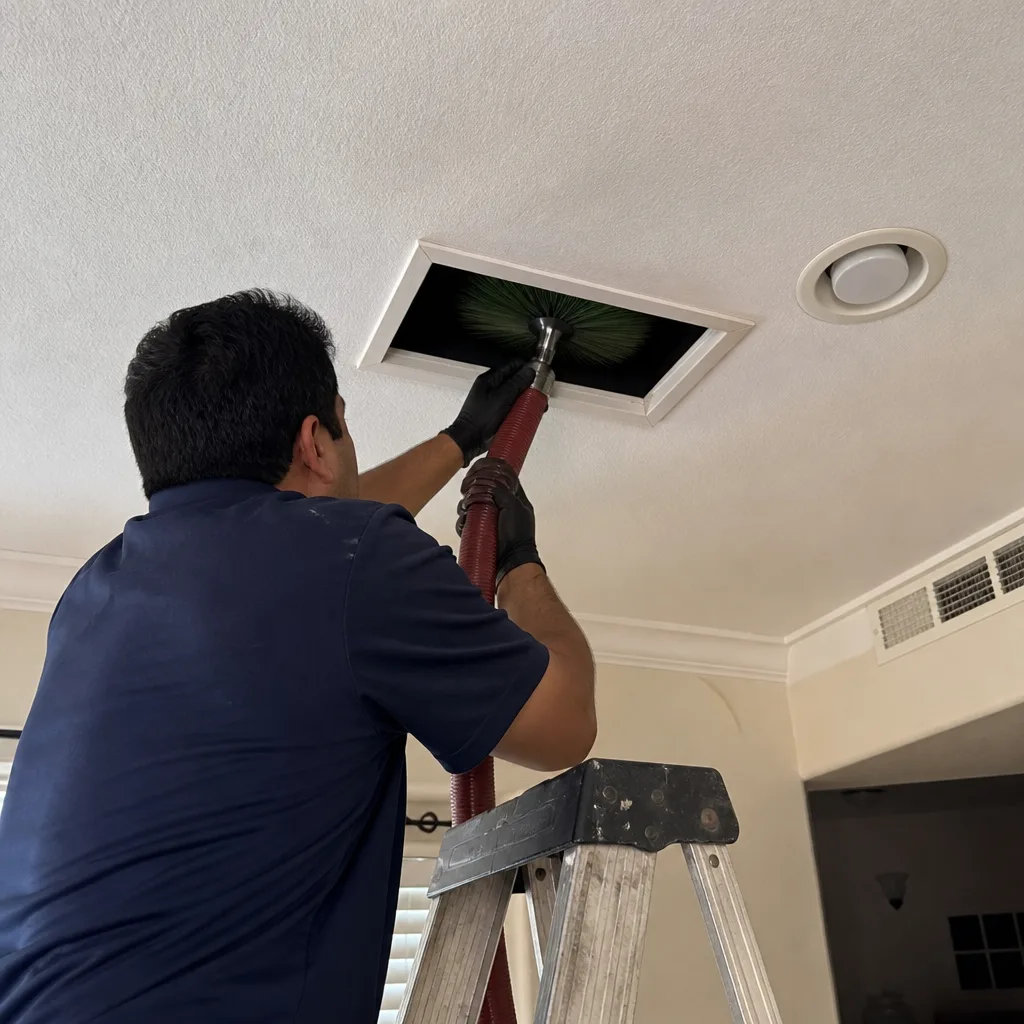
- If you see either: Schedule a professional inspection. Wind-driven dust can be extremely fine (under 10 microns), which means it penetrates deep into duct runs and resists removal by standard vacuum methods. Our Duct Cleaning Fontana home service uses Rotobrush and Nikro agitation systems specifically because fine particulate needs mechanical disturbance, not just airflow.
One thing we see repeatedly after Santa Ana events in the north Fontana neighborhoods: attic hatch seals break down, and the resulting air exchange pulls wind-driven dust directly into return plenums. That’s a 15-minute inspection point most homeowners never check.
Summer Prep Steps Before Peak Cooling Demand
Fontana’s cooling season is long enough that pre-season duct care measurably affects both system performance and indoor air quality from April through October. Here’s the five-step sequence we recommend before temperatures climb:
- Upgrade filtration before the load starts. A high-MERV filter (8 – 11) installed in early spring catches more spring pollen and construction particulate before it enters the coil and duct system. Verify your system can handle the increased pressure drop – a 4-inch media cabinet handles it far better than a 1-inch slot.
- Inspect return vents for gaps and loose covers. Return-side leaks draw unfiltered air into the system. On hot days, that means attic air (130 degrees plus) entering the return plenum and reducing cooling efficiency while adding dust.
- Check visible duct runs for sagging or separation. Summer heat expands materials; winter contracted them. Section connections that held together through winter will show separation by June. Focus on flex duct in attics and rigid duct joints at plenums.
- Confirm register dampers are open and functional. Closed or partially closed dampers in unused rooms create pressure imbalances that increase duct leakage and pull more dust into the system. Open them fully for the cooling season.
- Schedule a duct integrity inspection if you’ve never had one. Most Fontana homes have had a filter change in their lives; far fewer have had a professional pressure or leakage evaluation. If your air duct repair in Fontana needs predate cleaning, that’s the service priority.
These steps cost little to nothing, and completing them in March or early April means your system enters the summer load with less contamination and fewer leak points. The return on that investment is lower energy bills and better airflow for the seven months that follow.
Wildfire Smoke: A Different Response Than Standard Dust
Wildfire smoke isn’t dust, and your response to a Fontana smoke event shouldn’t look like your response to normal household particulate. Smoke from regional fires – typically drifting into the Inland Empire from the San Bernardino Mountains, Angeles National Forest, or larger state fires – contains combustion byproducts, fine particulate under 2.5 microns, and volatile organic compounds. Standard duct dust is inert household debris. Smoke particulate is toxicologically different, and it behaves differently inside duct systems.
What we advise Fontana homeowners during and after smoke events:
- During active smoke events: Run your HVAC fan continuously (fan-on mode, not auto). Upgrade to a high-MERV filter temporarily if you haven’t already – a MERV 13 is the right temporary choice during smoke, even if you drop back to a lower rating after the event passes.
- After the smoke clears: Replace that temporary filter immediately. Do not wait for the normal replacement interval. A smoke-saturated filter restricts airflow and re-releases captured particulate.
- Assess whether ducts were exposed: If your home was smoky enough to smell indoors during the event, that particulate entered the return side and deposited on coil surfaces and duct walls. HEPA filtration at the unit level cannot remove what’s already deposited in the ductwork.
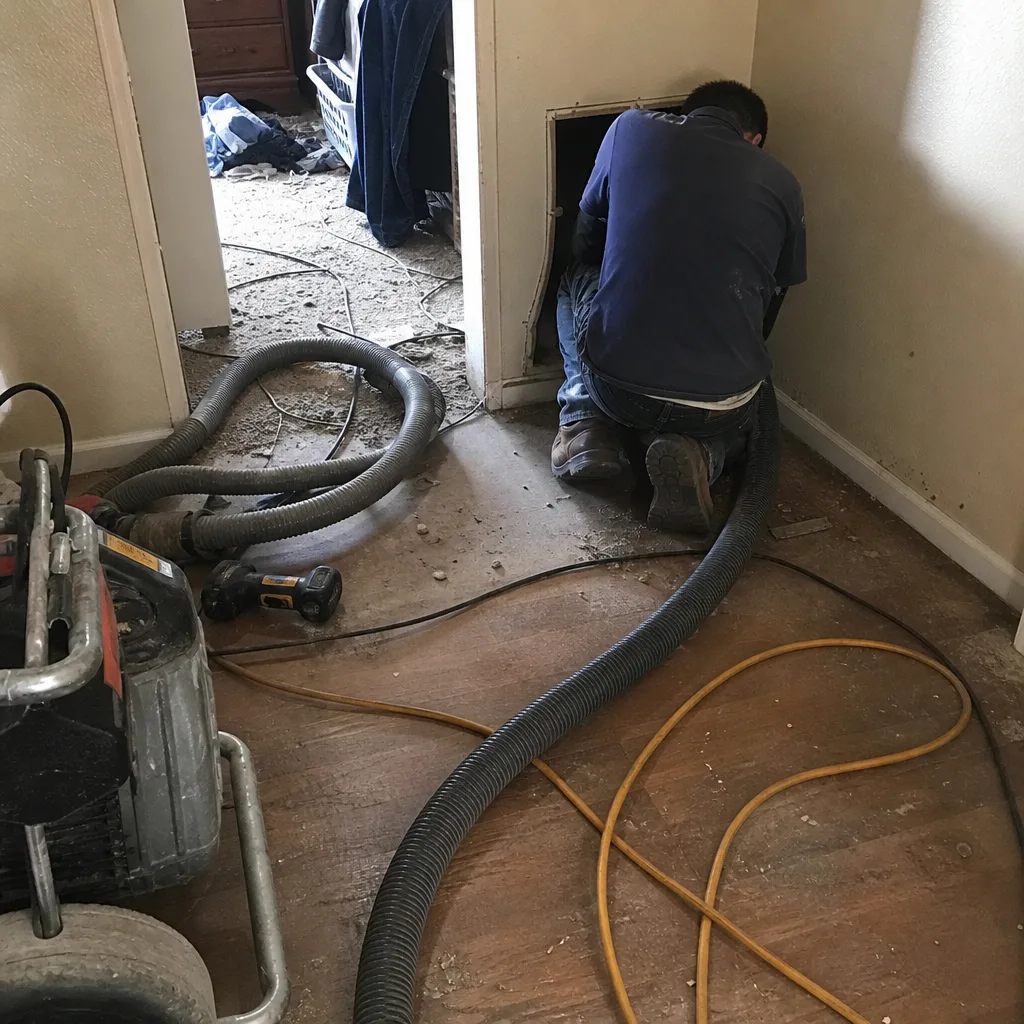
- When a professional cleaning is warranted: If you can smell smoke when the system runs two weeks after the event, particulate remains in the duct system. Our cleaning process includes Abatement Technologies air filtration equipment running during the service, which contains and captures what agitation removes so it doesn’t re-enter living spaces.
The honest answer about HEPA filtration: it’s excellent at preventing what’s airborne from recirculating, and inadequate at removing what’s already deposited on surfaces inside the duct run. If your home was smokey for more than a day, plan to have those ducts professionally cleaned before the next heating or cooling season.
Dryer Vent Cleaning Has Its Own Fontana Calendar
Dryer vents accumulate lint on a schedule tied to laundry volume, not HVAC load – but Fontana’s fire season weather makes lint accumulation more dangerous here than in more humid climates. Dry air plus wind plus a lint-clogged vent is a combination that doesn’t exist in coastal California months.
Here’s the seasonal logic:
- Before fire season peak (May – June): A dryer vent loaded with winter lint is a fuel source. Fontana’s dry summer air and warm vent runs create ideal conditions for ignition if the lint reaches the heating element or a failed connection in the run. Schedule cleaning by late spring if it’s been more than 18 months.
- After Santa Ana season begins (October – November): Wind-driven dust can accumulate in exterior vent terminations, and fall laundry loads increase. A second cleaning in the fall is warranted for homes with long vent runs (over 15 feet) or multiple bends.
- Year-round indicators: Dryer takes more than 50 minutes per load, laundry room gets hot and humid during cycles, or you can see lint built up at the exterior vent opening. Any one of these means cleaning is overdue regardless of season.
Our dryer vent cleaning is a standalone service, not an upgrade offered to duct-cleaning customers. The tools needed – long-run rotary brushes, inspection cameras, and airflow measurement – are different from what duct cleaning alone requires. Fontana homes with second-floor laundry rooms or long vent runs to exterior walls benefit most from an annual schedule.
Common Mistakes to Avoid
- Cleaning ducts in mid-summer because you noticed dust in July. What you noticed is active accumulation. Cleaning during peak cooling demand interrupts climate control and the system re-contaminates within weeks. Book for October – December instead.
- Assuming a high-MERV filter makes duct cleaning unnecessary. Filtration reduces what enters the system; it does nothing for what’s already deposited, or for leaks downstream of the filter. A better filter is a delay mechanism, not a replacement for periodic cleaning.
- Waiting for visible register dust before scheduling a cleaning. By the time dust is visible at supply registers, the duct walls and plenum have been loaded for months or years. Visible dust is a late-stage symptom.
- Treating Santa Ana events as a cleaning trigger every time. Not every wind event requires professional intervention. Use the 48-hour filter check and two-week visual inspection protocol described above, then act based on evidence rather than anxiety.
- Forgetting dryer vents when scheduling duct cleaning. Different tools, different deposit material, different fire risk. The two services don’t overlap equipment, and a duct-cleaning tech isn’t automatically cleaning your dryer vent unless that’s specified.
- Running your HVAC fan continuously during a smoke event with a low-MERV filter. Continuous fan operation with inadequate filtration accelerates smoke particulate deposition throughout the duct system. Upgrade the filter first, then run fan-on mode.
- Using a shop-vac and a ladder as a duct cleaning substitute. Household vacuums cannot access duct walls beyond the register boot, and no amount of homeowner effort substitutes for the mechanical agitation of a Rotobrush or Nikro system. What you can’t reach, you can’t clean.
When to Call a Professional
Some duct conditions are inspection items; others are service calls. Call a professional if you notice any of these: a persistent burning-dust smell that continues beyond the first heating cycle of the season, visible mold growth on register surfaces or inside accessible ductwork, rodents or nesting evidence in duct runs, significant airflow loss across multiple rooms that filter changes don’t resolve, or a dryer that runs hot while producing weak exhaust at the exterior vent. Also call after any major renovation that generated drywall dust, even if you sealed vents during the work – negative pressure draws fine particulate through gaps. Duct Cleaning Fontana offers free estimates in Fontana – call (855) 501-3681 to schedule an inspection. Our technicians use Rotobrush and Nikro agitation equipment with Abatement Technologies air filtration, and we service homes throughout Fontana and the surrounding Inland Empire communities.
Frequently Asked Questions
Air duct cleaning in Fontana typically runs $350 – $650 for a standard single-family home, with larger homes (over 3,000 square feet) or systems with multiple zones falling above that range. Prices vary based on the number of supply and return runs, the presence of multiple plenums, the age and condition of the ductwork, and whether dryer vent cleaning or duct repairs are included. Some companies quote a low per-vent price that multiplies quickly; our pricing is one flat rate per system agreed before work starts. Call (855) 501-3681 for a free estimate specific to your home.
Cheap duct cleaning quotes typically come from operations using a negative-air-only vacuum without mechanical agitation, which means the duct walls are never actually disturbed. Dust that has adhered to the interior surface remains after the vacuum truck leaves. Rotobrush and Nikro systems use physical agitation during extraction, which is the difference between air passing through the ducts versus air plus mechanical removal. If a quote comes in under $200, ask directly what agitation equipment they’re running and whether they’ll provide before-and-after photos of your actual ducts.
Reputable duct cleaning operations provide before-and-after photos taken inside your ducts at the register boots and at main trunk access points. Ask for this before booking. A proper cleaning also includes the return plenum, supply plenum, and blower compartment – surfaces that a lazy operator skips. Our process includes Guardsman-grade surface protection throughout the home and photographic documentation of each section completed before the job is signed off.
Every three to five years for most Fontana homes. The specific interval depends on pets, smoking, proximity to construction, occupant sensitivities, and filter discipline. Homes within a mile of the active development corridors in north Fontana may justify a three-year interval because of construction dust; a pet-free, filter-disciplined home may go five years. Dryer vent cleaning should happen more frequently – every 12 – 18 months for most households, or annually if you have a long vent run.
Not automatically. Use the two-step check: inspect your filter within 48 hours, and inspect register interiors within two weeks. If the filter looks heavily loaded and registers show fresh dust streaking, a professional inspection is justified. Frequent mild Santa Ana events that don’t load the filter or show register dust visually do not warrant the expense of a full cleaning.
If smoke odor persists when the system runs two weeks after the event, the particulate is embedded in duct lining and coil surfaces. Filter changes and surface wiping address a fraction of the surface area. The mechanical agitation of professional equipment is what removes smoke particulate from the interior walls of the duct run, and pairing that agitation with containment filtration (like the Abatement Technologies equipment we run) prevents re-release during extraction. Call (855) 501-3681 for an assessment if your Fontana home was exposed to smoke for more than a day.
High-quality whole-home filtration from Aprilaire or Honeywell significantly reduces the rate at which new particulate enters the system. Those systems are excellent at what they do, and we regularly work with homes that have them installed. What they cannot do is remove particulate already deposited on duct walls and plenum surfaces before installation, or buildup from the years before the filtration system was added. If you’ve invested in good filtration, you’ve slowed the contamination clock – but you haven’t reset it.
The Bottom Line
Fontana’s duct care calendar has two anchors: clean between October and December to remove summer cooling-season accumulation before closed-window heating months, and check both filters and registers after any significant Santa Ana event. Everything else – summer prep, dryer vent timing, smoke event response – hangs off those two anchors. Your duct system is the largest air-contact surface in your home, and in a climate like Fontana’s, it accumulates particulate faster than most national guidance assumes. Run high-MERV filtration, inspect what’s accessible, and schedule professional cleaning on evidence rather than habit. Duct Cleaning Fontana serves Fontana and surrounding Inland Empire communities with professional-grade Rotobrush and Nikro equipment and Abatement Technologies containment filtration. Call (855) 501-3681 for a free estimate, or to schedule an inspection during the fall cleaning window.
Written by the team at Duct Cleaning Fontana, serving Fontana since 2017. Explore more guides & resources.
See the difference
 Before
 After
 Before
 After
 Before
 After