
Last updated November 2, 2026
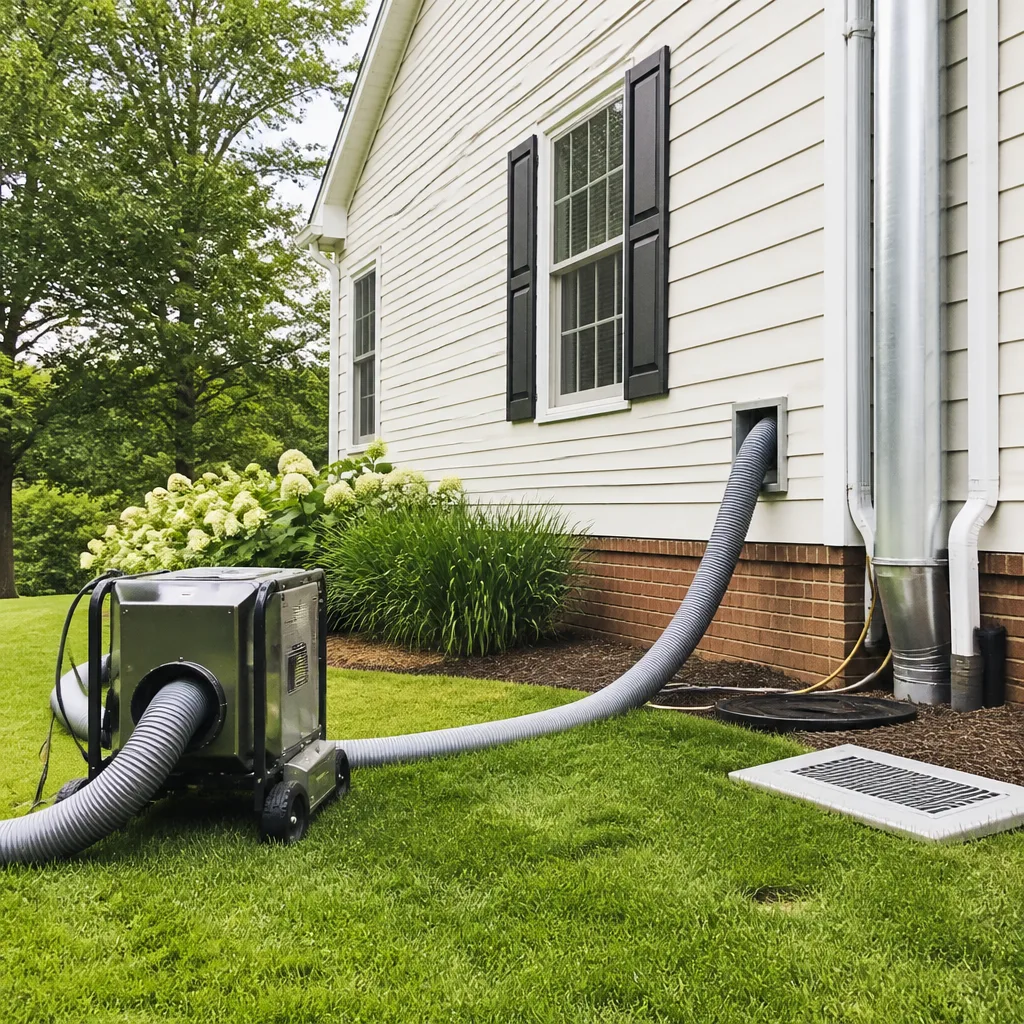 Whole-home duct cleaning
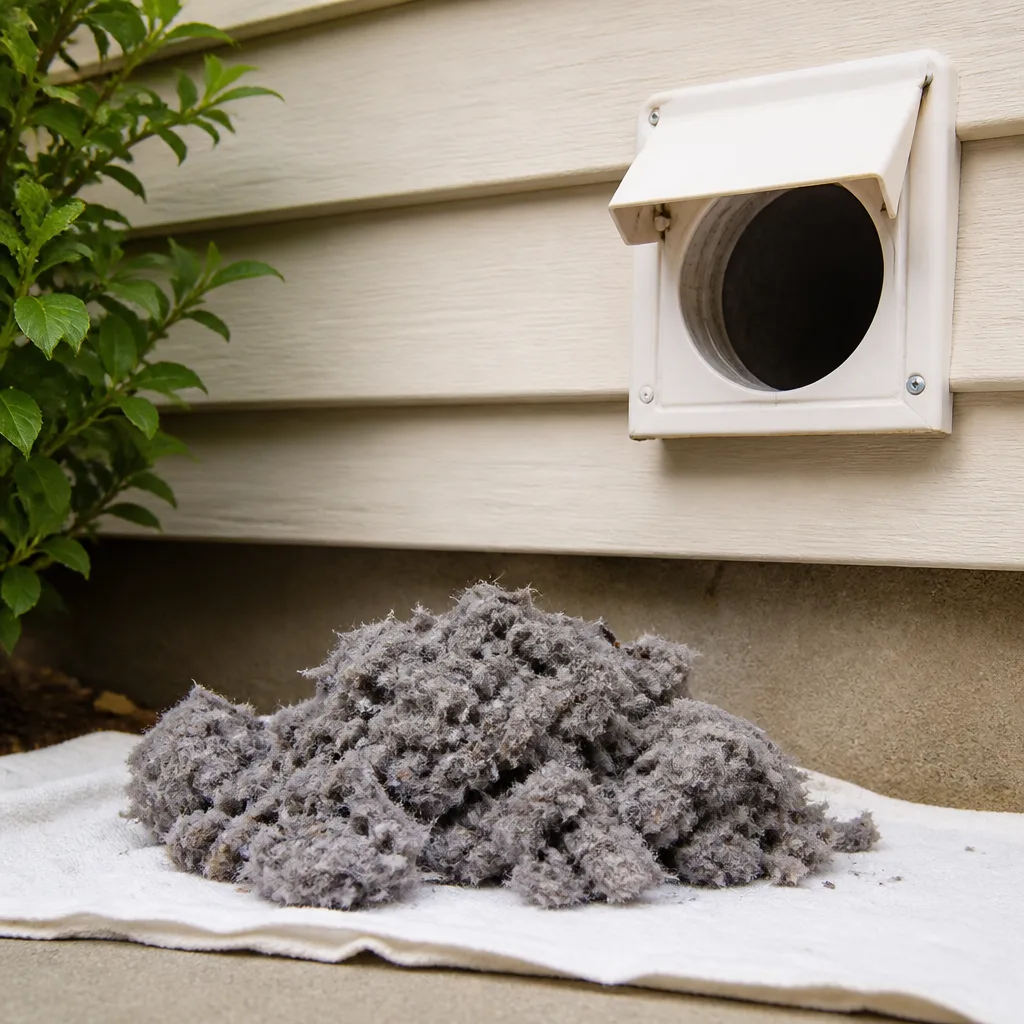 Dryer vent cleaning
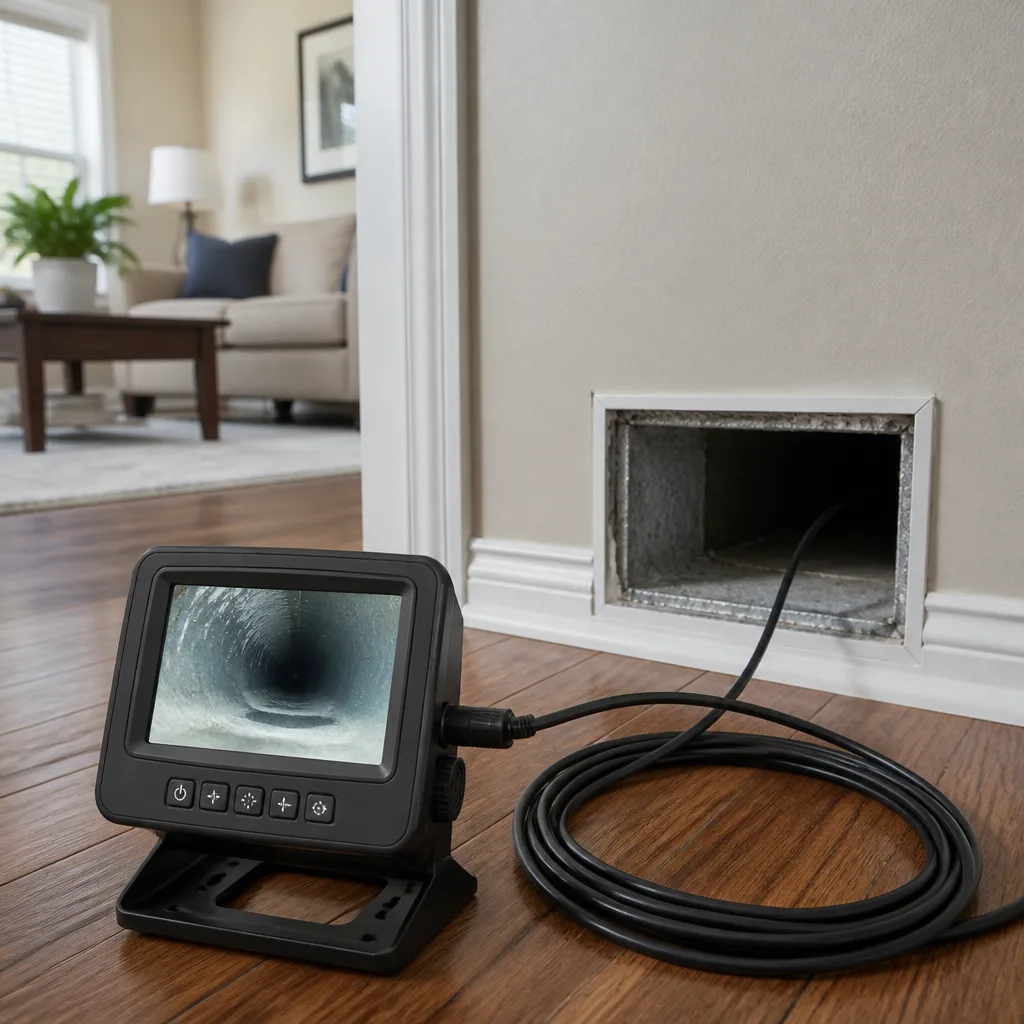 Camera inspection
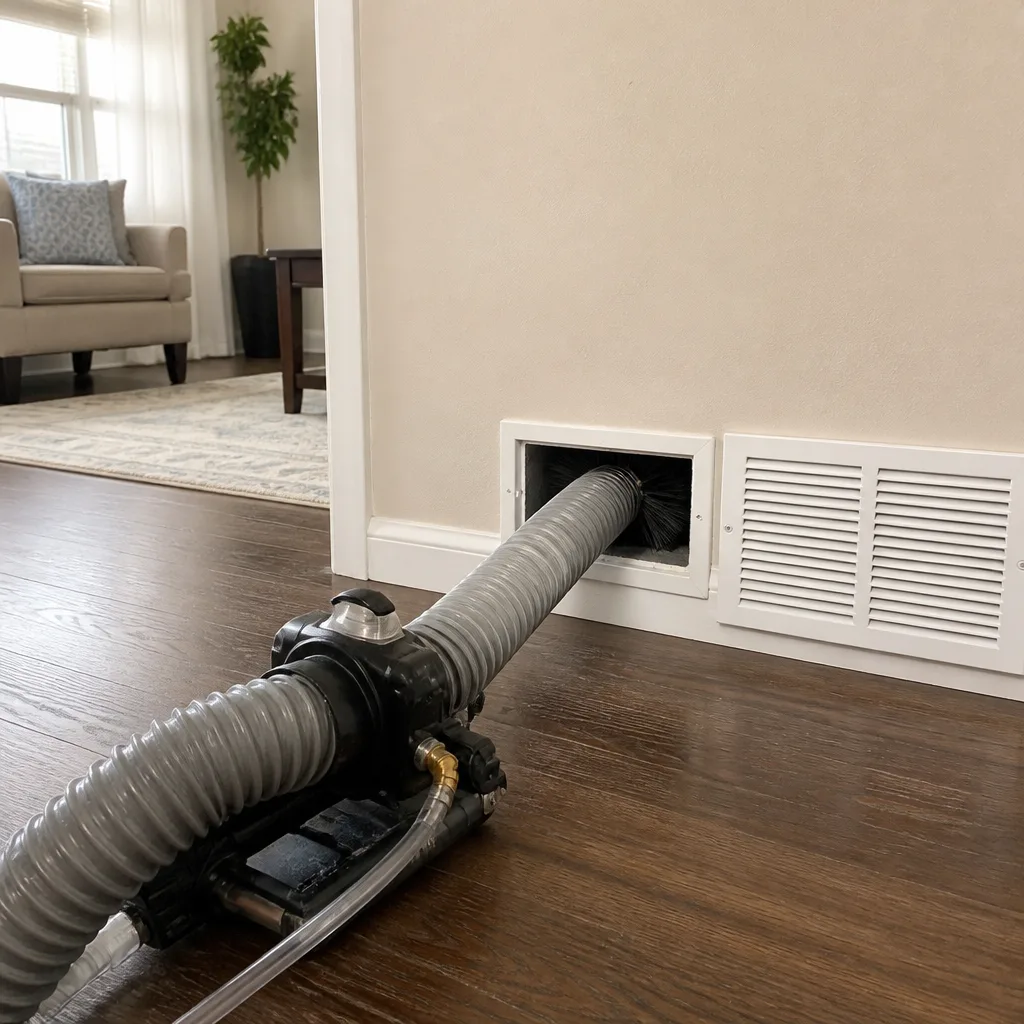 Sanitizing & deodorizing
Whole-system duct and dryer vent check with before-and-after photos - you see exactly what came out of your vents
That "$99 whole-house special" is a bait ad - the real number appears once they are in your hallway, or the "clean" is a shop-vac at the register. We photograph the inside of your ducts before and after instead.
How to Hire an Air Duct Cleaning Contractor in Fontana: A Step-by-Step Guide
The air duct cleaning industry has a documented credibility problem. The National Air Duct Cleaners Association (NADCA) has formally warned consumers about “blow-and-go” operations that advertise a $99 whole-house special, spend 45 minutes waving a shop-vac hose at a few registers, then pivot to selling $800 “mold treatments” and “sanitizing foggers” with no testing behind them. California’s long cooling season means Fontana HVAC systems run hard from May through October, pulling dust, pollen, and construction debris through the ductwork year after year. That volume of use makes Fontana a target market for exactly these operators. This guide – along with our Seasonal Air Duct Cleaning Care for Fontana: Year-Round Homeowner’s Guide – gives you a vetting system built around red flags, not just promises, so you can hire a contractor who actually cleans your ducts.
Styles & brands we work with
- Whole-home duct cleaning
- Dryer vent cleaning
- Camera inspection
- Sanitizing & deodorizing
Quick Answer
To hire an air duct cleaning contractor in Fontana, verify their license through CSLB, confirm they run negative-pressure equipment with HEPA filtration (not a shop-vac attached to a register), ask what they do when they find damaged duct sections mid-job, and get a written quote that lists scope, access points, and the number of full system passes. Skip any contractor whose quote arrives before they’ve looked at your system.
Table of Contents
- Why Duct Cleaning in Fontana Needs a Vetting Process
- Step 1: Verify the California Contractor License
- Step 2: Ask What Equipment They Run
- Step 3: Understand Containment Before They Arrive
- Step 4: Decode the Quote Line by Line
- Step 5: Red Flags to Watch on the Job
- Step 6: What Happens When They Find Damage
- Common Mistakes to Avoid
- When to Call a Professional
- Frequently Asked Questions
- The Bottom Line
Why Duct Cleaning in Fontana Needs a Vetting Process
Fontana sits in the Inland Empire, where summer temperatures routinely push past 100 degrees and homeowners run their air conditioning for six months straight. Santa Ana winds add another layer: fine dust and particulate matter get drawn into return registers and coat the interior of duct runs. Homes near the 210 freeway or active construction in North Fontana accumulate debris faster than homes in less exposed areas. None of this is exotic. It’s standard Inland Empire air quality, and it means ducts in Fontana genuinely do accumulate material worth removing.
The problem isn’t whether duct cleaning is legitimate. The problem is that the low barrier to entry attracts operators who own a portable vacuum and a business card. A generalist handyman can advertise “duct cleaning” without owning a single piece of purpose-built equipment. A generalist HVAC company can add it as a side line to pad a service call. Neither is structurally motivated to do the job thoroughly, because duct work isn’t their core business.
This is why the vetting process matters more than the estimate. A contractor who only does duct work has no other service to fall back on when a cleaning job is unprofitable. They can’t “discover” a $600 blower motor replacement because they don’t sell blower motors. Their entire business depends on doing the duct job well enough that you call them again in three to five years and refer them to your neighbors. That structural alignment is worth more than any coupon.
Step 1: Verify the California Contractor License
California requires a contractor’s license for any job over $500 in labor and materials, and duct cleaning falls under this threshold regularly. The California Contractors State License Board (CSLB) maintains a free online license lookup. You enter the contractor’s name or license number and get back their status, classification, bonding information, and any disciplinary actions.
Here’s the step-by-step process:
- Ask the contractor for their CSLB license number before booking. Legitimate operators volunteer this without hesitation.
- Go to the CSLB website and run the number through the license check tool.
- Confirm the license is active, not suspended or expired. This is the most common finding on scam operations.
- Check for any complaints or citations on record. A single old complaint isn’t disqualifying; a pattern of unresolved ones is.
- Verify the classification makes sense. Duct cleaning typically falls under a C-20 (warm-air heating, ventilating, and air-conditioning) or C-61 / D-18 (limited specialty) classification, though some operators work under a general building classification. What matters is that a classification exists and covers HVAC work.
- Confirm the name on the license matches the name on the quote. Mismatches are a classic sign of a borrowed or rented license.
In Fontana, city code may also require a local business license. It’s a reasonable question to ask, though the CSLB verification is your primary protection. Contractors operating without proper state licensing put you at risk on liability, worker’s compensation, and any damage claims that arise during the job.
You can also check trade association membership. NADCA membership is voluntary, which means a contractor who maintains it is paying money to be held to a standard. Not every good contractor is a NADCA member, and membership alone doesn’t guarantee quality, but it’s a signal that the operator takes the trade seriously.
Step 2: Ask What Equipment They Run
The single most revealing question you can ask a duct cleaning contractor is: “What equipment do you use?” The answer separates real operators from blow-and-go scams faster than any other line of inquiry.
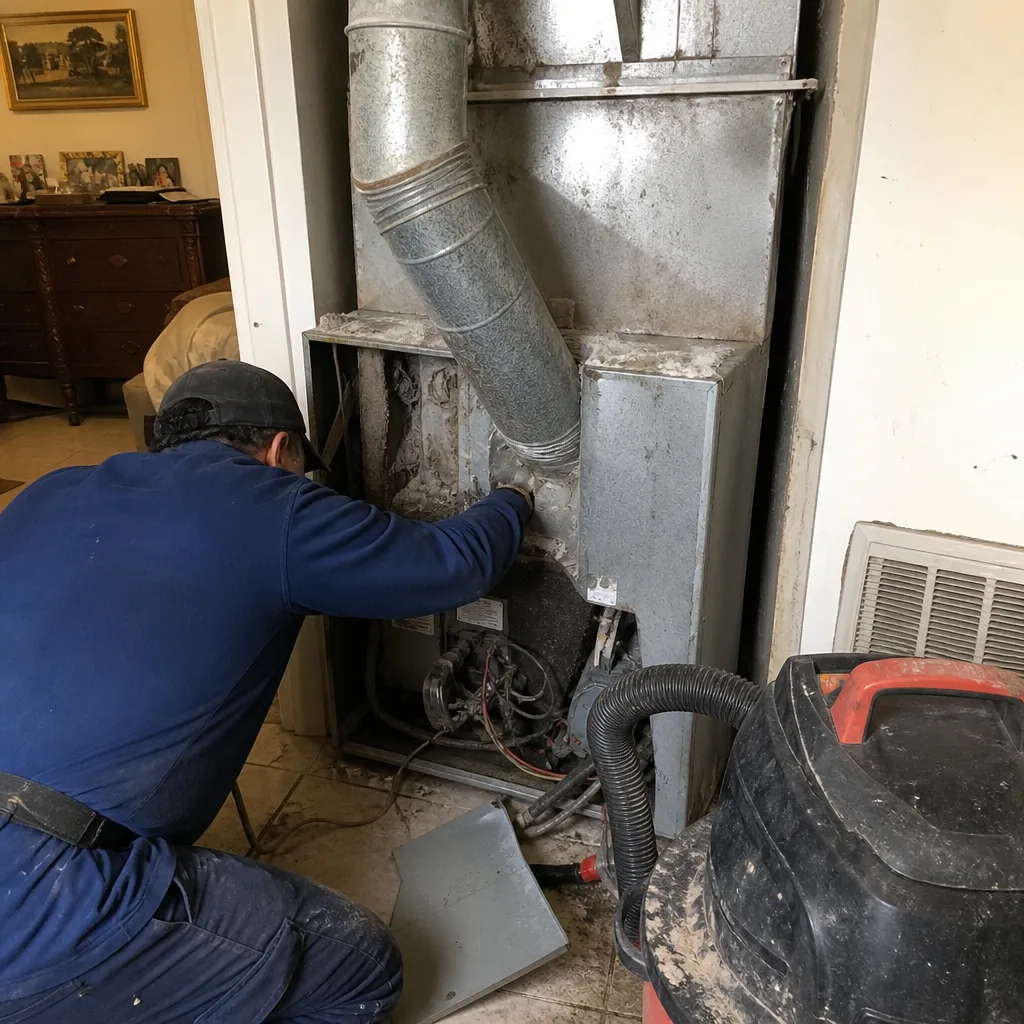
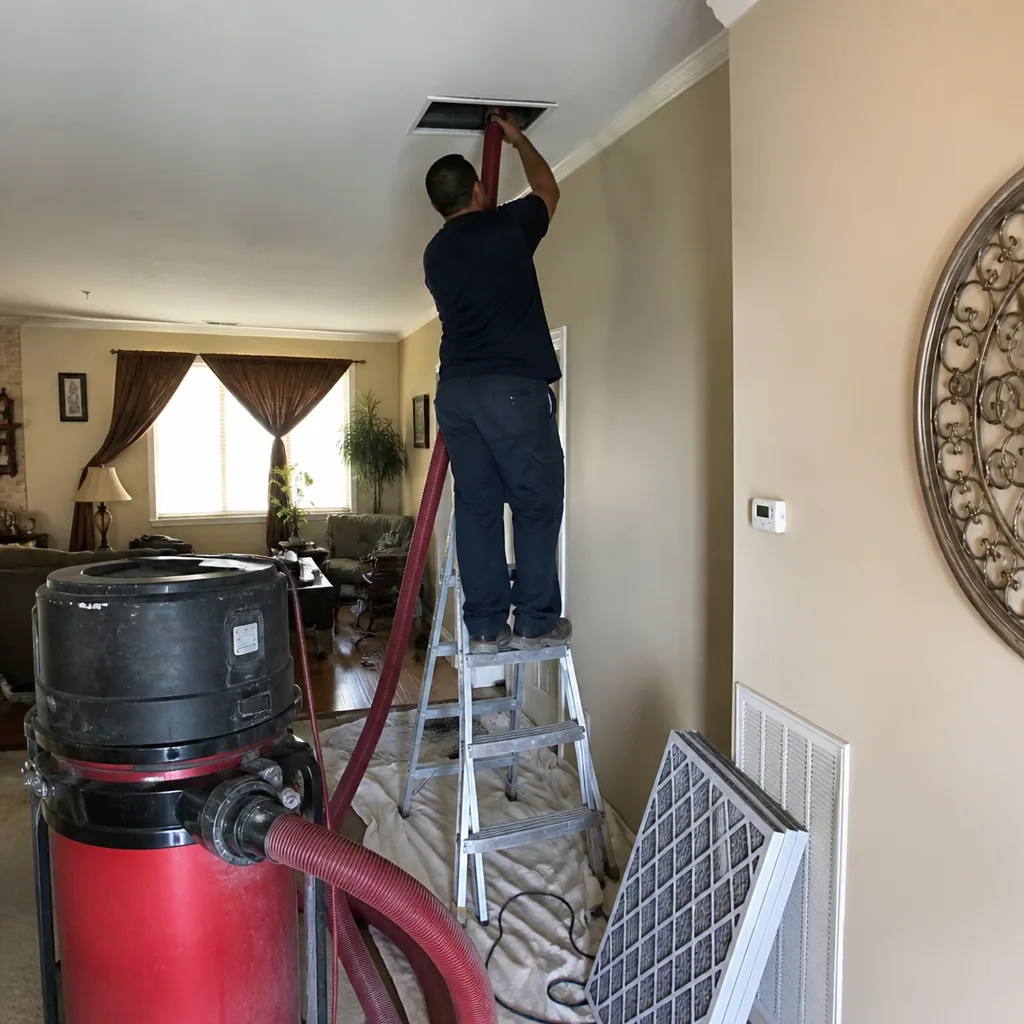
A legitimate duct cleaning rig uses a powerful negative-pressure vacuum system connected to the ductwork to pull debris out while agitation tools loosen it from the duct walls. The vacuum exhausts outside the home or through a HEPA-filtered system, never recirculating dust back into your living space. The equipment should be truck-mounted or a large portable unit, not a canister vacuum carried in from the garage.
Here’s what to listen for:
- Negative-pressure systems: The workhorse of professional duct cleaning. Look for brands like Rotobrush or Nikro, which are purpose-built for duct runs and far more effective than general vacuums.
- HEPA filtration: The vacuum system should filter exhaust to HEPA standard. This matters because aggressive duct agitation releases fine particulate. Without HEPA, that particulate settles back into your home.
- Agitation tools: Whips, brushes, or compressed-air tools that dislodge caked-on debris. A vacuum alone won’t clean effectively; something has to knock the dust off the duct walls.
- Access capability: Proper equipment includes tools to cut access ports when needed, run camera scopes for before-and-after documentation, and seal the ports when the job is done.
A contractor who answers “we use a really powerful vacuum” without naming a system is telling you they own a shop-vac. A contractor who names Rotobrush or Nikro and can explain how their system works is showing you they invested real money in the trade. Those systems cost thousands of dollars, which is why scam operators don’t own them.
For Fontana homeowners, equipment matters extra because of what’s in the ducts. Inland Empire dust is fine and heavy with particulate from freeway traffic and desert winds. It cements to duct walls over time. Light-duty vacuum equipment physically can’t remove it.
Step 3: Understand Containment Before They Arrive
Containment is the difference between a cleaning that removes dust from your ducts and a cleaning that redistributes dust throughout your house. The principle is simple: when you agitate the inside of a duct run, debris loosens and becomes airborne. If the system isn’t under negative pressure, that airborne debris follows the path of least resistance, which is usually out through your registers and into your rooms.
A professional operation runs the vacuum system during the entire agitation process, maintaining negative pressure inside the ductwork so that all loosened debris is pulled toward the vacuum, not pushed into your living space. This is standard practice in commercial and industrial duct cleaning. It’s also where many residential shortcuts happen.
There’s a second layer to containment. Some contractors deploy air filtration equipment inside the home during the job to capture any particulate that escapes. Abatement Technologies makes filtration and containment systems used in professional remediation work, and some contractors bring these units into residential jobs for exactly this purpose. It’s a signal that the operator understands contamination control, not just dirt removal.
Floor and furniture protection is another marker of a professional operation. Guardsman surface protection products, or similar materials, should cover the traffic path from the door to the furnace closet and any work areas.
Questions to ask before booking:
- “Do you run negative pressure during the entire agitation process?” If they hesitate, or if they describe a process that sounds like vacuuming from the register end, move on.
- “What air filtration or containment equipment do you use inside the home during service?”
- “How do you protect floors, furniture, and registers while working?”
A contractor who can’t answer these questions specifically is telling you they haven’t thought about containment. That’s a structural red flag, not a minor oversight. In Fontana’s dry climate, dust is fine and easily suspended. Poor containment during cleaning can leave your home dustier than it was before the job started.
Step 4: Decode the Quote Line by Line
Duct cleaning quotes vary wildly in format, which makes comparison difficult. Some contractors quote a flat price per system. Others quote per vent, per linear foot, or per access point. The format matters less than the transparency, but there are specific things a legitimate quote should always include.
What a complete quote includes:
- Scope of system covered: Supply ducts, return ducts, main trunk lines, and the air handler / plenum. If a quote prices only “up to X vents” and your system has more, the extras will cost you.
- Number of access points: Professional cleaning requires cutting access holes in the ductwork. A quote should state how many access points are included and confirm they’ll be sealed afterward.
- Cleaning method description: Negative-pressure extraction with mechanical agitation. Not “air sweep,” not “power vacuum,” not vague language.
- Pass count: How many passes through the system? A thorough cleaning typically runs the agitation and vacuum through each duct section multiple times, not once.
- Before-and-after documentation: Camera scope photos or video of the duct interior before and after cleaning.
- Total price including all access, sealing, and documentation.
What’s almost always unnecessary:
- “Anti-microbial fogging” as an add-on: If no testing has identified microbial contamination, fogging is a chemical treatment of an unconfirmed problem.
- “Duct sealing” without leakage testing: If the contractor didn’t run a duct leakage test, they can’t know your ducts need sealing.
- “Whole-home sanitizing” with no post-treatment verification: Ask how you’ll know it worked. Unverifiable treatments are upsells dressed up as services.
- Filter replacement at above-retail markup: You can buy a filter yourself. A contractor should tell you when to change it, not sell you a $80 filter for a $30 product.
Typical whole-system duct cleaning in the Fontana market runs from $350 to $650 for an average single-family home, depending on system size, access difficulty, and condition; see our Air Duct Cleaning Cost Breakdown: The Fontana Homeowner’s Reference for 2026 for a detailed pricing analysis. Add-on services above that range should come with specific justification. If someone quotes you $99 for the whole house, you already know what you’re getting.
The most important line on any quote: the one that says the price is the price. One flat rate per system, agreed before work starts, with no per-vent charges discovered mid-job.
Step 5: Red Flags to Watch on the Job
You’ve vetted the license, asked about equipment, reviewed the quote. The job day arrives. There are still things to watch for that reveal whether you got the operation you were promised or a well-rehearsed imitation.
On-site red flags:
- The vacuum is inside the house and it’s the size of a household canister. Professional negative-pressure systems are large. Truck-mounted units or substantial portable machines. If the “equipment” came out of a trunk, you’ve been had.
- No HEPA filtration on the vacuum exhaust. You asked about this in advance. Confirm it’s on the unit. If the exhaust is blowing unfiltered air into your garage or living room, the cleaning is redistributing the dust it removes.
- Technician works without cutting access ports. Unless your system has designer access already installed, professional cleaning requires access holes to reach the interior of the duct runs. Register-end vacuuming only cleans a few feet of duct.
- No floor or furniture protection. Professional crews lay down covers in the work path. No protection is a preview of how they’ll treat your home.
- Agitation is missing. A vacuum on without any mechanical agitation inside the ducts means they’re pulling loose dust, not removing adhered debris. The whole point of agitation is to break the dust bond from the duct surface.
- The “inspection” suddenly finds mold with an immediate treatment price. Visual inspection alone cannot confirm mold. Real mold identification requires sampling and lab analysis. A contractor who “sees” mold and has a fogging treatment ready to sell is running the classic scam play.
What a technician not using a HEPA-filtered vacuum means for your indoor air quality is straightforward: the dust that was layered inside your ducts becomes airborne dust inside your home. Fine particulate suspended in the air column gets inhaled. If the reason you hired the cleaning was dust or allergy symptoms, a non-HEPA job can make both worse.
In Fontana’s dry air, suspended fine dust lingers longer than it would in humid climates. The Inland Empire’s naturally dusty environment means any particulate released indoors is additive to what’s already coming through your returns. The entire value of professional cleaning is that it removes material from the home permanently. Non-HEPA, non-negative-pressure methods fail that test.
Step 6: What Happens When They Find Damage
This is the question almost nobody asks before booking, and it’s the one that separates honest contractors from the rest. Duct systems deteriorate. Sections disconnect, joints come loose, flexible duct sags, crushed returns restrict airflow. During cleaning, the contractor is looking at the inside of your ductwork more closely than anyone has since the system was installed. They will find things.
What they do when they find damage tells you who you hired.
- The honest operator documents it. Camera scope photos show the disconnected joint or collapsed section. They explain what it means for airflow and give you options.
- The honest operator quotes the repair separately. A disconnected duct section is a different job than a cleaning. It’s priced as such, with the scope explained. You can say yes or no.
- The upseller turns it into an emergency. “This is a serious health risk, you need this fixed today, we can do it right now.” Pressure and urgency around a duct that has been disconnected for years is a sales technique.
Some contractors are licensed and equipped to perform air duct repair in Fontana as a standalone service. Some only clean and will refer you elsewhere for repairs. The key is that the offer should be separated from the cleaning work, clearly scoped, and priced as its own line item. You should never feel like the repair quote is a hostage negotiation.
Here’s the structural advantage of hiring a duct-focused contractor for this scenario. A specialist who performs air duct cleaning in Fontana regularly sees the same failure patterns again and again, knows exactly what a real problem looks like, and quotes repairs accurately because they do that work too. A generalist is more likely to overstate severity because they lack the frame of reference.
Common Mistakes to Avoid
- Hiring on price alone. The $99 duct cleaning ad is the single most reliable indicator of a substandard job. Legitimate negative-pressure cleaning with HEPA filtration costs real money to perform. If the price is below the cost of doing it properly, the contractor is either cutting every corner or planning to upsell you into profitability.
- Skipping the CSLB license check. Two minutes on the CSLB website can reveal a revoked license, an expired bond, or a pattern of complaints. Skipping it hands away your best consumer protection.
- Not asking about equipment before booking. By the time the van pulls up, it’s too late. Ask about the vacuum system, HEPA filtration, and agitation tools during the phone call, when you still have leverage to choose another contractor.
- Falling for the mold treatment upsell. Mold requires testing to confirm. A visual inspection during duct cleaning is not mold testing. Any contractor who claims otherwise is selling fear, not service.
- Accepting a quote without access point details. If the quote doesn’t say how many access holes will be cut and how they’ll be sealed afterward, you’ll likely be charged extra for “unexpected access requirements” once the job starts.
- Hiring a generalist for a specialty job. A handyman or general HVAC company that does duct cleaning “also” is not structurally motivated to do it well. Specialists whose entire business is duct work live or die on the quality of that one service.
- Skipping the dryer vent. Most duct cleaning quotes don’t include the dryer vent, and most homeowners don’t ask. The dryer vent is a separate run with a separate purpose: expelling lint and hot air. It’s also one of the leading household fire risks when neglected. Dryer vent cleaning in Fontana deserves to be part of the job, or at minimum a separate scheduled service.
When to Call a Professional
Call a duct cleaning professional when you see visible dust accumulation on register covers or walls near vents, when rooms get dusty within days of cleaning despite regular filter changes, when allergy symptoms worsen inside the home, or after any major renovation that produced drywall dust, sawdust, or demolition debris. In Fontana’s high-use cooling season, any of these signals is worth acting on before the system runs another six months of accumulated particulate through your home. If your dryer is running hot, taking longer than one cycle to dry clothes, or you can’t remember the last time the vent was cleaned, schedule that too. Duct Cleaning Fontana offers free estimates across Fontana, with the equipment and process to document the work before, during, and after. Call (855) 501-3681.
Frequently Asked Questions
Whole-system duct cleaning in Fontana typically runs from $350 to $650 for an average single-family home, depending on system size, number of accesses, and condition. Prices below $200 for a full system should be treated as a red flag. For an exact quote based on your ductwork, call (855) 501-3681 for a free estimate.
Visit the CSLB website and enter the contractor’s license number to check status, classification, bonding, and complaint history. The license should be active, with no unresolved complaints, and the name on the license should match the name on your quote. Duct cleaning typically falls under C-20 or a related HVAC classification.
A professional duct cleaner should run a negative-pressure vacuum system with HEPA filtration, connected to the ductwork while mechanical agitation tools dislodge debris from the duct walls. Brands like Rotobrush and Nikro are common in professional rigs. A shop-vac attached to a register is not duct cleaning.
Lowball quotes come from operators who skip the core components of the job: no negative-pressure containment, no HEPA filtration, no access holes, no agitation. They run a vacuum at the registers for under an hour, then upsell add-on “treatments” to recover their costs. Proper cleaning takes real equipment and real hours, which costs real money.
Ask for camera scope documentation of the duct interior before and after cleaning. A professional contractor can show you dated photos or video of what the ducts looked like on arrival and what they looked like when the job was complete. If they can’t provide that documentation, assume the work didn’t happen.
Every three to five years is a reasonable interval for most Fontana homes, though homes near freeways, construction zones, or with occupants who have serious allergies may benefit from more frequent cleaning. The best indicator is what’s actually in your ducts, which a camera inspection can show. Call (855) 501-3681 to schedule an inspection.
Most duct cleaning quotes do not include the dryer vent, because it’s a separate run with separate access requirements. Ask whether it’s included or available as an added service. Dryer vent cleaning in Fontana is a distinct fire-safety service and should be part of your home’s air system maintenance.
The Bottom Line
Hiring an Air Duct Cleaning services contractor in Fontana doesn’t need to be a gamble. Verify the CSLB license. Ask about equipment and listen for negative pressure, HEPA filtration, and mechanical agitation. Demand a quote that lists scope, access points, and total price before work starts. Watch the job while it happens and ask for camera documentation when it’s done. The contractors who invite this level of scrutiny are the ones who do the work. The ones who resist it are showing you what your ducts will look like after they leave. You already know what clean ducts look like, because you’re paying for them.
Written by the team at Duct Cleaning Fontana, serving Fontana since 2017. Explore more guides & resources on our blog.
See the difference
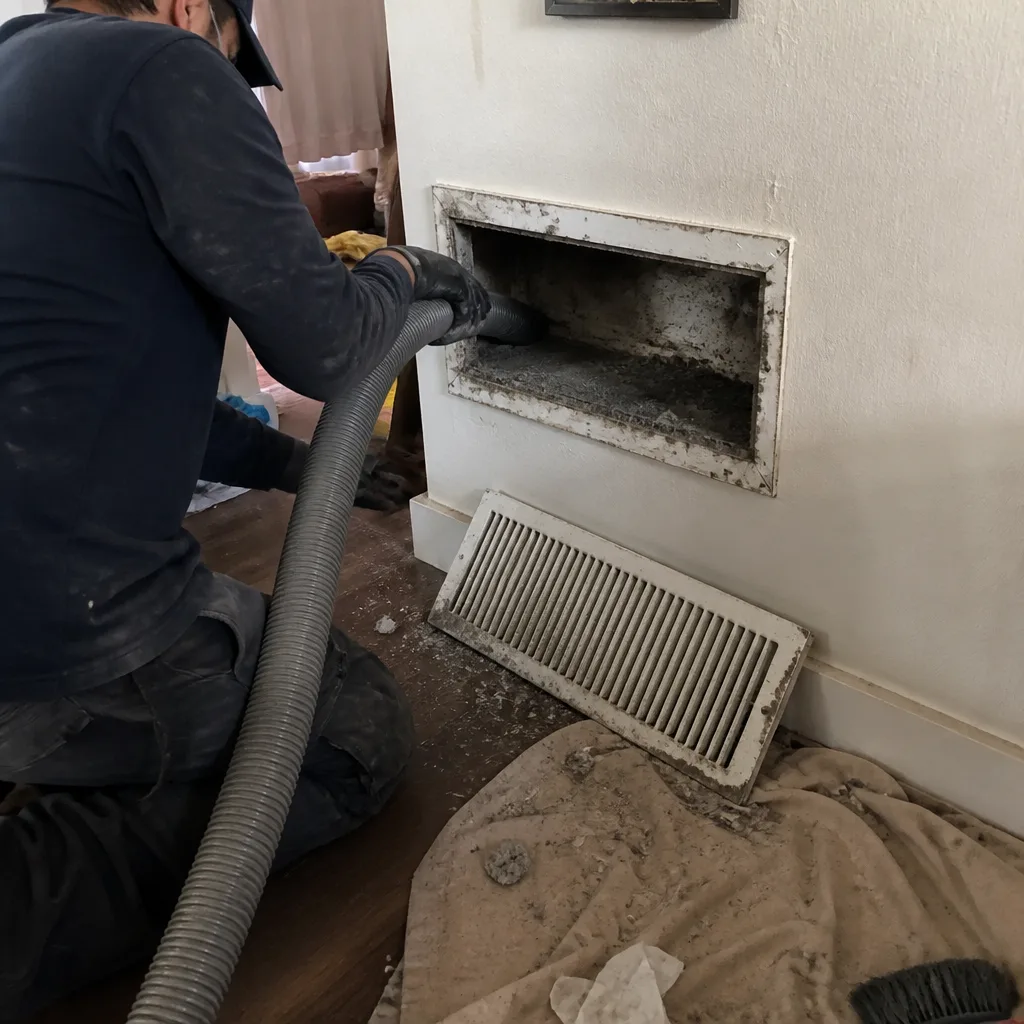 Before
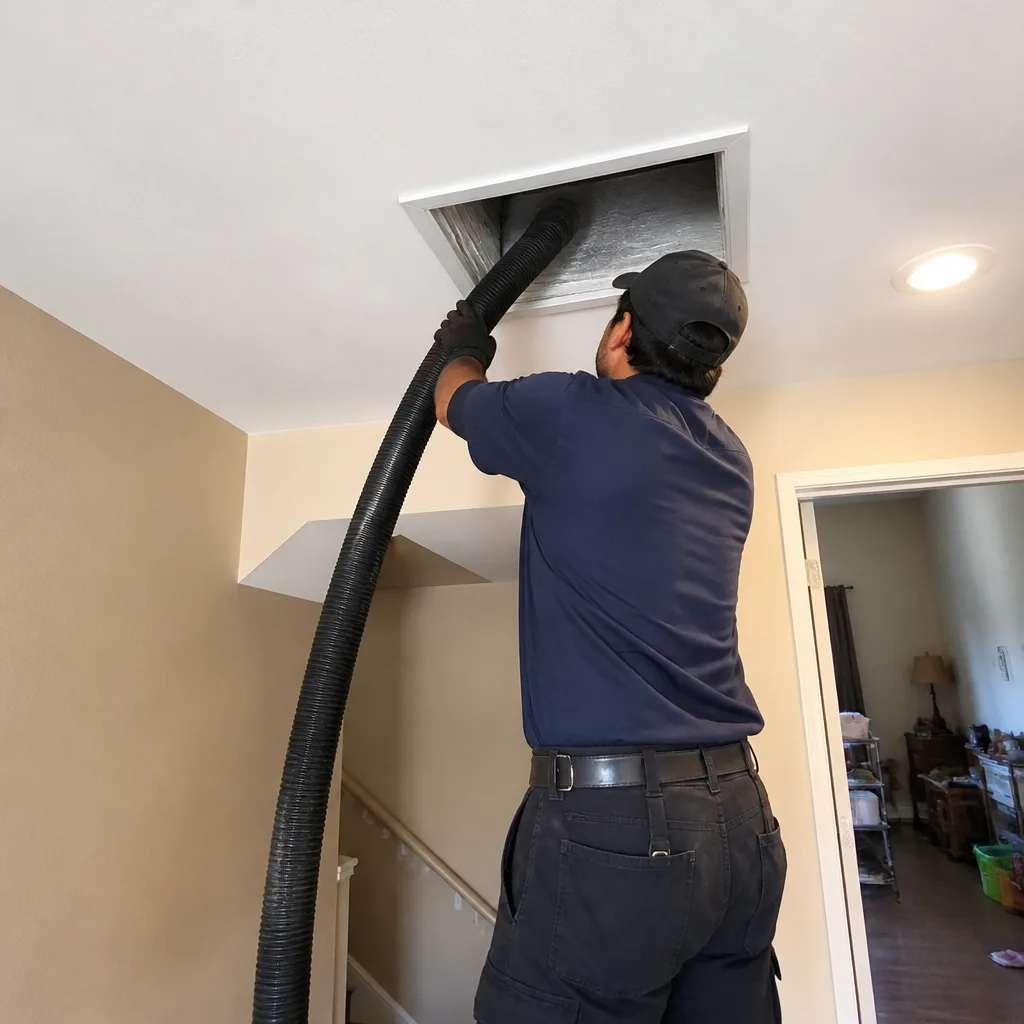 After
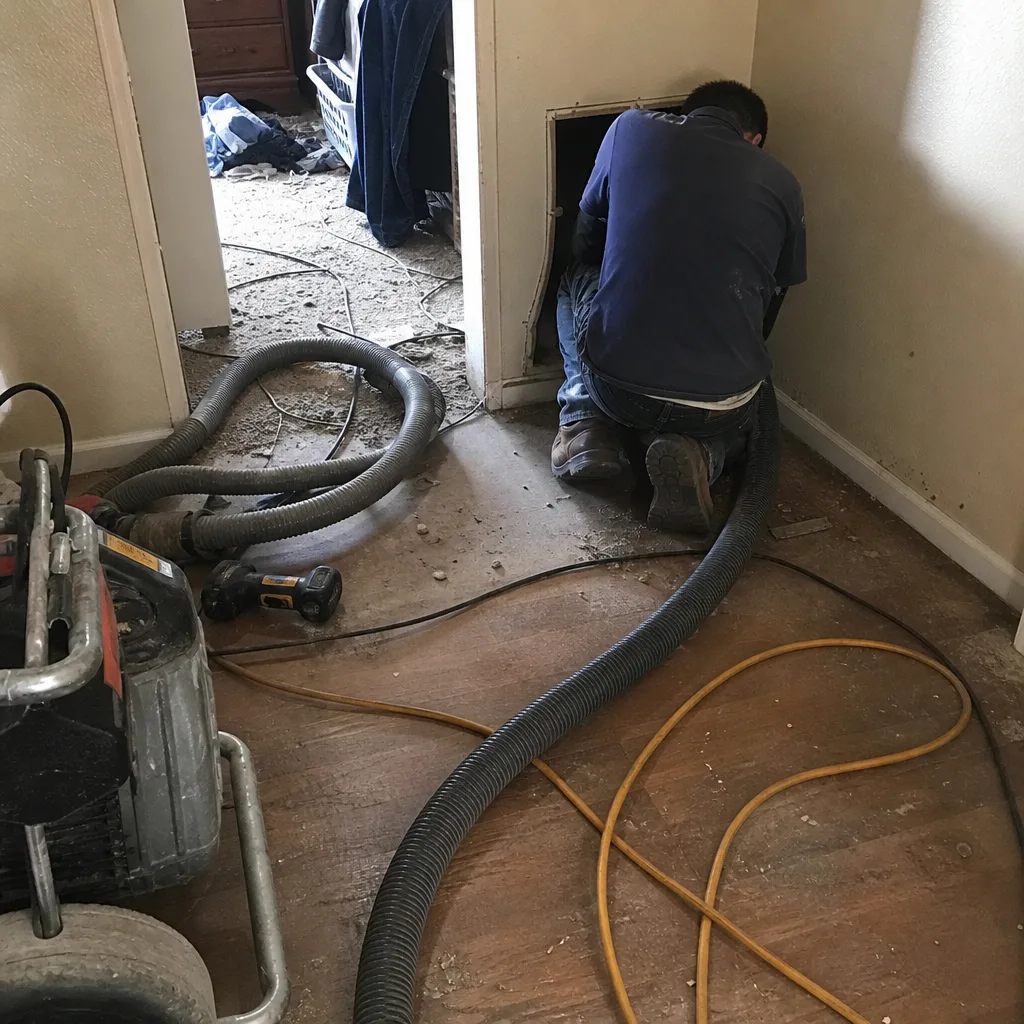 Before
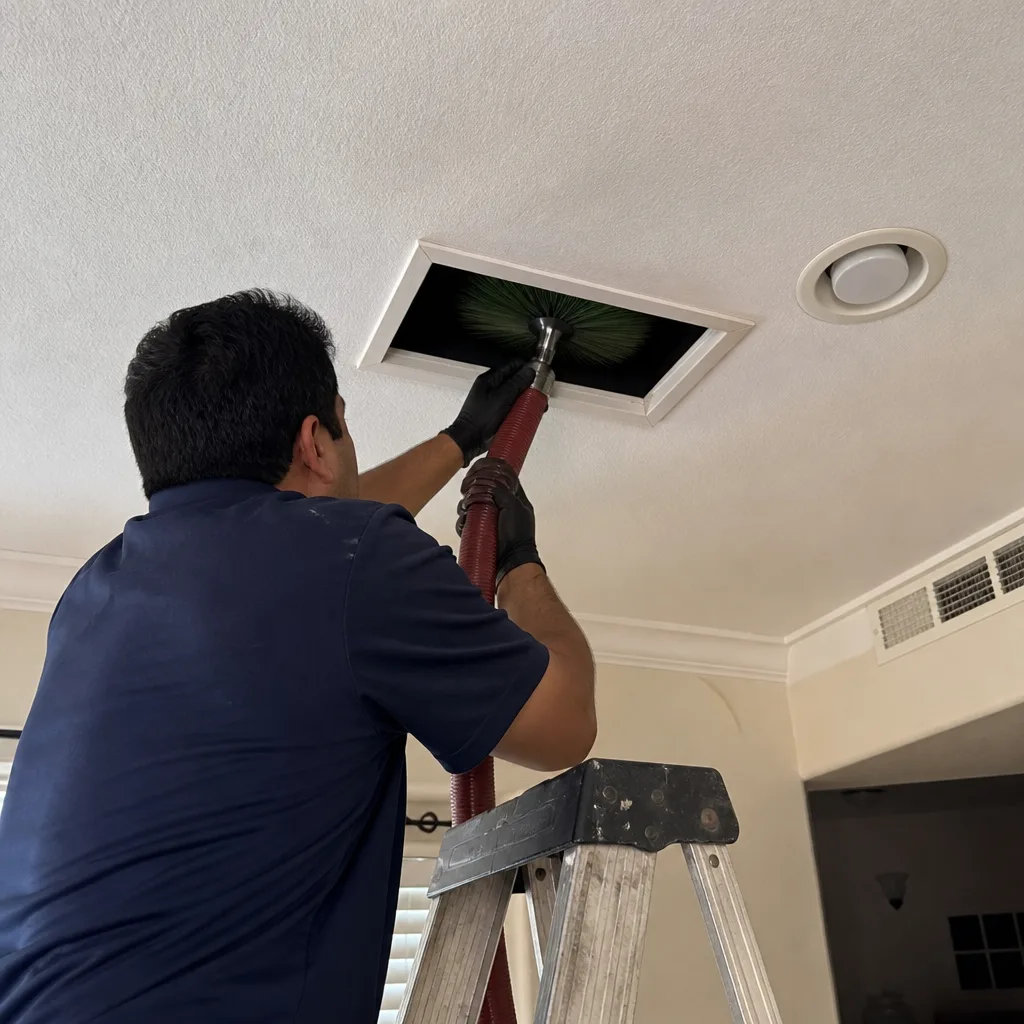 After
 Before
 After