
Last updated November 2, 2026
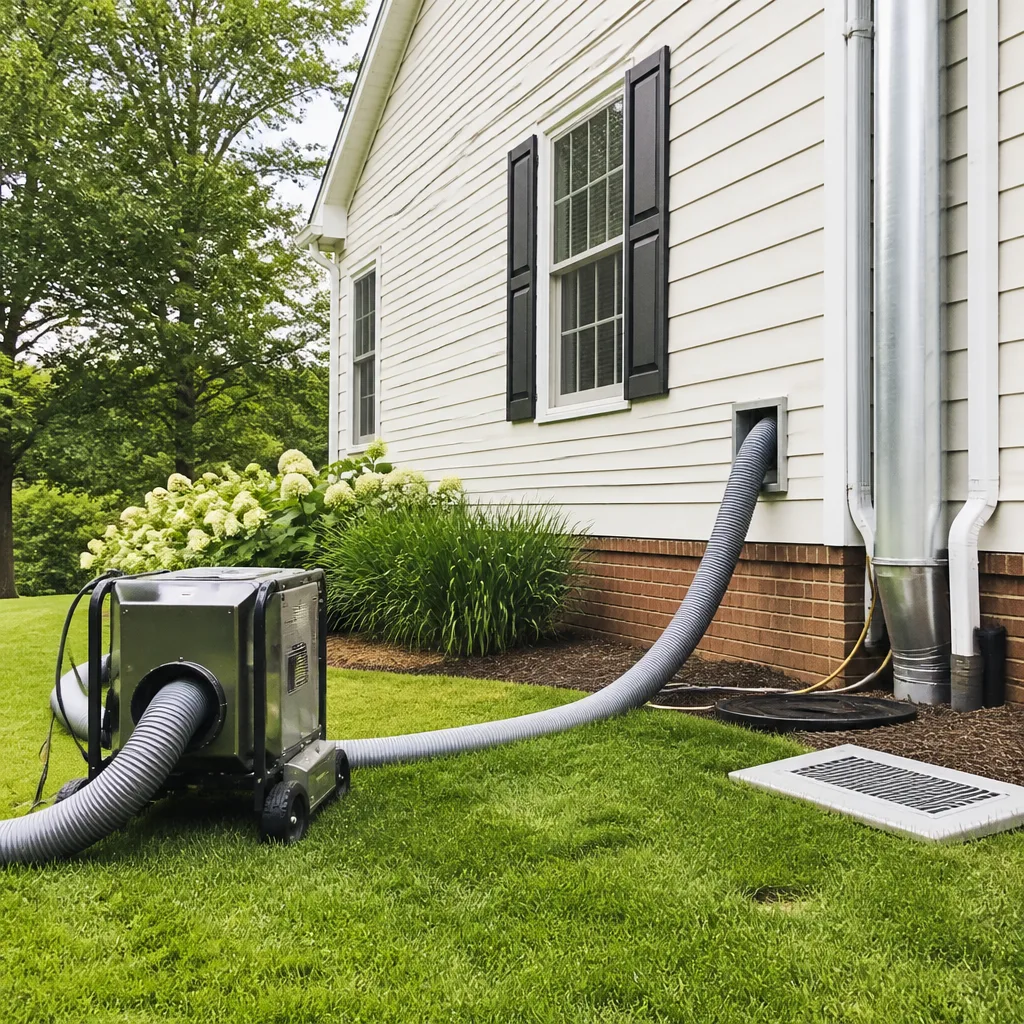 Whole-home duct cleaning
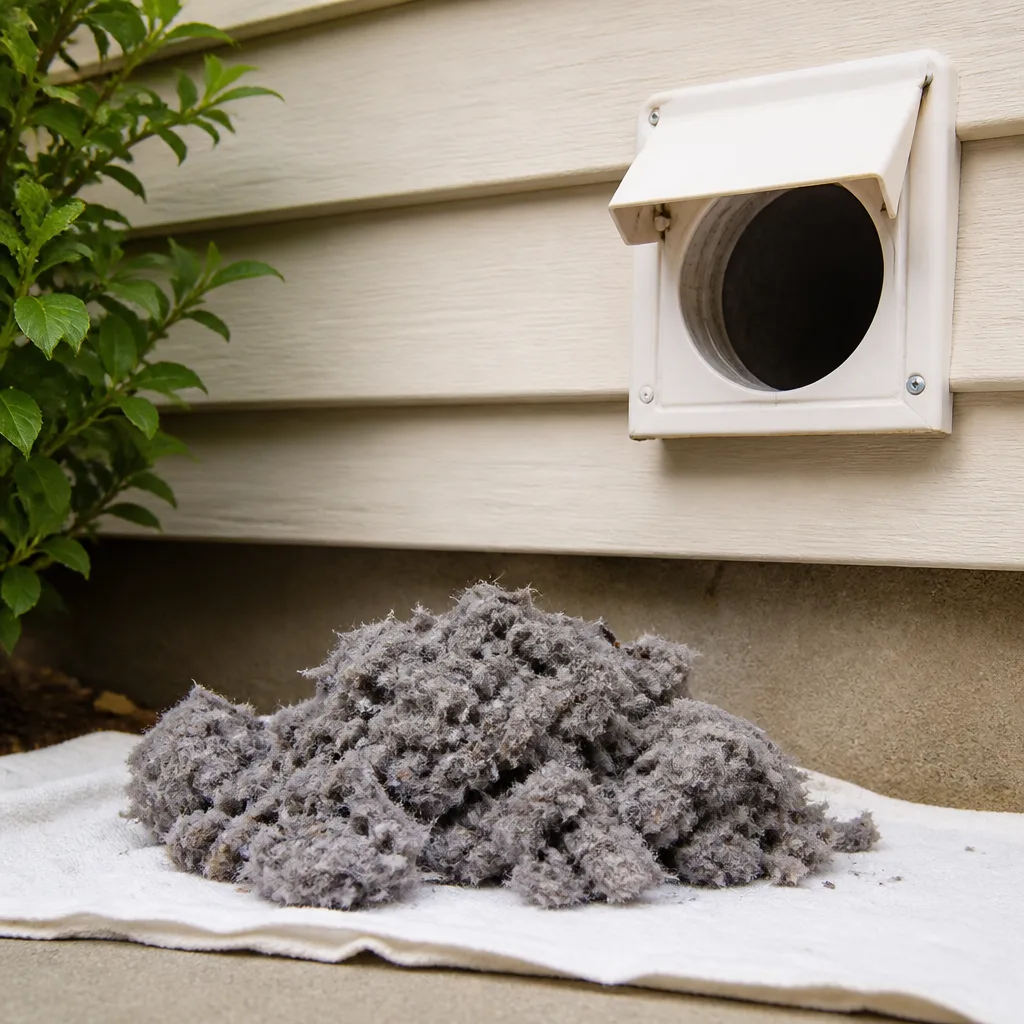 Dryer vent cleaning
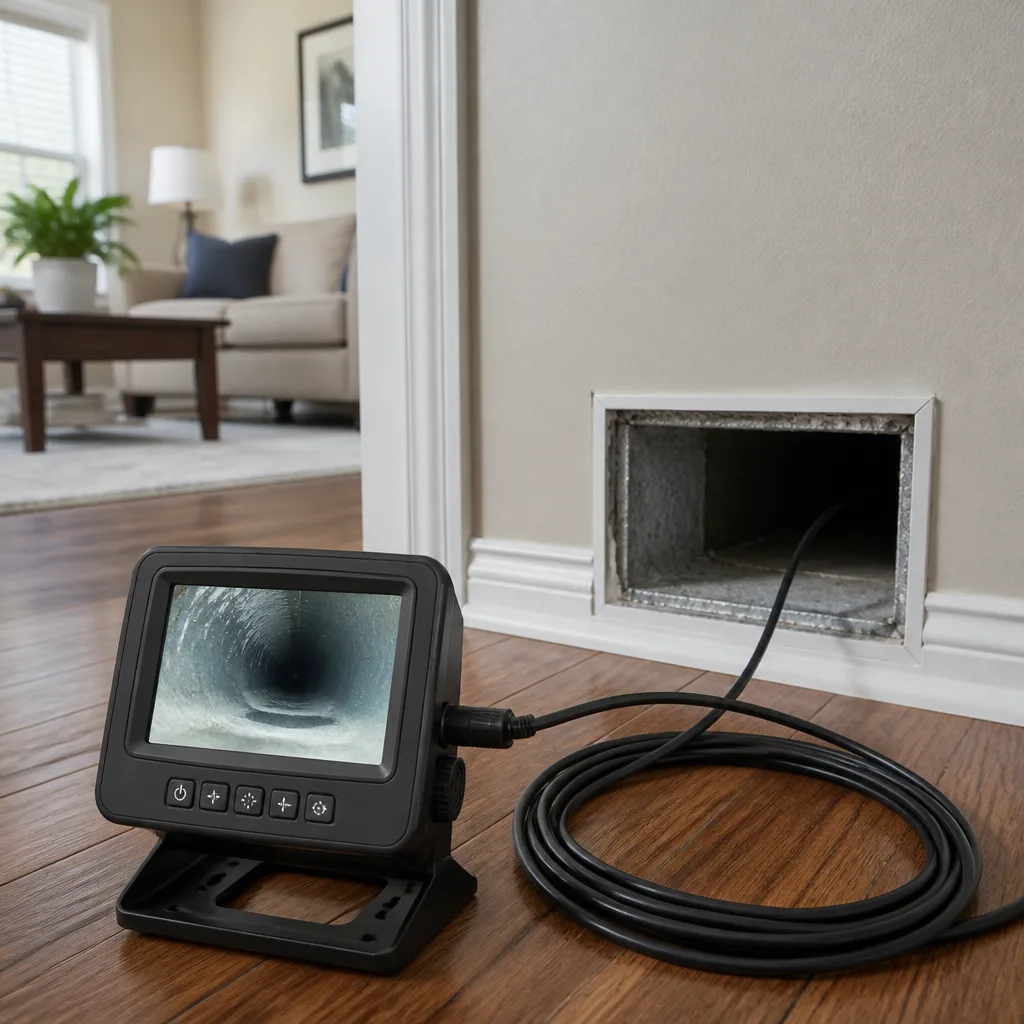 Camera inspection
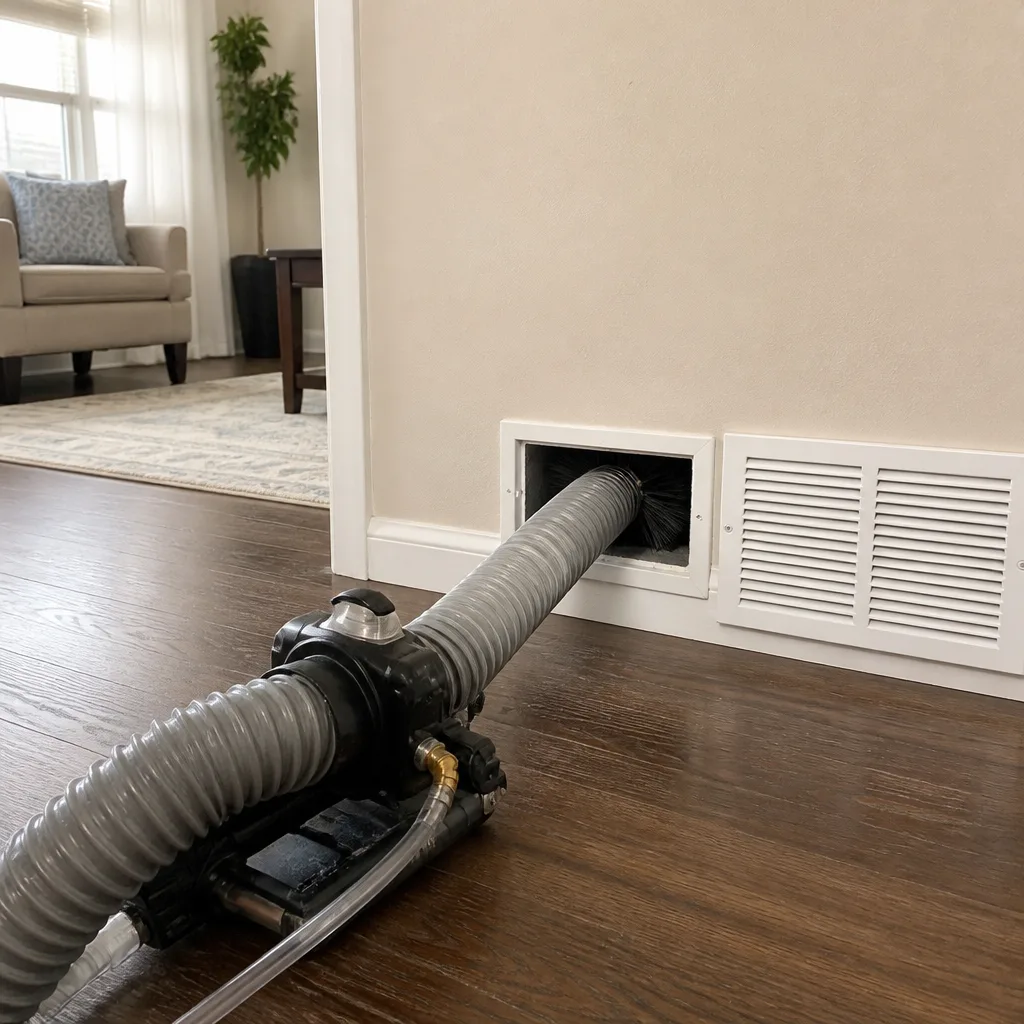 Sanitizing & deodorizing
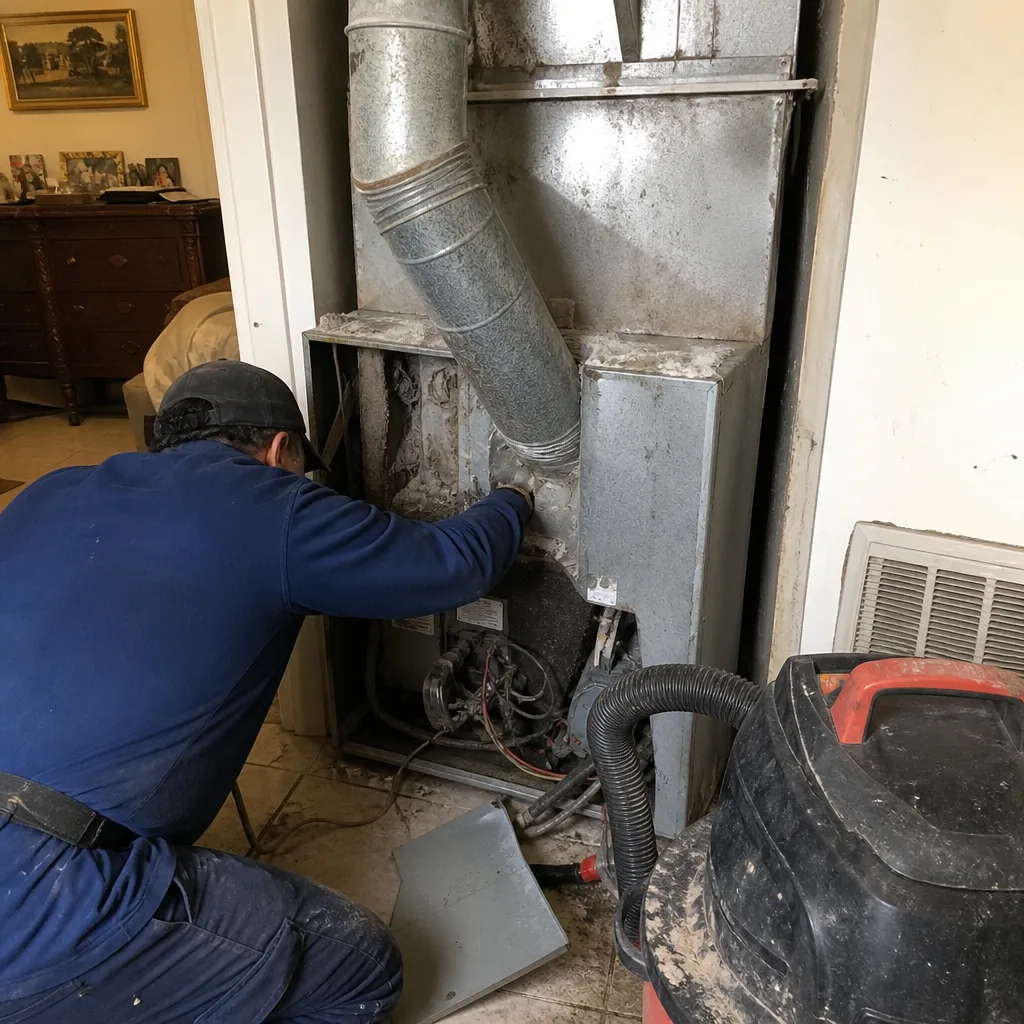
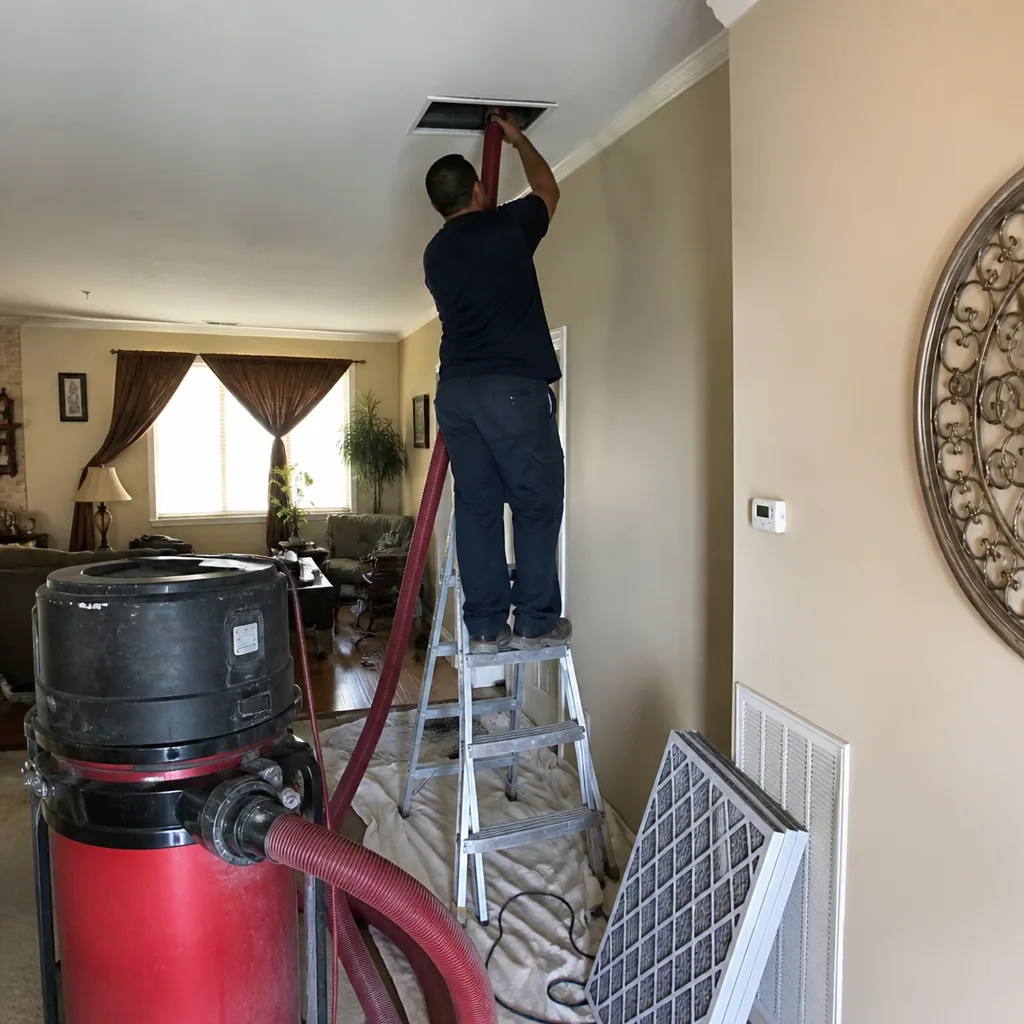
Whole-system duct and dryer vent check with before-and-after photos - you see exactly what came out of your vents
That "$99 whole-house special" is a bait ad - the real number appears once they are in your hallway, or the "clean" is a shop-vac at the register. We photograph the inside of your ducts before and after instead.
Air Duct Cleaning Maintenance Checklist for Fontana Homeowners
Here’s a number that should make every Fontana homeowner pause: the Inland Empire records some of the highest annual particulate matter concentrations in Southern California, and your HVAC system’s ductwork is the final filter between that outdoor air and your living room. A static maintenance calendar, the kind that tells you to clean your ducts every three to five years no matter what, ignores what actually happens in Fontana. This guide replaces the generic timeline with a condition-triggered checklist tuned to Santa Ana winds, wildfire smoke events, and the brutal summer cooling load that pushes residential duct systems harder here than almost anywhere else in the state. You’ll learn what to inspect monthly, what to document after each professional cleaning, and when a visual check warrants a real service call.
Styles & brands we work with
- Whole-home duct cleaning
- Dryer vent cleaning
- Camera inspection
- Sanitizing & deodorizing
Quick Answer
The right air duct maintenance schedule for Fontana isn’t a countdown timer, it’s a condition-based protocol. Inspect your supply registers and return grilles every 30 days during peak cooling season, check filters every 30 to 45 days depending on wildfire and Santa Ana activity, run a room-by-room airflow test at least once per quarter, and schedule professional duct cleaning after any sustained smoke event, visible dust discharge from registers, or a summer where your system ran more than 60 consecutive high-load days. Treat dryer vent cleaning as a separate twice-yearly service, not an add-on to duct work.
Table of Contents
- Why Calendar-Based Duct Cleaning Fails Fontana Homeowners
- The Monthly Visual Inspection: What to Check and Why
- Fontana’s Seasonal Triggers: Wildfire Smoke, Santa Anas, and Peak Cooling
- The Room-by-Room Airflow Checklist
- Filter Intervals Calibrated for Fontana, Not National Averages
- Dryer Vent Cleaning: A Separate Fire-Safety Cadence
- What to Document After Every Professional Cleaning
- Common Mistakes to Avoid
- When to Call a Professional
- Frequently Asked Questions
- The Bottom Line
Why Calendar-Based Duct Cleaning Fails Fontana Homeowners
The standard advice, clean your air ducts every three to five years, assumes a national average that doesn’t exist here. In Fontana, a single Santa Ana wind event can deposit more fine dust into your duct system than six months of normal operation in a coastal city. A wildfire advisory that keeps your windows sealed for ten days while your HVAC recirculates indoor air won’t automatically contaminate your ducts, but if your filter wasn’t rated for the particulate load, whatever slipped past is now sitting in your return plenum. We’ve opened duct systems in Fontana homes that were professionally cleaned two years prior and found a quarter-inch of fine silt in the trunk line because the previous service predated a bad fire season and nobody re-evaluated the system’s condition afterward. Duct cleaning isn’t a scheduled event. It’s a response to measurable conditions. A checklist that ignores those conditions gives you a false sense of confidence while your system quietly distributes what the outside air leaves behind. The professional-grade equipment used on Duct Cleaning Fontana home service calls, Rotobrush and Nikro systems specifically, reaches the full linear run of your ductwork. But between professional cleanings, your own eyes are the first line of detection.
The Monthly Visual Inspection: What to Check and Why
You don’t need tools or technical training to run a meaningful duct inspection. You need a flashlight, a screwdriver for removing register covers, and ten minutes once a month during the cooling season. Here’s exactly what to look for and what each finding signals.
- Remove two or three supply registers. Choose the registers closest to the air handler and the farthest from it. Look inside with a flashlight. A thin, even dust film on the duct surface is normal and not a service trigger. Visible accumulation thicker than a credit card edge, especially if it appears gray, black, or clumped, means particulate is bypassing your filter or entering through leaks in the return side.
- Check the register’s back side and the wall or ceiling around it. Dark streaking or dust shadowing around the register opening indicates air is escaping around the register boot, not through it. That gap pulls unfiltered attic or wall-cavity air into the conditioned stream. In Fontana attics, where summer temperatures can exceed 140°F, that gap also pulls fine insulation fibers into your supply air.
- Inspect the return grille, not just the filter behind it. If the grille itself is caked, air is bypassing the filter around its edges. A filter that fits loosely in its slot is effectively a screen, not a filter. Verify the filter seats flush with no visible gaps.
- Run the blower fan for 60 seconds and hold a tissue near each register. Weak or no airflow at a single register while others blow strong indicates a disconnected, crushed, or blocked branch line. In homes built with flexible duct, Fontana’s summer heat can degrade the inner liner enough that it collapses and restricts airflow, a problem that cleaning alone won’t solve and that points toward Air Duct Repair in Fontana.
- Listen for unusual sounds. A rhythmic thumping in the duct when the blower runs often means a loose damper or a sagging section of flex duct. A high-pitched whistle at a register means air is being forced through a restriction. Neither is a cleaning issue, but both warrant professional evaluation before they become a system failure.
The monthly check is about trending, not single readings. A register that shows slightly more dust this month than last month is data. Log what you see, especially if outdoor conditions have been rough. The pattern over sixty or ninety days tells you whether your system is holding its own or losing ground.
Fontana’s Seasonal Triggers: Wildfire Smoke, Santa Anas, and Peak Cooling
Most duct cleaning guides were written for climates where the biggest airborne concern is spring pollen. Fontana operates under a different set of environmental loads, and each one leaves a specific signature in your duct system.
Post-Santa Ana Wind Periods
Santa Ana events push desert dust and fine grit through the Cajon Pass and across the Fontana basin with enough force to infiltrate exterior door seals, attic vents, and any gap in a home’s building envelope. Your HVAC system’s job during these events is to maintain positive pressure and filter what enters. But if your return ducts have even minor leaks in the attic or crawl space, that negative-pressure side will pull dirty attic air directly into the system, bypassing the filter entirely. After any multi-day Santa Ana event, run the monthly visual inspection. If you find grit in the duct beyond the first few inches of the register throat, your return side is likely leaking and needs evaluation before the next wind event. The fix is duct sealing or section replacement, part of what an air duct repair service addresses, not something a cleaning alone resolves.
Post-Wildfire Smoke Advisories
When Fontana sits under a wildfire smoke advisory, the particulate entering your home is dominated by combustion byproducts, not household dust. These particles are smaller, more numerous, and carry compounds that standard fiberglass filters never capture. If your HVAC ran during the advisory with a standard MERV 8 filter, a meaningful percentage of that smoke particulate is now coating the inside of your supply ducts. It sits there until the next time air velocity is high enough to re-entrain it, which means you’ll be breathing last fire season’s smoke long after the sky clears. The trigger rule from our experience in Fontana: any smoke event lasting more than three consecutive days with visible haze at ground level justifies a post-event inspection. If the inspection shows accumulation, schedule professional cleaning. If you can smell smoke from your registers weeks after the event, don’t wait for the next interval. That’s an active recirculation problem, not a passive dust issue.
Extended High-Load Cooling Cycles
An HVAC system that runs 18 hours a day for 60 consecutive days moves an enormous volume of air through your ducts. In Fontana’s summer, that’s not an edge case. It’s July through September. Extended runtime doesn’t create dust by itself, but it concentrates existing debris, dries out organic material into friable particles, and accelerates degradation in any duct section that was already marginal. A flex duct joint that held fine under light use can separate under sustained thermal expansion and air pressure. A condensate issue that never showed symptoms in mild weather can promote biological growth during a humid stretch. The checklist rule: after any summer where your cooling runs near-continuous for two months or more, schedule a professional system evaluation even if your monthly visual checks looked acceptable. The monthly check catches what’s visible at the register. It cannot see what’s happening mid-run or at the plenum connection.
The Room-by-Room Airflow Checklist
Airflow is the most honest indicator of duct system health you can measure without professional instruments. If air isn’t moving correctly, something is wrong, even if you can’t see it. This quarterly test takes about 15 minutes and gives you a baseline to compare against after any seasonal event or professional service.
- Set the thermostat fan to ON, not AUTO. This runs the blower continuously during the test and eliminates cycling variables. Close all exterior doors and windows. Leave interior doors in their normal positions.
- Walk the house and hold a tissue or single strip of toilet paper at each supply register. Note how far the tissue deflects. You’re not measuring velocity, you’re comparing registers against each other. A register that shows noticeably less deflection than others on the same floor is restricted.
- Check every room, not just the ones you use. Guest bedrooms, hallways, and bathrooms that run consistently warmer than the rest of the house often indicate a disconnected branch line that’s been blowing conditioned air into the attic for months.
- Test the return side. Hold the tissue at the return grille. It should pull firmly against the grille face. A weak pull means the return side is undersized or obstructed, which forces the blower to work harder and pulls air through any available gap.
- Note any room that smells different. Mustiness from a single register usually means moisture is entering that specific branch line, not the whole system. In Fontana, this often traces to a bathroom exhaust vent backdrafting into the duct or a roof boot that lost its seal during winter rains.
- Write down the results. Date, which registers felt weak, which rooms were warm, anything that smelled. Six months of notes gives a professional technician more diagnostic signal than a single service visit could ever collect on its own.
This quarterly check is not a substitute for professional assessment, but it catches the mechanical problems that cleaning can’t fix and helps you decide whether you need air duct cleaning in Fontana or a more targeted repair. Airflow problems are almost always structural: disconnected sections, collapsed flex, crushed trunk lines. Cleaning addresses contamination, not structure. Knowing the difference saves you from paying for a service that won’t solve your actual problem.
Filter Intervals Calibrated for Fontana, Not National Averages
The standard advice is to change your HVAC filter every 90 days. That number is a national average computed for houses in places like Ohio and Virginia. Applying it to Fontana means running a filter that’s been clogged for six of those days, for roughly eight additional weeks per year. Clogged filters do two things: they force your blower to work against higher static pressure, and they increase the likelihood that air will bypass the filter entirely around its edges. When bypass happens, whatever the filter was supposed to catch goes straight into your return duct and eventually your supply duct.
Fontana calibration starts with runtime. During peak summer, a typical Fontana home’s system runs 12 to 18 hours per day. That means a 90-day filter change interval on paper is really a 45-day interval in actual blower hours. But runtime isn’t the only variable. Santa Ana events and wildfire smoke advisories spike the particulate load dramatically. A filter that would last 60 days under normal conditions can load up in two weeks during a bad wind season.
Here’s the inspection schedule we recommend for Fontana:
- July through September: Check the filter every 30 days. If the filter media is visibly gray or you can’t see light through it when held up to a bulb, replace it regardless of the calendar. During these months, most Fontana homes need replacement every 30 to 45 days.
- October through December: Santa Ana season. Check every 30 days. The fine dust these events carry loads filters quickly, even when the HVAC is running less. Replace when discolored.
- January through March: Lighter runtime in most Fontana homes. Check every 45 days. Rainy periods reduce airborne dust but can increase indoor particulates if your home has poor ventilation or existing moisture issues.
- April through June: Transition months. Check every 45 days. If spring winds are active, move to a 30-day check.
Filter quality matters as much as filter timing. In Fontana’s particulate environment, a MERV 8 fiberglass filter is the floor, not the ceiling. Homes in newer subdivisions with tighter envelopes can support MERV 11 or 13 filters if the blower is rated for the additional static pressure. Homes with older systems may not tolerate high-MERV filters without airflow restrictions. The right filter is the highest MERV rating your specific system can handle while maintaining proper airflow. A technician who works with whole-home air quality products from Honeywell and Aprilaire can tell you where your system lands on that scale, because the filter and the system have to be matched as a pair, not picked from a shelf.
Dryer Vent Cleaning: A Separate Fire-Safety Cadence
Your dryer vent is not part of your HVAC duct system, and treating it as an afterthought is a mistake that costs Fontana homeowners in two currencies: energy and risk. Lint accumulation in a dryer vent reduces airflow, which forces the dryer to run longer to dry the same load. It also creates the conditions for lint ignition. The National Fire Protection Association identifies dryer vent cleaning as a primary prevention measure for dryer fires, and in Fontana’s dry climate, lint reaches a combustible state faster than in humid regions. The same lint that stays damp and clumpy in a coastal home’s vent will dry to a fine, highly flammable powder here within weeks.
Cadence depends on household size and dryer usage:
- Households of 1 to 2 people, moderate laundry volume: Professional dryer vent cleaning once per year.
- Households of 3 to 5 people, active family: Twice per year, with one of those scheduled before the holiday season when laundry volume spikes.
- Households with pets, long vent runs, or multiple dryers: Every four to six months. Pet hair dramatically accelerates lint accumulation in the vent, not just the lint trap.
- Rental properties and multi-unit buildings: Every six months regardless of occupancy. You cannot verify tenant habits, and a dryer fire in one unit is a building-wide problem.
Watch for these warning signs between cleanings: clothes taking longer than one full cycle to dry, the dryer exterior running hot to the touch, a burning or musty smell during operation, excessive lint visible at the exterior vent hood, or the flapper on the exterior vent not opening fully when the dryer runs. Any combination of these means airflow is restricted and the vent needs professional attention, not just a lint trap check. Dryer vent cleaning in Fontana is handled as a fire-safety service by specialists who treat it as a standalone scope, using equipment sized for lint extraction rather than general duct work.
What to Document After Every Professional Cleaning
The most valuable tool a Fontana homeowner can keep isn’t a wrench. It’s a simple record of what was found and what was done inside the duct system. Most homeowners treat a duct cleaning as a one-time event and retain nothing from it. That leaves the next technician, whether the same company or a different one, with no baseline. Every service call starts from zero, and zero means you pay for discovery work that proper documentation would have made unnecessary.
After any professional air duct cleaning, request and keep the following:
- Pre-service inspection notes. What did the technician find before starting? This includes visible dust levels, register condition, evidence of leaks or disconnections, and any moisture or biological growth observed. If the technician doesn’t offer this, ask for it.
- Before-and-after photos. Professional duct cleaning should include photo documentation of the duct interior at representative points. These photos are your proof of work and your baseline for evaluating future conditions. If a company can’t show you the inside of your own ducts, that’s a gap in their scope.
- Equipment and method used. Note whether the service used a Rotobrush or Nikro system, negative air collection, and what filtration or containment practices were in place. Equipment matters because the difference between professional extraction and a glorified vacuum is the difference between removed material and redistributed material. Abatement Technologies containment equipment signals a contamination-control standard that protects the rest of the home during service, which matters if the ducts are heavily loaded.
- Post-service airflow readings. If the service measured airflow or static pressure before and after, keep those numbers. They’re the most objective measure of whether the cleaning changed system performance. If readings weren’t taken, note the visual condition and any measured changes in room-to-room temperatures.
- Recommendations for repair or follow-up. A good cleaning company will flag sections of duct that need sealing, replacement, or modification. These notes, kept on file, tell you what to watch and what to prioritize before the next fire season.
Maintaining this record takes five minutes per service and costs nothing. It also gives any future technician something that no amount of diagnostic equipment can produce: a history. In our experience, homes with even minimal documentation resolve duct problems faster and at lower cost because the technician isn’t guessing at what’s been done and what hasn’t. The team at Duct Cleaning Fontana, using professional-grade equipment that reaches every linear foot of the duct run, provides this documentation as standard practice on every cleaning. But even if you use a different provider, insist on the same record-keeping. It’s your system and your air.
Common Mistakes to Avoid
- Trusting a calendar instead of conditions. A duct system that sailed through a mild year doesn’t need cleaning just because three years passed, and a system that endured a severe fire season might need attention after one year. Fontana conditions vary too much for fixed intervals.
- Using a filter with too low a MERV rating for the local particulate load. National big-box filter recommendations underserve this region. What works in Oregon fails in Fontana’s dust and smoke environment.
- Ignoring visible dust at the registers because “the ducts were just cleaned.” If you see dust discharge from your supply registers within months of a professional cleaning, something is reintroducing contamination. Common culprits include a leaking return plenum, an unsealed filter rack, or disconnected branch line pulling attic air.
- Treating dryer vent cleaning as an optional add-on to HVAC duct work. These are separate systems with separate risks. A clean HVAC duct setup paired with an obstructed dryer vent still leaves you with a fire hazard.
- Skipping the room-by-room airflow test because the air feels fine. Uneven airflow is often the first symptom of a structural duct failure. By the time the whole system feels wrong, a section has usually been compromised for months.
- Discarding documentation from a previous cleaning. The notes and photos from your last service are the single most useful diagnostic tool for the next one. Losing them means paying twice for the same discovery.
- Focusing on price without asking about equipment and process. In Fontana, where several low-cost duct cleaning providers operate with vac trucks and minimal process, the cheapest quote often reflects what’s left in the ducts, not what’s removed. Professional-grade equipment, not a shop-vac and a ladder, determines whether the service actually changes your indoor air quality.
When to Call a Professional
Some duct conditions warrant expert evaluation, not another month of observation. Call for a professional assessment if you see visible mold growth, which in Fontana’s dry climate usually traces to a specific moisture source like a leaking roof boot or bathroom exhaust issue, not ambient humidity. Call if a smoke smell persists from your registers weeks after a wildfire advisory lifts, which means you’re actively recirculating captured smoke particulate. Call if you find significant debris or dust discharge from multiple registers simultaneously, indicating a return-side failure upstream. Call if your quarterly airflow test shows a consistent weak register that doesn’t resolve, which points to a structural disconnection or collapse. And call if your dryer takes more than one cycle to dry a load while the exterior vent hood shows little airflow, since that’s a lint obstruction risk, not an appliance inefficiency. Duct Cleaning Fontana offers free estimates with no obligation, and you can reach the team at (855) 501-3681 to schedule an inspection.
Frequently Asked Questions
You’ll know by inspecting, not by waiting. Look for visible dust accumulation inside the duct beyond a thin film, dust discharge from registers during normal operation, a persistent smell that doesn’t resolve after filter changes, or reduced airflow in specific rooms. Fontana’s seasonal events, particularly wildfire smoke and Santa Ana winds, can create these conditions in a single season even if your last cleaning was recent. If you see these signs, call (855) 501-3681 for a professional evaluation with photographic documentation of what’s actually inside your ducts.
No residential-grade approach can clean the full interior surface of a duct system. A household vacuum and a brush cannot reach beyond the first few feet of a typical duct run, and the attempt often dislodges debris deeper into the system rather than removing it. Professional units from Rotobrush and Nikro are purpose-built to agitate and extract material along the entire duct run under negative pressure. The safety consideration here isn’t injury, it’s effectiveness. A partial DIY cleaning leaves the system no cleaner while stirring up what was settled.
Under a condition-based approach, the honest answer is that some Fontana homes justify cleaning every two years and others go five or more years without needing it. The determining factors are your system’s runtime history, proximity to open land and construction, whether you had pets during that period, and what seasonal events occurred. A home in a newer Fontana subdivision with a tight envelope, proper filtration, and no pets might not need cleaning for four to five years. A home that ran heavy through a wildfire season with a basic filter might need service within a year. The right answer comes from inspection, not a calendar. Call (855) 501-3681 for a free estimate and a realistic recommendation based on your actual system condition.
The difference is specialization and equipment. A general HVAC company runs duct cleaning as a secondary service, often with portable equipment sized for convenience, not thoroughness. A dedicated duct cleaning operation runs professional-grade Rotobrush and Nikro systems designed specifically for full-length duct agitation and extraction, uses Abatement Technologies containment to protect the home environment during service, and treats the duct system as the primary scope of work. When we encounter ducts that are damaged or disconnected, we address the full lifecycle through air duct repair, rather than cleaning around structural failures and calling the job done.
Duct cleaning improves indoor air quality when it removes material that would otherwise be re-entrained into your living space, but the effect depends on the thoroughness of the service and the condition of the system. In Fontana’s particulate-heavy environment, it’s common to find significant accumulations in properly documented systems. A cleaning that genuinely removes that material changes what’s circulating in your air. A superficial cleaning that only addresses visible registers does not. The difference is verifiable: before-and-after photos inside the duct, airflow measurement, and documentation of what was removed. If a company can’t show you those things, you’re right to be skeptical of what you paid for.
Ask for visual proof from inside the ducts. A legitimate professional cleaning includes before-and-after photographs taken at representative points in the system, not just at the registers. Verify airflow readings if the service includes them, and walk the house checking register airflow in rooms that were weak before the service. Check that the system was left clean, with no debris on the floor or register damage. If the technician used containment practices to protect your floors and furniture during work, that’s another marker of a service that takes its scope seriously. If all you received was a receipt, you have no evidence of work performed.
The Bottom Line
Fontana homeowners face a dust and particulate environment that national maintenance advice simply doesn’t account for. Santa Ana winds, wildfire smoke events, and the continuous summer cooling load all deposit material in your duct system at rates that vary wildly from year to year. The right maintenance approach isn’t a calendar reminder, it’s a set of condition triggers tied to what’s actually happening in your air and your system. Inspect monthly during peak seasons, test airflow quarterly, check your filter at intervals matched to Fontana’s particulate load rather than a national average, treat dryer vents as a separate fire-safety item, and keep documentation so every future service starts from a real baseline. That protocol, executed consistently, will tell you exactly when your ducts need professional attention and when they don’t. Every duct system in Fontana is different, and the only way to maintain yours correctly is to inspect it like you mean it. Air duct cleaning in Fontana is the service that addresses what inspection finds, but the maintenance checklist in this guide is your system’s first line of defense. Call (855) 501-3681 for a free estimate when your inspection says it’s time.
Written by the team at Duct Cleaning Fontana, serving Fontana since 2017.
See the difference
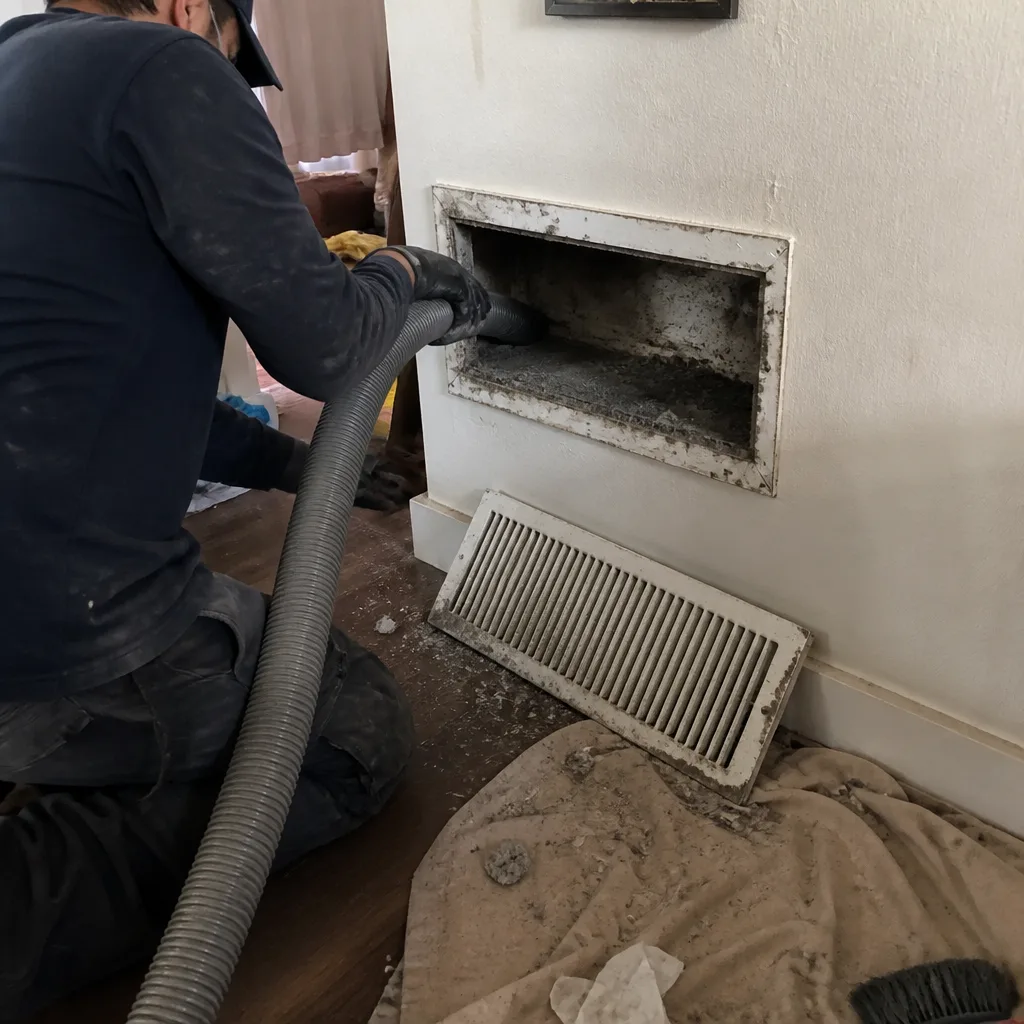 Before
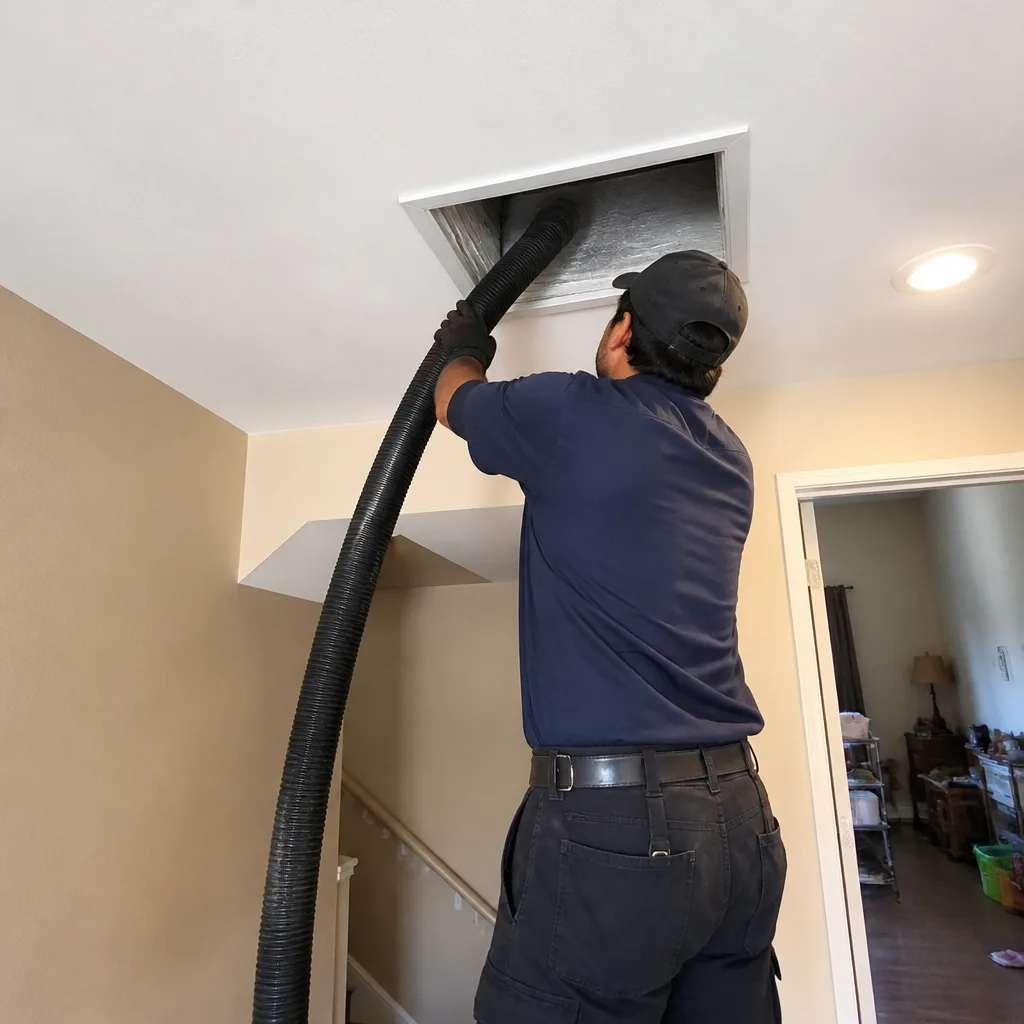 After
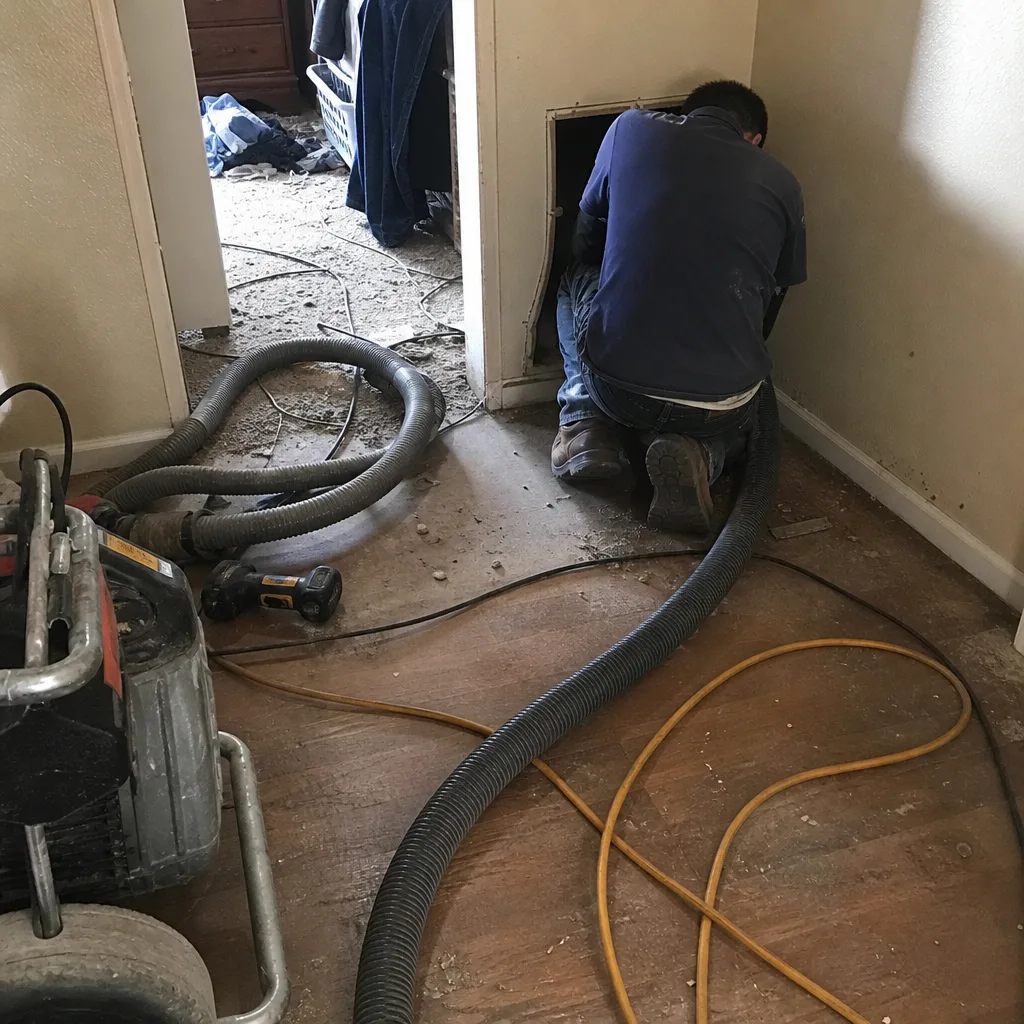 Before
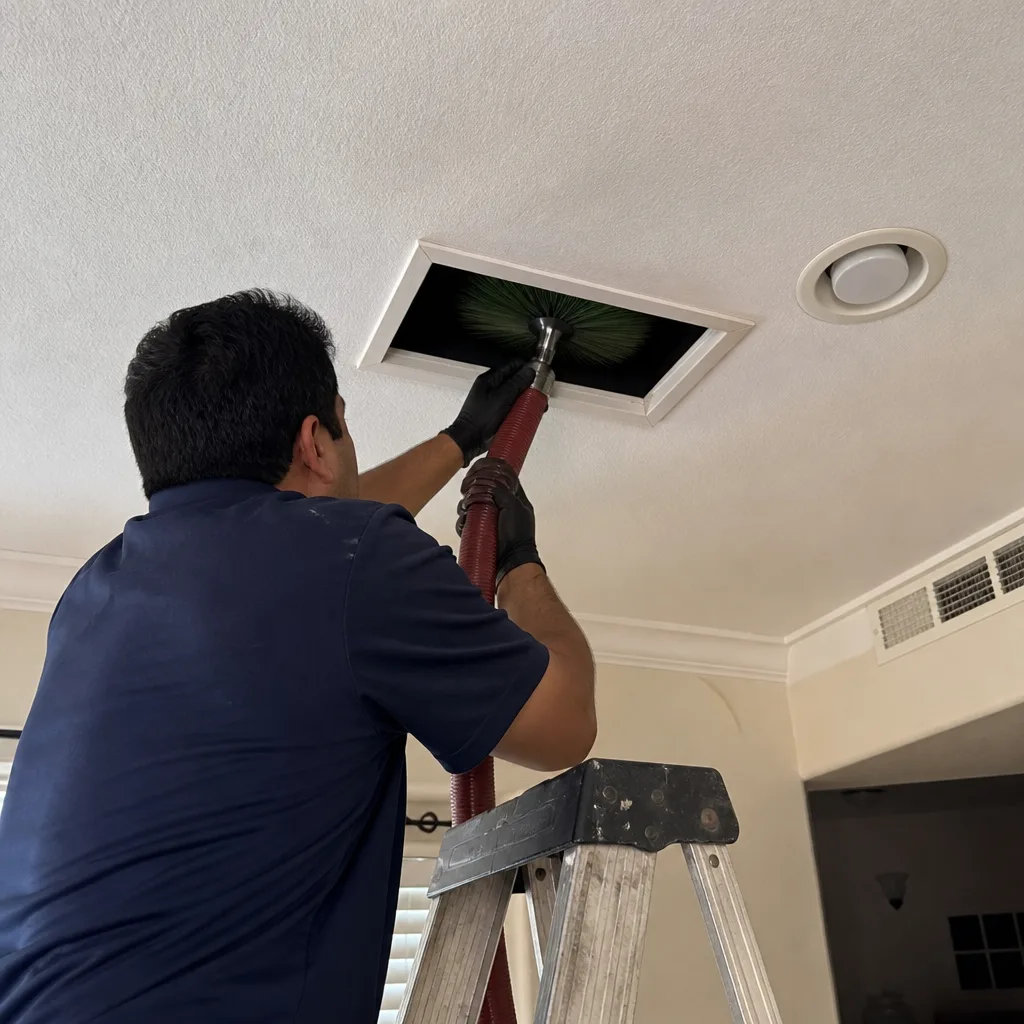 After
 Before
 After