
Last updated November 3, 2026
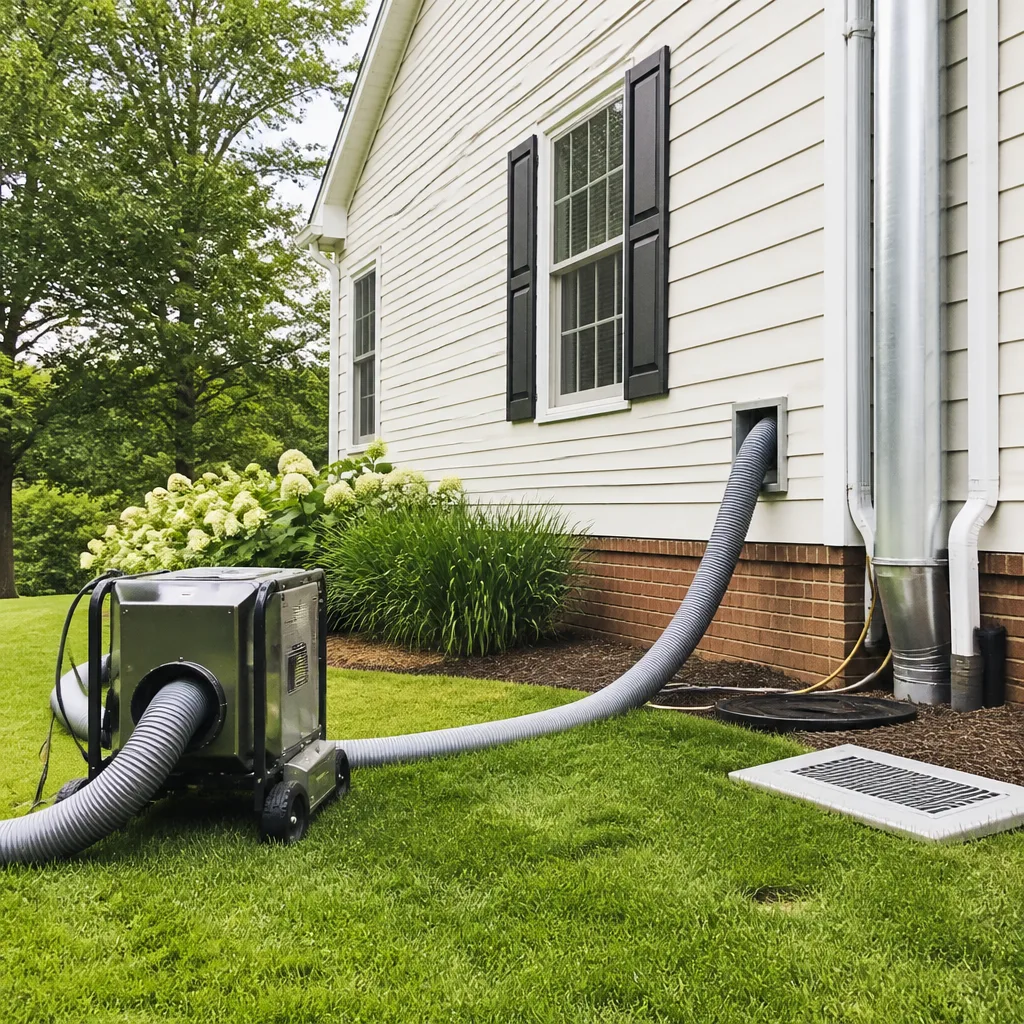 Whole-home duct cleaning
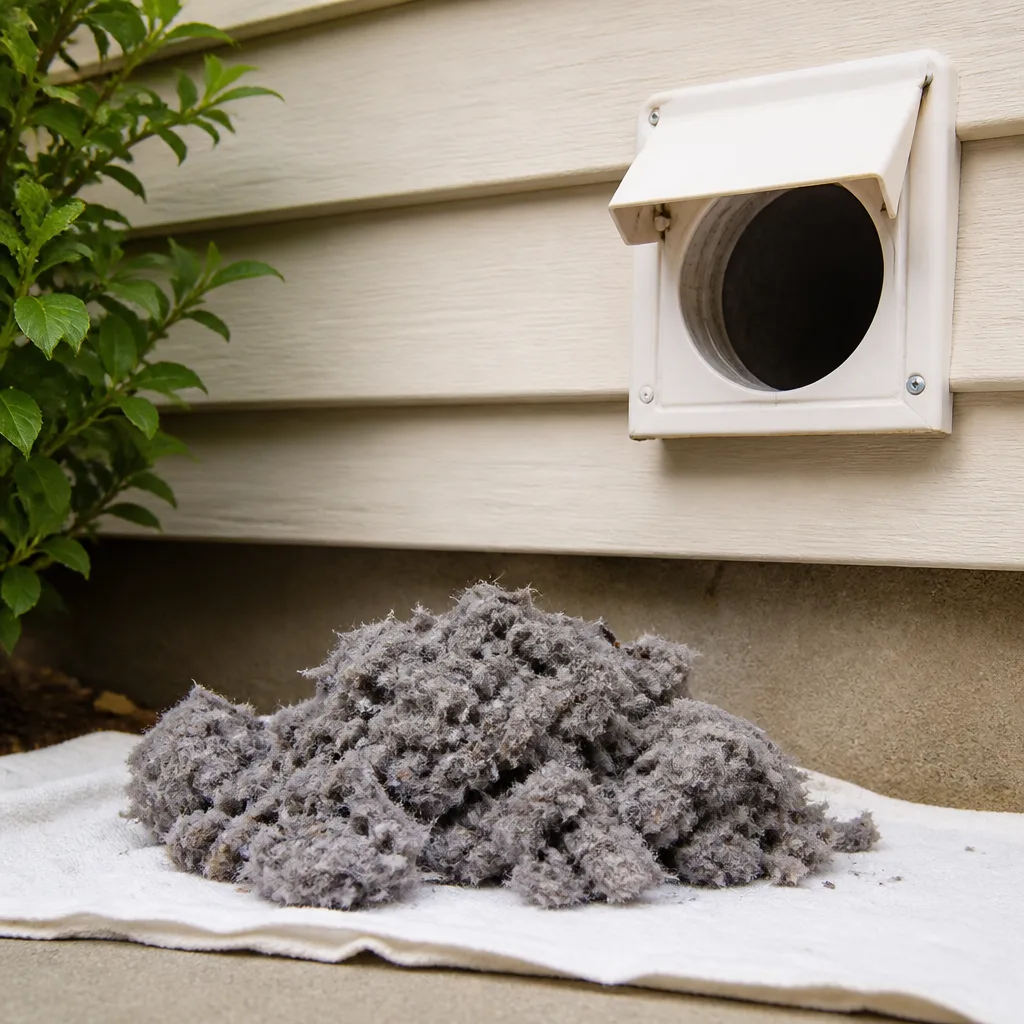 Dryer vent cleaning
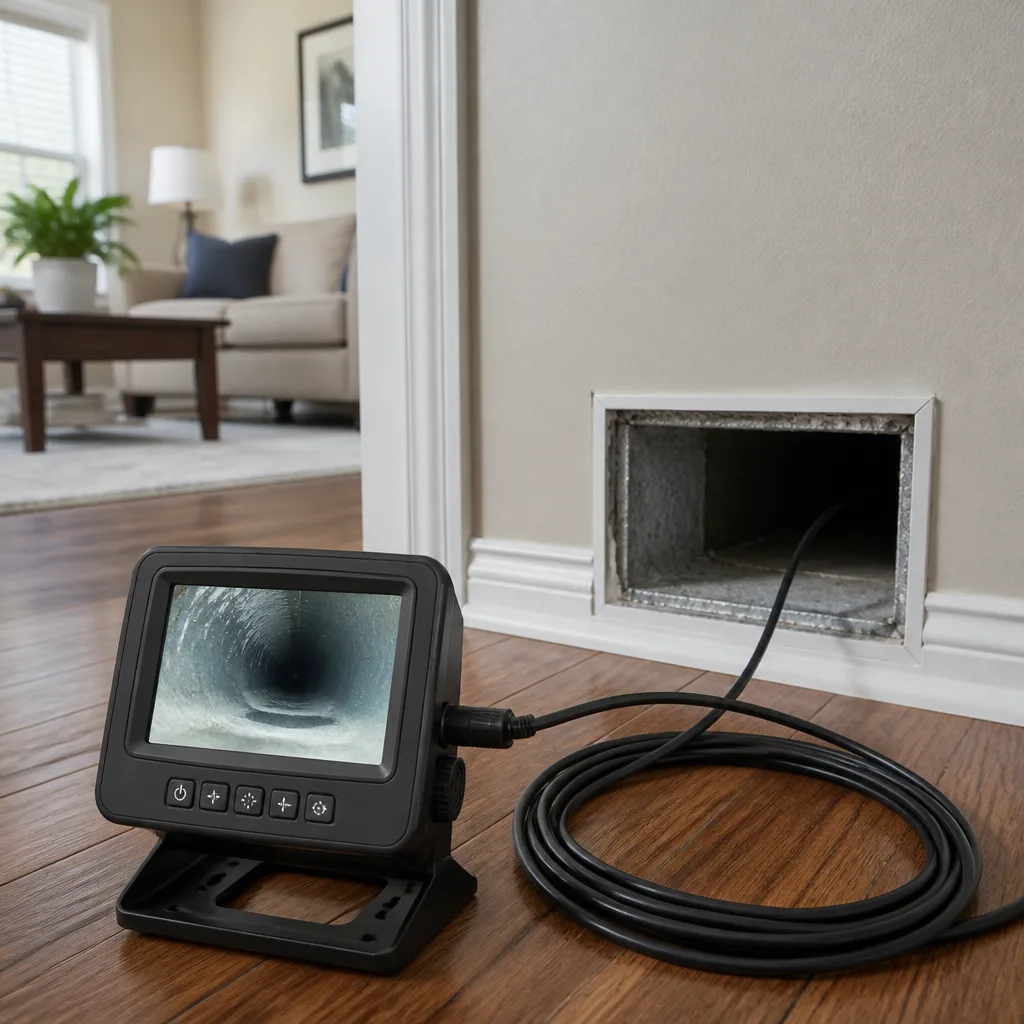 Camera inspection
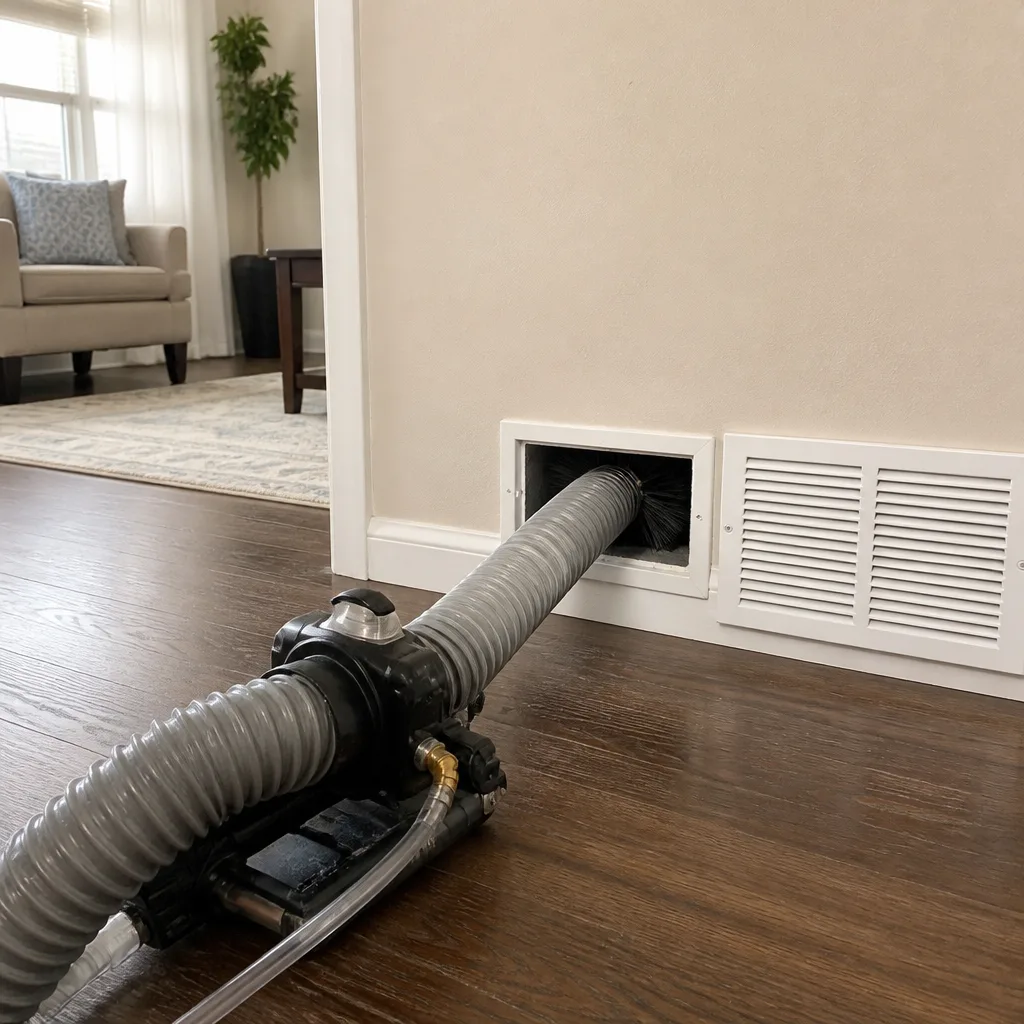 Sanitizing & deodorizing
Whole-system duct and dryer vent check with before-and-after photos - you see exactly what came out of your vents
That "$99 whole-house special" is a bait ad - the real number appears once they are in your hallway, or the "clean" is a shop-vac at the register. We photograph the inside of your ducts before and after instead.
The Complete Air Duct Cleaning Guide for Fontana Homeowners
Fontana sits in a meteorological bowl. The San Gabriel and San Bernardino mountains trap air that rolls east from Los Angeles, and the Cajon Pass funnels desert wind straight into the city. Every day, your HVAC system pulls that air through return registers and pushes it through ductwork that most homeowners never see. This guide explains what actually accumulates in Fontana ducts, why the standard cleaning advice you’ll read on national websites doesn’t fit this city, and how to evaluate whether your system needs Air Duct Cleaning. If you’ve noticed dust returning within days of cleaning, or if you live in one of Fontana’s newer subdivisions north of the 210, this is written for you.
Quick Answer
The Complete Guide to Air Duct Cleaning in Fontana typically cites $350 – $650 for a full system, which should focus on source removal, not just vacuuming. In our experience, most Fontana homes need evaluation every 3 – 5 years, though new construction along Summit Avenue and in the Sierra Lakes area often requires cleaning within the first two years due to drywall dust contamination. A legitimate job uses negative-pressure equipment and agitation tools, not a shop-vac and a ladder.
Styles & brands we work with
- Whole-home duct cleaning
- Dryer vent cleaning
- Camera inspection
- Sanitizing & deodorizing
Table of Contents
- Why Fontana Ducts Fill Faster Than the National Average
- Source Removal vs. the Blow-and-Vacuum Approach
- How to Assess Your Own Duct System Before Scheduling
- What a Legitimate Cleaning Job Looks Like Start to Finish
- New Construction in Fontana: The Drywall Dust Problem
- Dryer Vent Cleaning in Fontana: A Fire-Safety Service, Not an Afterthought
- When Ducts Need Repair, Not Just Cleaning
- Common Mistakes to Avoid
Why Fontana Ducts Fill Faster Than the National Average
The South Coast Air Quality Management District consistently ranks the Inland Empire among the most polluted air basins in the country for PM2.5, the fine particulate that penetrates deep into lung tissue. Fontana gets a double dose. Prevailing winds push LA basin emissions eastward. When Santa Ana conditions develop, desert dust and wildfire smoke come through the Cajon Pass and settle over the valley. Either way, the air entering your return grille carries more particulate than what a typical coastal California home sees.
Then there’s the I-10 corridor. Diesel particulate from truck traffic doesn’t stay neatly on the freeway. It lingers in the air column and gets drawn into homes through windows, doors, and the HVAC system itself. We’ve pulled filters from Fontana homes after a single Santa Ana event that look like they’ve been in service for six months. The filter catches what it can. The rest moves through the return ducts and accumulates.
Here’s what we see in Fontana duct systems:
- Fine desert silt that coats duct walls within two to three years, even with regular filter changes
- Particulate from wildfire smoke that bonds with existing dust and creates a stubborn film
- Diesel soot accumulation in homes near the 10, 15, and 210 corridors
- Construction dust from the city’s ongoing residential expansion, drawn in through open windows and doors
- Pet dander, skin cells, and textile fibers that build up regardless of outdoor conditions
The standard advice you’ll read on national websites says ducts need cleaning every 3 – 5 years. That’s a reasonable baseline for a house in Portland or Minneapolis. In Fontana, the particulate load is simply higher. We recommend evaluating at the two-year mark if you live near the freeway corridors or in areas with active construction nearby. Your own observation will tell you more than any national guideline. More on that below.
Source Removal vs. the Blow-and-Vacuum Approach
The phrase “air duct cleaning” covers two very different jobs. Knowing the difference – detailed in our DIY vs Professional Air Duct Cleaning: The Fontana Homeowner’s Decision Guide – will save you from paying for work that doesn’t actually clean anything.
The blow-and-vacuum approach is what most generalist HVAC companies and handyman services offer. A technician connects a vacuum to one register, seals off a few others, and uses compressed air to blast dust toward the vacuum. The problem: much of that dust never reaches the vacuum. It gets stirred up, redistributed, and settled back into the ducts within weeks. It’s surface agitation at best.
Source-removal cleaning is the industry standard for legitimate duct work. The goal is removing contamination from the duct walls themselves, not just moving it around. This requires:
- Negative pressure setup: A high-powered vacuum unit creates suction on the entire duct system so that anything dislodged gets pulled out of the system rather than into your living space.
- Mechanical agitation: Rotating brushes or compressed air tools physically scrub the duct interior, breaking loose the bonded dust and debris film.
- Access points: The technician cuts or opens access at strategic locations so every linear foot of duct run is reachable. This is the only way to clean the entire system, not just the first few feet visible from a register.
- Containment: Professional equipment includes filtration that captures the dislodged particulate before it re-enters your home’s air.
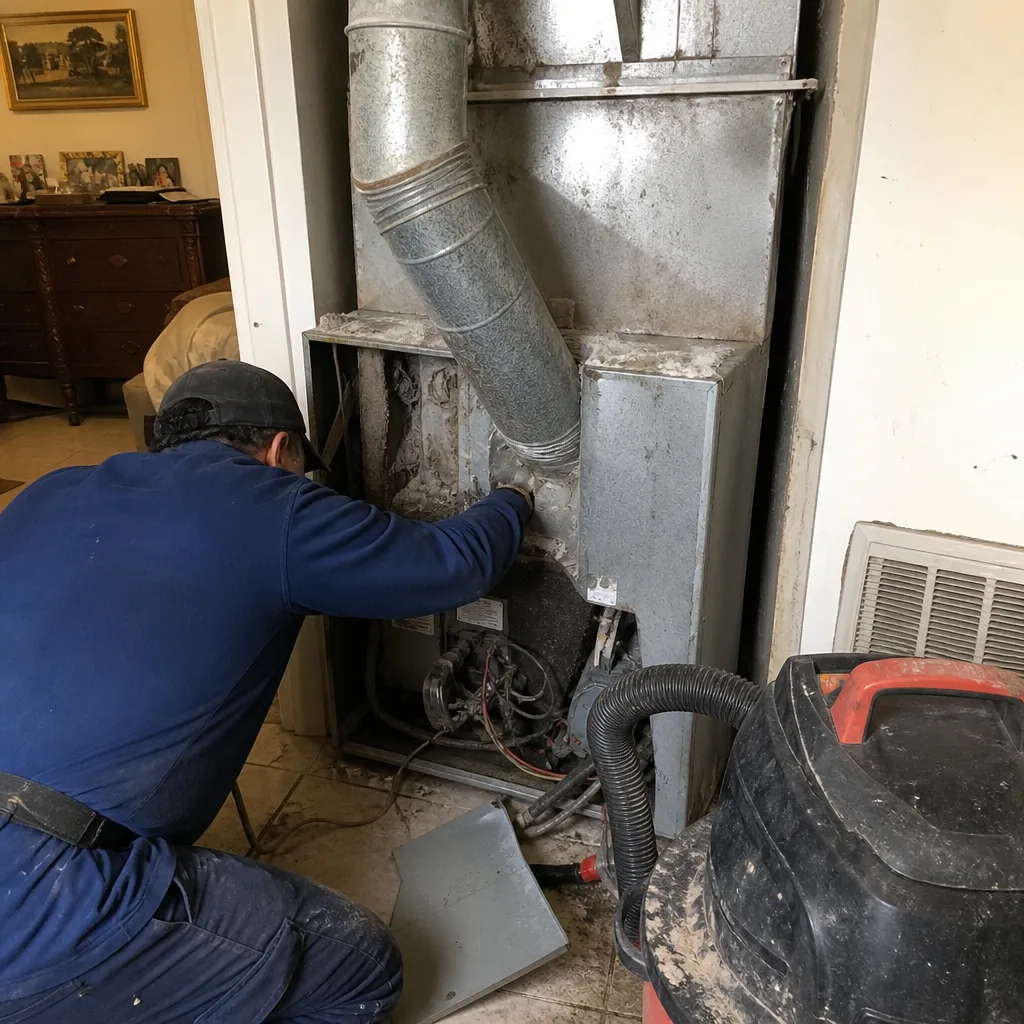
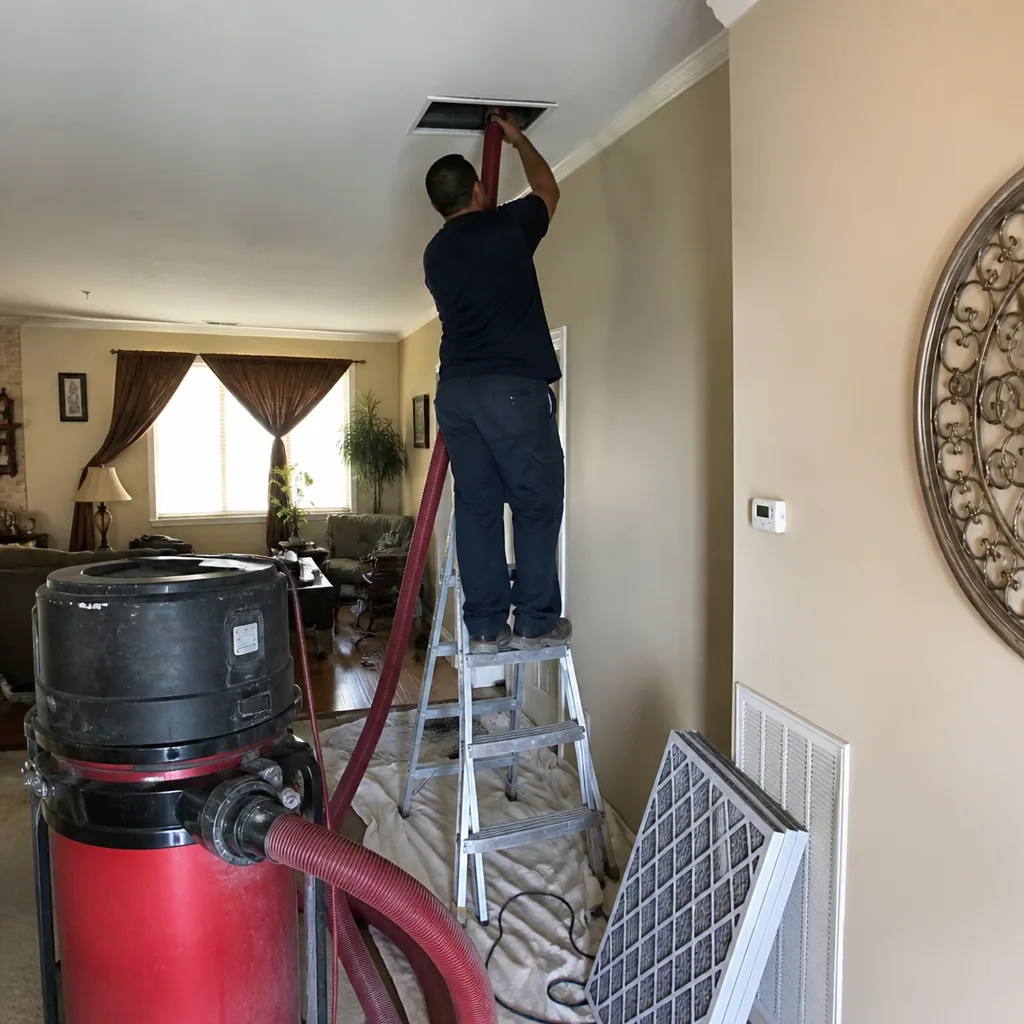
This is where equipment brands matter. Rotobrush and Nikro systems are contractor-grade machines built specifically for source-removal duct cleaning. They’re not residential vacuums adapted for duct work. A Rotobrush system feeds a rotating brush head down the duct while simultaneously vacuuming at the point of contact. A Nikro negative-air machine sets up the pressure differential that keeps dislodged debris moving in one direction: out of your house. If a company pulls up in a van and walks in with a household shop-vac and a ladder, you’re not getting source removal. You’re getting a very expensive dust redistribution.
For a deeper look at what differentiates professional equipment from consumer-grade approaches, see our Air Duct Cleaning in Fontana page.
How to Assess Your Own Duct System Before Scheduling
Before you call anyone, spend thirty minutes looking at your own system. You don’t need special tools. The evidence of duct contamination is usually visible to anyone who knows where to look.
Check Your Supply Registers
Remove one or two supply registers in rooms you use daily. Look at the inside of the register itself and into the duct boot. What you’re looking for: gray or brown film on the metal, visible dust clumps inside the boot, or debris that’s clearly been there through multiple HVAC cycles. Some dust at registers is normal. A caked-on layer that re-forms within days of wiping is not.
Inspect Your Return Grille and Filter Housing
The return side is where air enters the system. If the return grille is visibly coated with gray fuzz and the filter housing has dust buildup downstream of the filter, that tells you the filter isn’t catching everything. Homes in Fontana with the standard one-inch fiberglass filters often show this pattern. The filter catches large particles. Fine Fontana silt passes right through.
Look at Your Evaporator Coil
If you can access the coil through an inspection panel, look for a matted layer of dust and hair on the coil face. A dirty coil doesn’t just reduce efficiency. It means everything upstream of the coil, including the return ducts, has been carrying that particulate into your system. This also connects to whole-home air quality equipment from brands like Honeywell and Aprilaire, which do a better job of protecting your coil and ductwork than a basic fiberglass filter.
Run Your Hand Along Duct Surfaces You Can See
Exposed ductwork in garages, basements, or crawl spaces will tell you the story. Run a finger along the exterior. If you feel a slight vibration when the system runs, or if you see dust accumulating around joints and seams, that’s a sign of leakage. Leaky ducts pull in air from unconditioned spaces: garage air with carbon monoxide potential, crawl space air with moisture and soil particulate, attic air with insulation fibers.
Track How Fast Dust Returns
Dust your bedroom surfaces thoroughly. Take a photo. Wait one week. Take another photo. If you’re seeing visible re-accumulation within seven days with no windows open and no construction nearby, your ducts are likely acting as a dust distribution system rather than a dust containment system.
What a Legitimate Cleaning Job Looks Like Start to Finish
If you’ve never hired a duct cleaning service before, you don’t know what to expect, and you don’t know what to hold a contractor to. Here’s the full sequence of a proper source-removal job using professional equipment, start to finish.
1. Initial Walkthrough and System Inspection
Before any equipment comes off the truck, the technician should inspect the system. This means looking at the supply and return registers, accessing the plenum, checking filter condition, and identifying the type of ductwork: sheet metal, flex duct, or duct board. Each material requires different cleaning methods and agitation levels. If the technician skips this and starts setting up equipment immediately, that’s a red flag.
2. Surface Protection and Containment Setup
A professional operation protects the house. Floor coverings at entry paths, corner guards, and protective material at each register being worked on. This is what Guardsman-grade surface protection practices look like in practice. The technician is working in your living room, your bedrooms, your hallways. Protection should be non-negotiable.
3. Access Point Creation
Source-removal cleaning requires access into the main trunk lines, not just the branch runs accessible at registers. The technician will cut a few access holes, typically 8 – 10 inches, in the supply and return plenums or trunk lines. These get fitted with caps that are sealed and left accessible for future service. If a company tells you they can clean the whole system through existing registers without cutting access, they’re describing a partial job.
4. Negative Pressure Configuration
The vacuum unit connects to the system to create continuous negative pressure. This is the critical step that separates source removal from blow-and-vacuum. With the system under negative pressure, anything dislodged during agitation gets pulled toward the vacuum rather than pushed into your living space.
5. Mechanical Agitation Throughout the System
This is the actual cleaning. Rotating brush systems travel down each branch line and trunk line, scrubbing the interior surfaces. The brush contacts the duct walls and physically breaks loose the bonded dust, silt, and debris film. On a Nikro setup, the agitation occurs simultaneously with high-volume air movement at the point of contact. Each linear foot gets treated, not just the runs visible from the register opening.
6. Post-Clean Verification
At minimum, the technician should show you before-and-after photos of multiple duct locations. Better: have them put a camera down the main trunk line so you can see the clean metal surface yourself. A technician who won’t show you the interior after the work is done is either hiding something or didn’t do a thorough job.
New Construction in Fontana: The Drywall Dust Problem
Fontana’s growth over the past decade has been aggressive. Subdivisions in Sierra Lakes, Walnut Village, and the areas north of Summit Avenue have added thousands of homes. And almost every one of those homes has ductwork contaminated from day one.
The sequence is predictable. During construction, HVAC registers are often left open or poorly sealed. Drywall work creates extremely fine gypsum dust that hangs in the air and gets pulled into the duct system as soon as the HVAC gets fired up for the first time. The result: brand-new ductwork with a layer of fine white powder coating the interior before the homeowner has spent a single night in the house.
Why it matters. Drywall dust is abrasive and extremely fine. It passes through most filters easily. It coats the evaporator coil, reducing heat exchange efficiency. It circulates through the house for months or years after move-in. We’ve pulled access panels in Fontana homes less than two years old and found drywall dust caked a quarter-inch thick on the coil face.
Timing matters. If you’ve just purchased a new-construction home in Fontana, the ideal first cleaning window is within the first 12 – 24 months. That gives the system time to accumulate what it’s going to accumulate from your own occupancy, but addresses the construction dust before it bonds with household dust and pet dander into a more stubborn composite film. If you’re buying a new build, ask the builder whether the ducts were cleaned post-construction. Most will say no.
If you suspect your new Fontana home has construction dust in the system, our Duct Cleaning Fontana home page has more on what to look for and when to act.
Dryer Vent Cleaning in Fontana: A Fire-Safety Service, Not an Afterthought
Dryer vent cleaning often gets treated as an add-on. It shouldn’t be. Lint accumulation in dryer exhaust ducts is one of the leading household fire risks in any city, and Fontana’s dry, hot climate accelerates the danger.
The physics is straightforward. Your dryer pushes hot, moisture-laden air through an exhaust duct to the outside. That air carries lint particles that get caught on every bend, joint, and interior surface of the duct. Fontana’s low humidity means the lint dries out completely. What’s left is a highly flammable fibrous material packed inside a warm, enclosed tube connected to a heat source.
Signs your dryer vent needs cleaning in Fontana:
- Drying time has increased noticeably for the same load size
- The dryer exterior feels hotter than normal during operation
- The laundry room gets unusually warm or humid while drying
- You can smell a slight burning odor during cycles
- Lint is visible at the exterior vent hood where the duct exits
- It’s been more than 12 months since the last cleaning
This is not a job for a leaf blower. Proper dryer vent cleaning uses rotary brush equipment that runs the full length of the duct from dryer to exterior termination, breaking loose packed lint and pulling it back out. It’s a separate service from air duct cleaning, but it falls under the same roof for a focused duct specialist. See our dedicated Dryer Vent Cleaning in Fontana page for more.
When Ducts Need Repair, Not Just Cleaning
Here’s a scenario we see regularly. A homeowner schedules duct cleaning. The technician gets into the system and finds ducts that have collapsed, disconnected at joints, or been crushed by objects stored in the attic. Cleaning alone won’t fix those problems. And a generalist company will often clean around the damage, say nothing, and leave the homeowner with a system that’s still leaking air, pulling in attic dust, and wasting energy.
Air duct repair is the third pillar of focused duct service. It’s not a bonus. It’s the difference between a system that stays clean and one that re-contaminates within months. Common repair scenarios in Fontana homes:
- Flex duct that’s been crushed by storage in attics, common in older homes in the North Fontana area
- Disconnected joints where flex duct meets metal trunk lines, often from original installation and aggravated by temperature swings
- Failed tape and mastic at seams, allowing conditioned air to leak into unconditioned spaces
- Animal damage, particularly in attic spaces where rodents have chewed through flex duct
- Ripped or torn flex duct from previous contractor work in attics, cable installers being a frequent culprit
We repair what others only clean around. That’s not a slogan. It’s the practical difference between treating the symptom and treating the system. A clean duct that leaks is still a failed duct. See Air Duct Repair in Fontana for the full scope of what repair involves.
Common Mistakes to Avoid
- Choosing on price alone. If one quote is $199 and others are $400+, ask what equipment the $199 company is bringing. If the answer isn’t a negative-pressure system with mechanical agitation, you’re paying for a demonstration, not a cleaning.
- Assuming new construction means clean ducts. We covered this above, but it bears repeating. Your brand-new Fontana home likely has drywall dust in the ducts from day one. Don’t assume otherwise.
- Cleaning ducts but ignoring the dryer vent. The dryer vent is a separate exhaust system. Cleaning the HVAC ducts does nothing for the lint-packed dryer duct that’s a fire waiting to happen.
- Using the cheapest fiberglass filters and calling it good. Fontana’s particulate load demands better filtration. Whole-home filtration products from Honeywell and Aprilaire do significantly more to protect your ducts and coil than a $2 filter.
- Falling for the “$49 whole-house special” coupon. The duct cleaning industry has a well-earned bait-and-switch reputation. A coupon price that low means the real invoice comes after the van pulls up. Ask for a firm, whole-system price before anyone starts work.
- Scheduling duct cleaning while a renovation is underway. If you’re remodeling, wait until the work is done. Drywall dust and construction debris will re-contaminate clean ducts immediately, and your money goes down the vent.
- Not asking for post-clean verification. After the cleaning, you should see before-and-after photos or, better, a live camera check. If the company can’t show you the clean metal, ask why.
See the difference
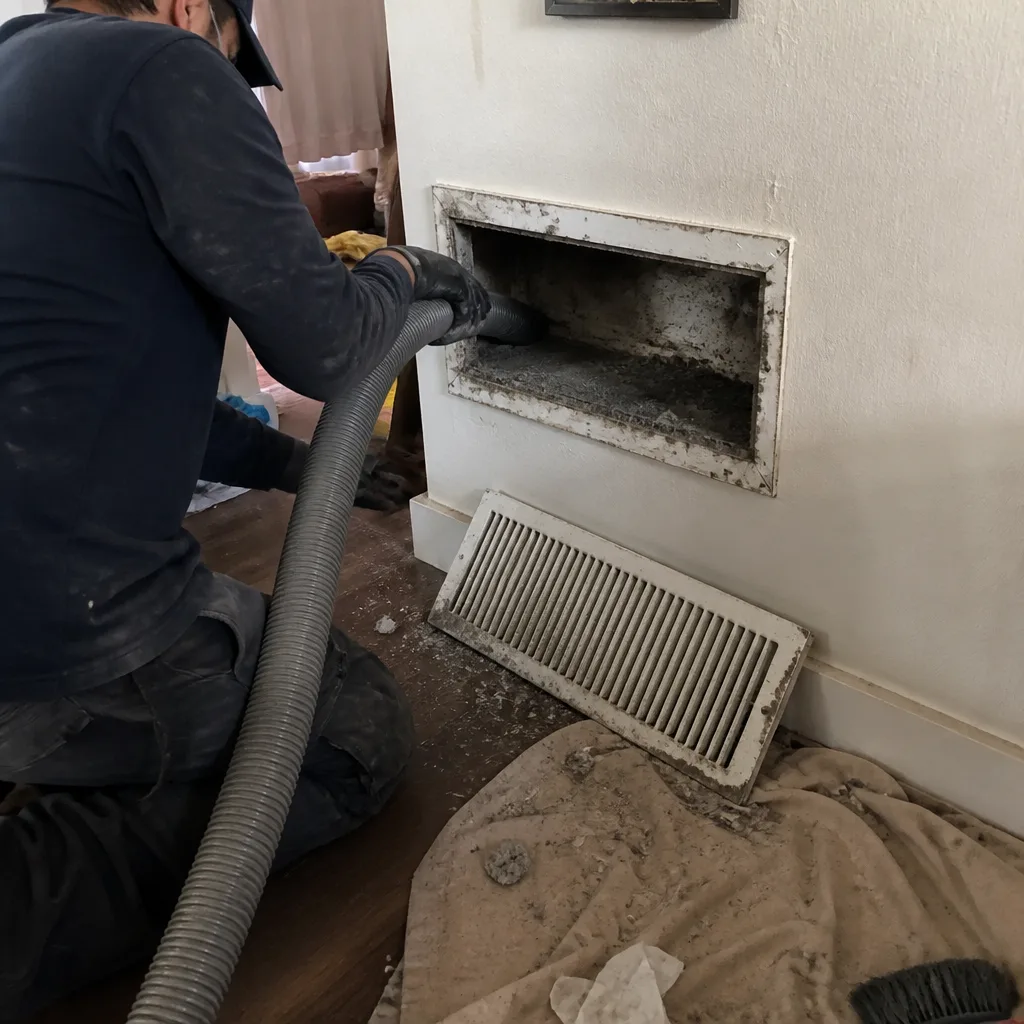 Before
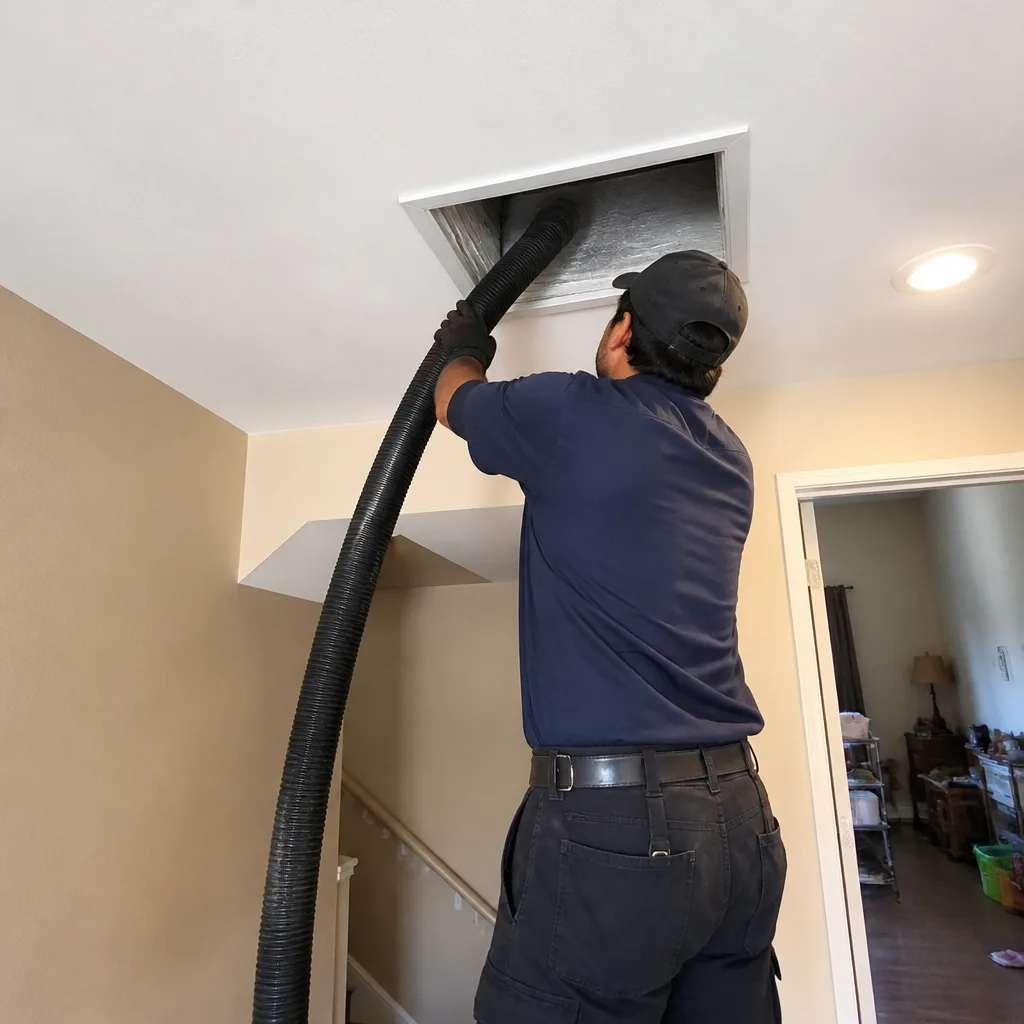 After
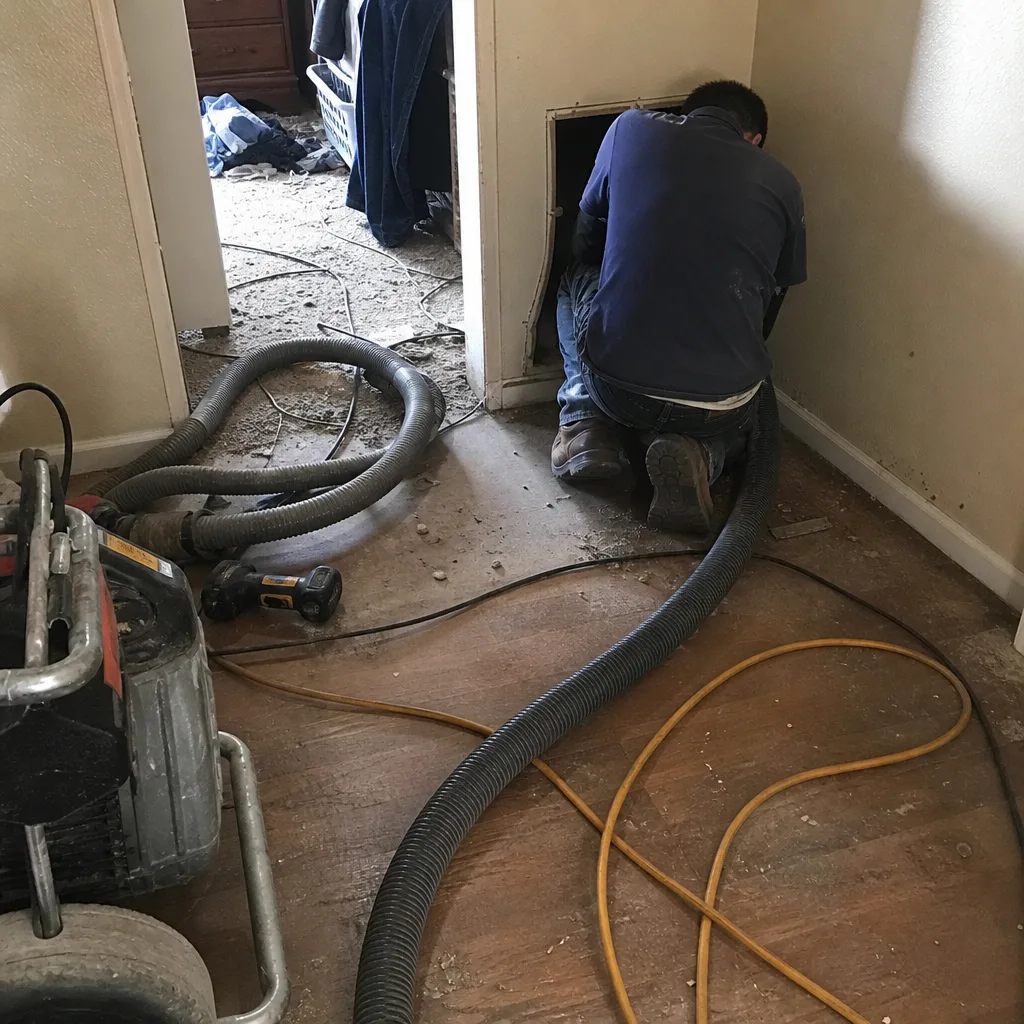 Before
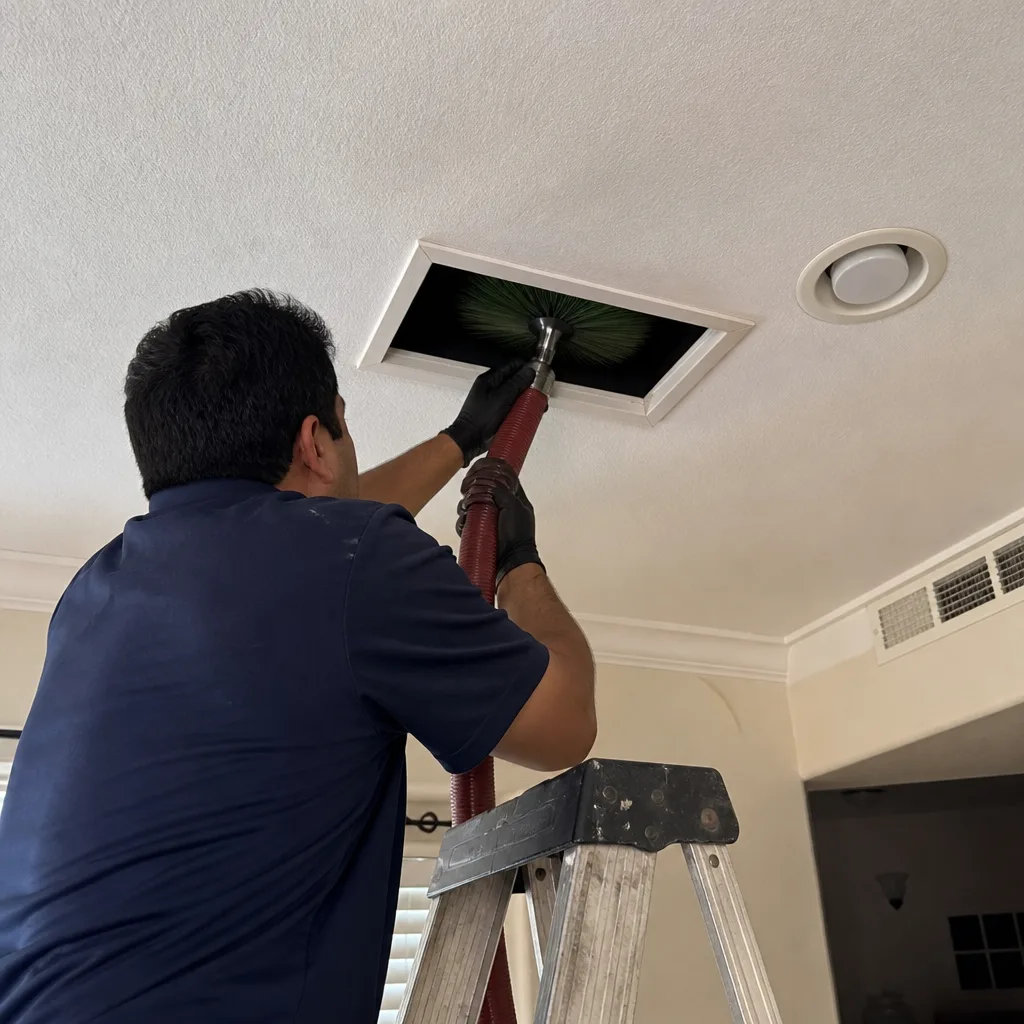 After
 Before
 After
When to Call a Professional
You should schedule an evaluation if you’ve noticed dust returning within days of cleaning, if your new Fontana home is less than two years old and has never had duct work done, if you smell mustiness when the HVAC runs, or if your dryer is running hot and slow. These aren’t things that resolve themselves. The longer contamination sits in the system, the more bonded it becomes and the harder it is to remove. Duct Cleaning Fontana offers free estimates in Fontana. Call (855) 501-3681 to schedule a system assessment.
Frequently Asked Questions
Whole-system air duct cleaning in Fontana typically runs between $350 and $650 depending on the number of ducts, the system configuration, and the level of contamination. The key is getting a firm price before work starts, not a per-vent quote that balloons once the technician arrives. Call (855) 501-3681 for a free estimate on your specific system.
Air duct cleaning is legitimate when it’s done with source-removal equipment and a proper negative-pressure setup. What gives the industry a bad name are the blow-and-vacuum operations and the bait-and-switch coupon companies. A genuine source-removal cleaning removes bonded dust from duct walls and measurably reduces the dust load circulating through your home. The difference is the equipment and the process.
In Fontana, we recommend evaluation every 2 – 3 years due to the higher particulate load from Santa Ana winds, I-10 corridor diesel traffic, and ongoing construction. Homes in coastal areas may go 5 years between cleanings. Fontana’s air quality conditions compress that timeline. If you’re near the freeway corridors or in an area with active construction, check your registers and filter at the two-year mark.
The cheapest quotes are almost always from companies using the blow-and-vacuum approach with household-grade equipment. A proper source-removal cleaning requires contractor-grade machines like Rotobrush or Nikro systems, which cost tens of thousands of dollars. Companies carrying that equipment charge accordingly. If the price difference is dramatic, the equipment and approach are the reason. Call (855) 501-3681 and ask what equipment we run. The answer won’t be a shop-vac.
Demand post-clean verification. Before-and-after photos from inside the ducts are the minimum standard. A camera inspection of the main trunk line after cleaning shows you the actual result on the actual metal. Any company that won’t show you the interior after finishing is giving you a reason to be suspicious.
Removing accumulated dust, pollen, and particulate from your duct system reduces the amount of that material being recirculated through your home’s air. That’s a mechanical fact, not a medical claim. For Fontana residents dealing with high outdoor particulate levels, clean ducts mean the air your system circulates isn’t adding to the load your nose and lungs are already dealing with from being outside. Whole-home filtration through systems from Honeywell and Aprilaire can further reduce what reaches your living space.
The Bottom Line
Air duct cleaning in Fontana is a different job than it is in coastal California. The particulate load from wind patterns, freeway proximity, and continuous construction means your ducts accumulate faster and need attention sooner. The difference between a real cleaning and a waste of money comes down to one thing: equipment. Source-removal cleaning with professional-grade systems like Rotobrush and Nikro actually removes contamination from duct surfaces. Blow-and-vacuum redistributes it. If you’re going to spend the money, spend it on a company that brings contractor-grade tools, protects your home during the work, and can show you the clean metal when it’s done. Call (855) 501-3681 to schedule a free estimate in Fontana.
Written by the team at Duct Cleaning Fontana, serving Fontana since 2017.