
Last updated November 2, 2026
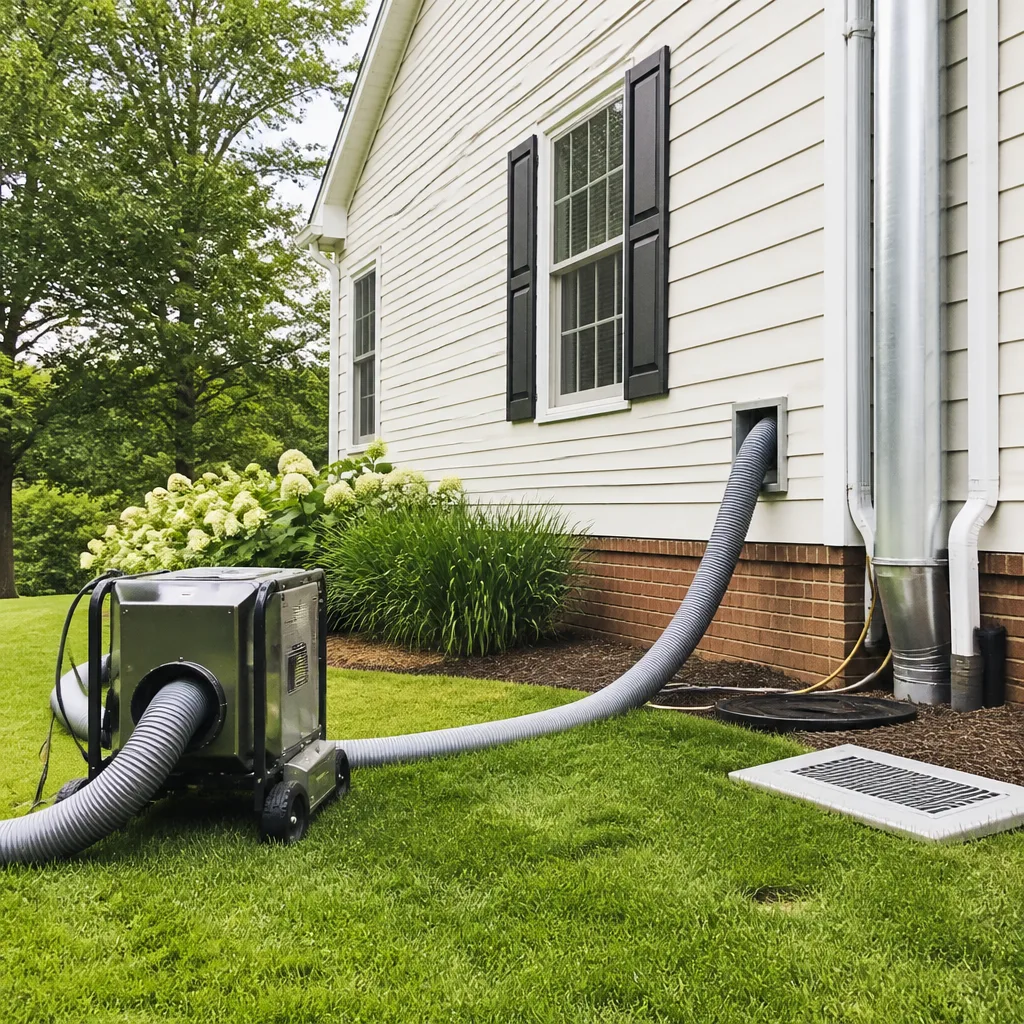 Whole-home duct cleaning
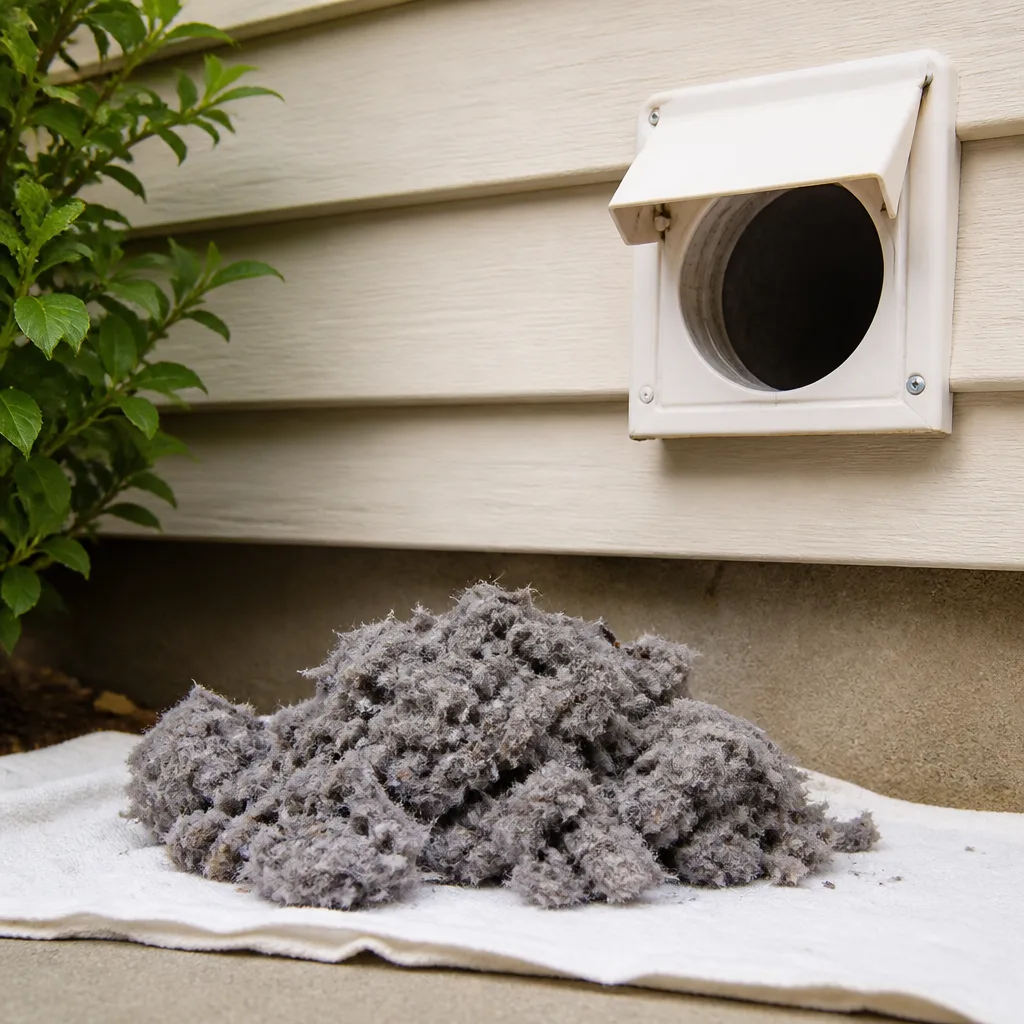 Dryer vent cleaning
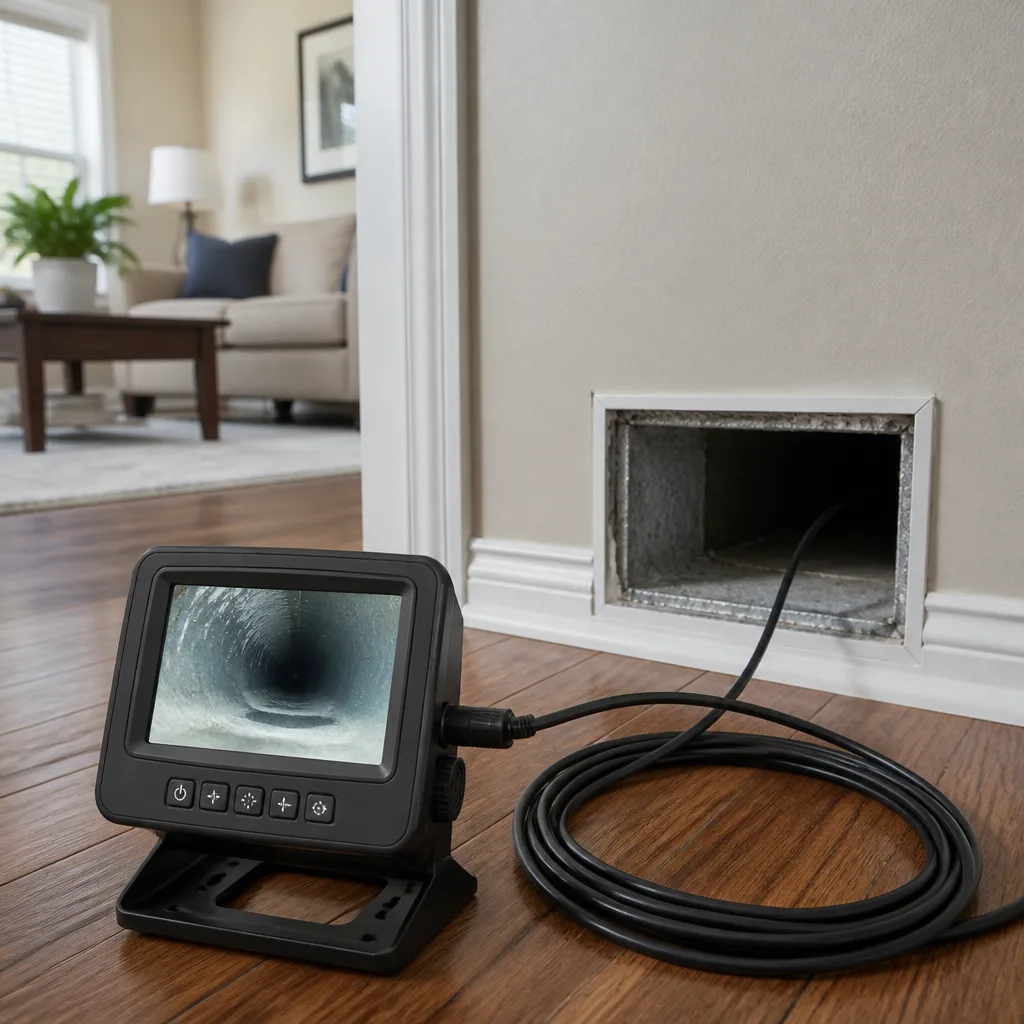 Camera inspection
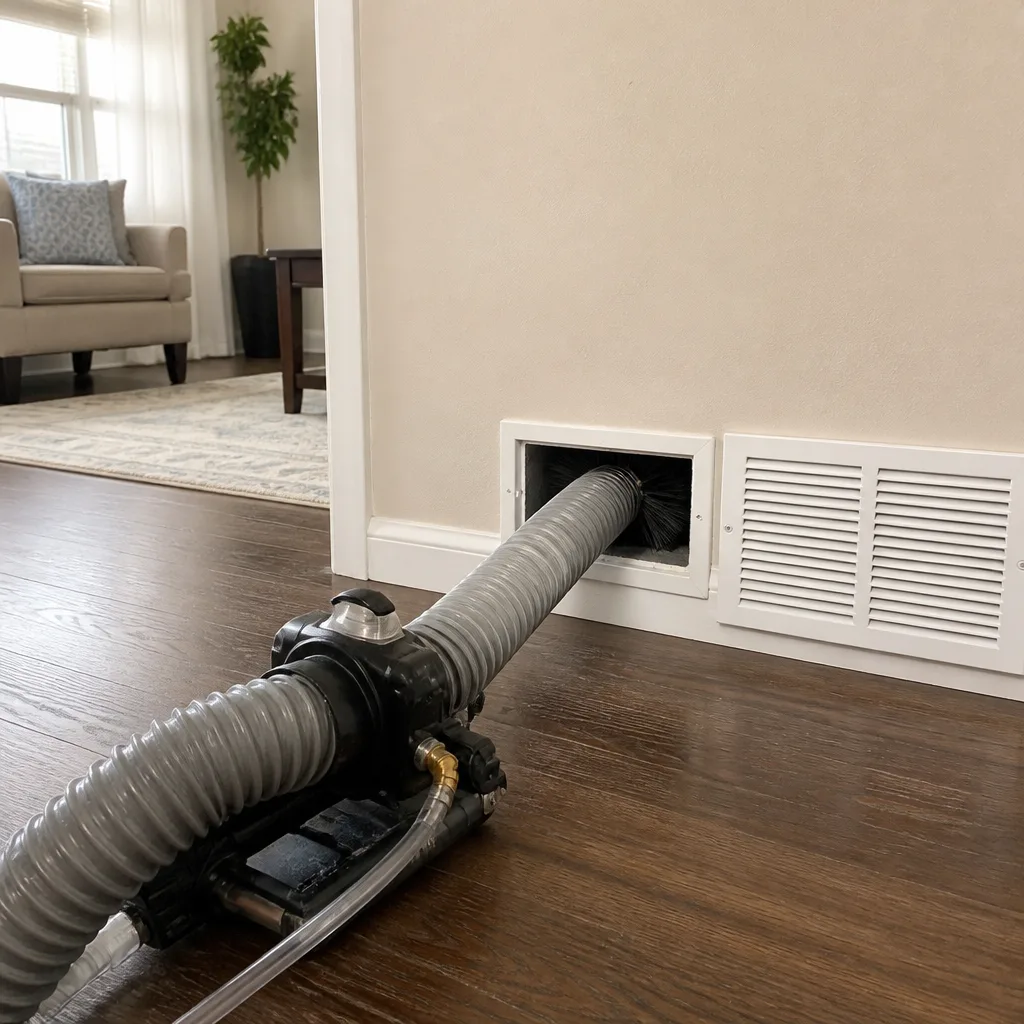 Sanitizing & deodorizing
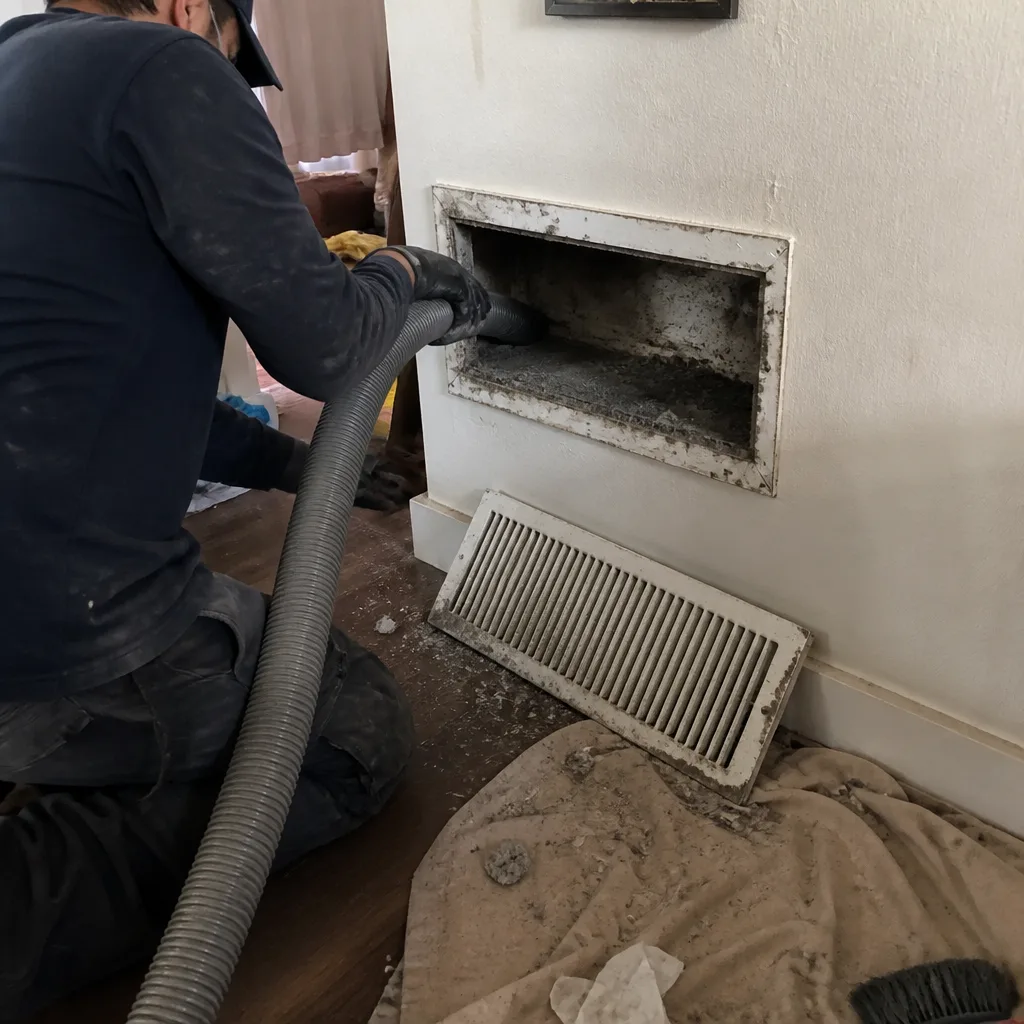
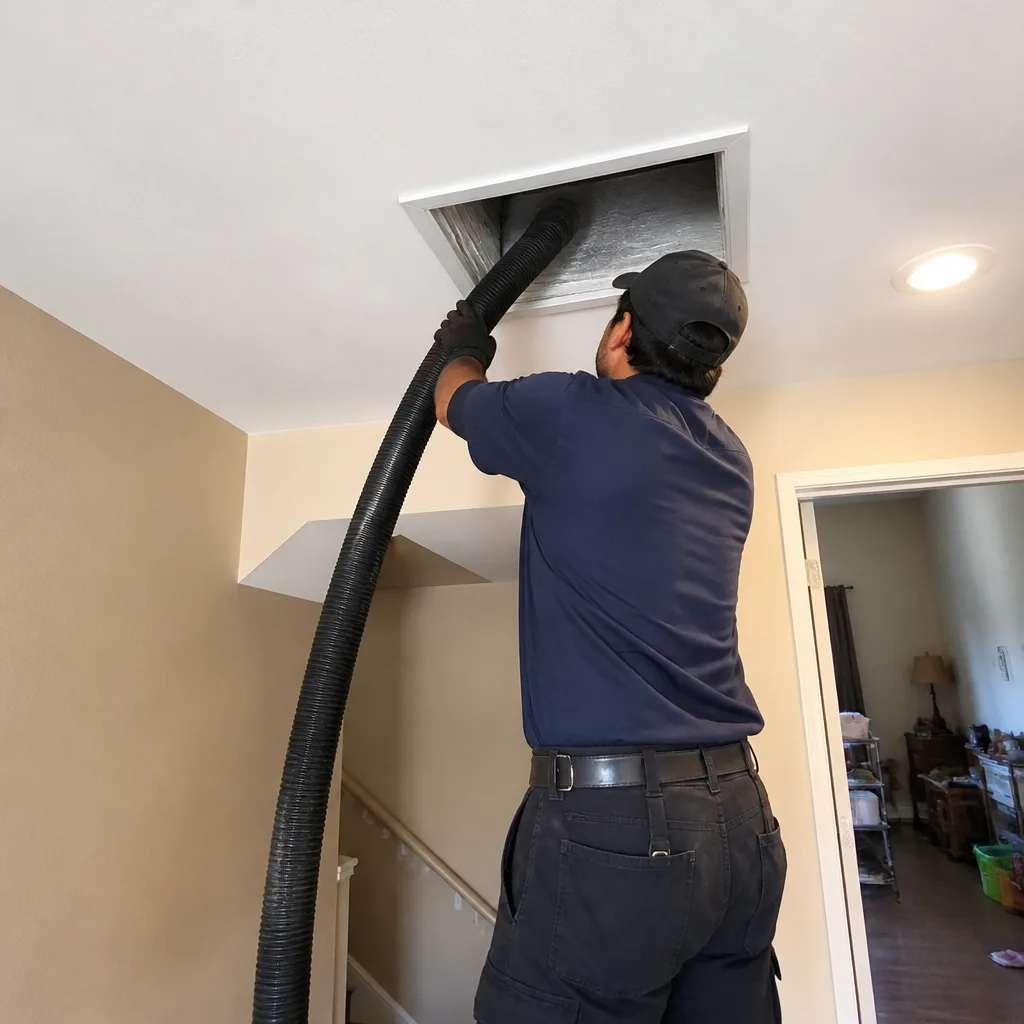
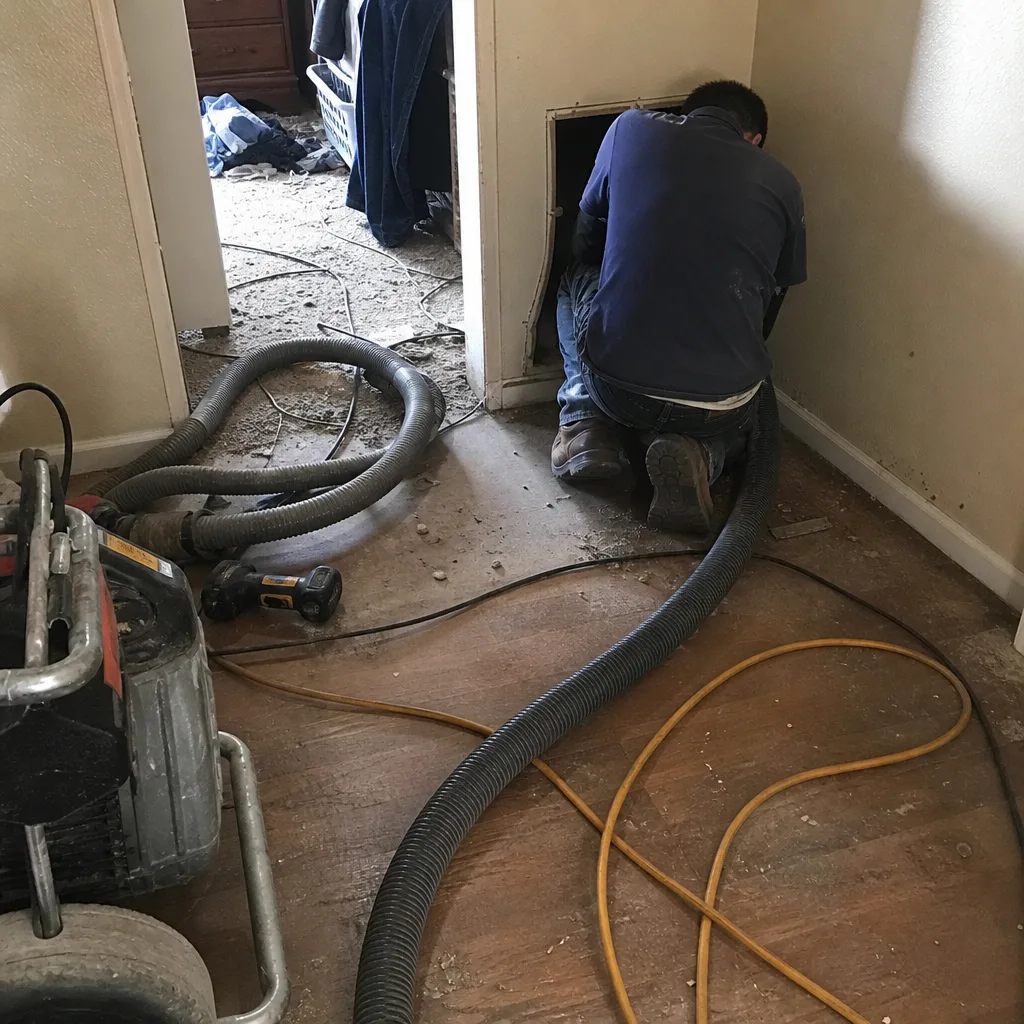
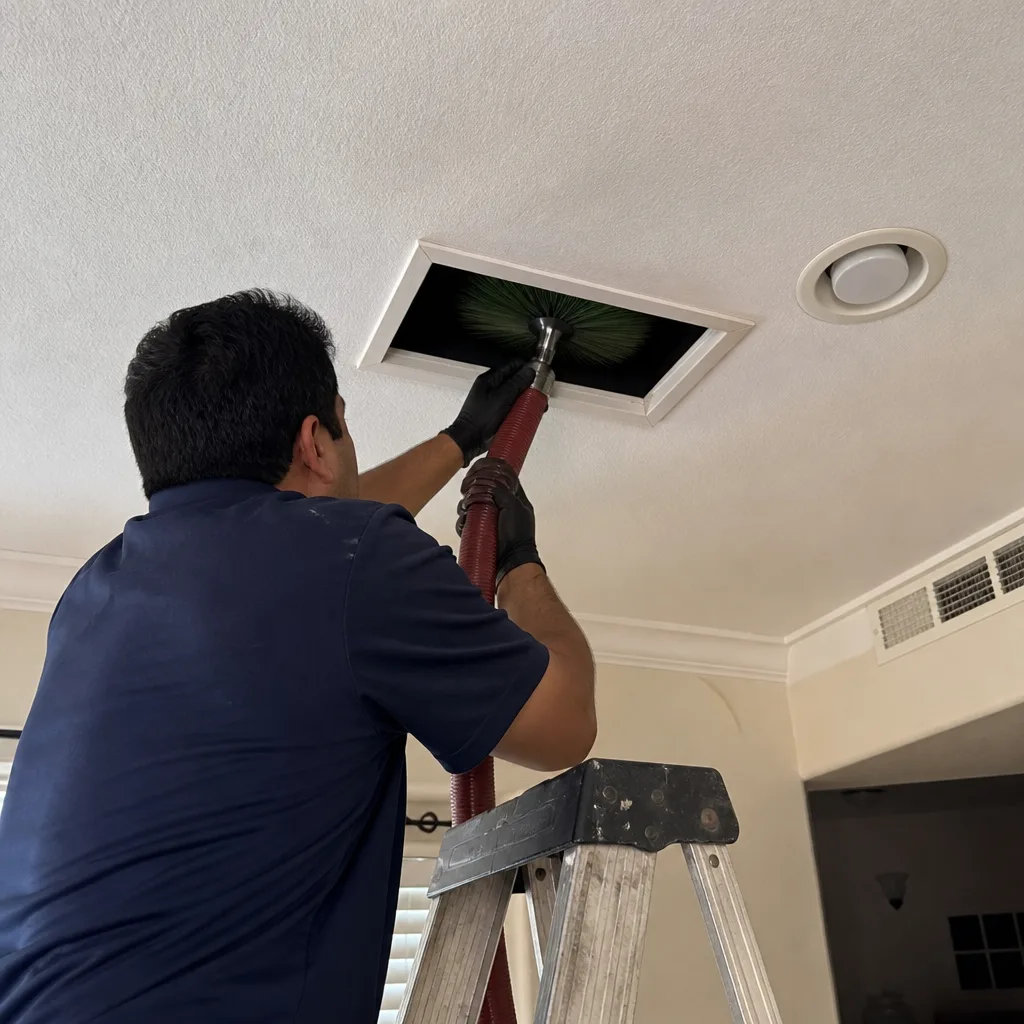
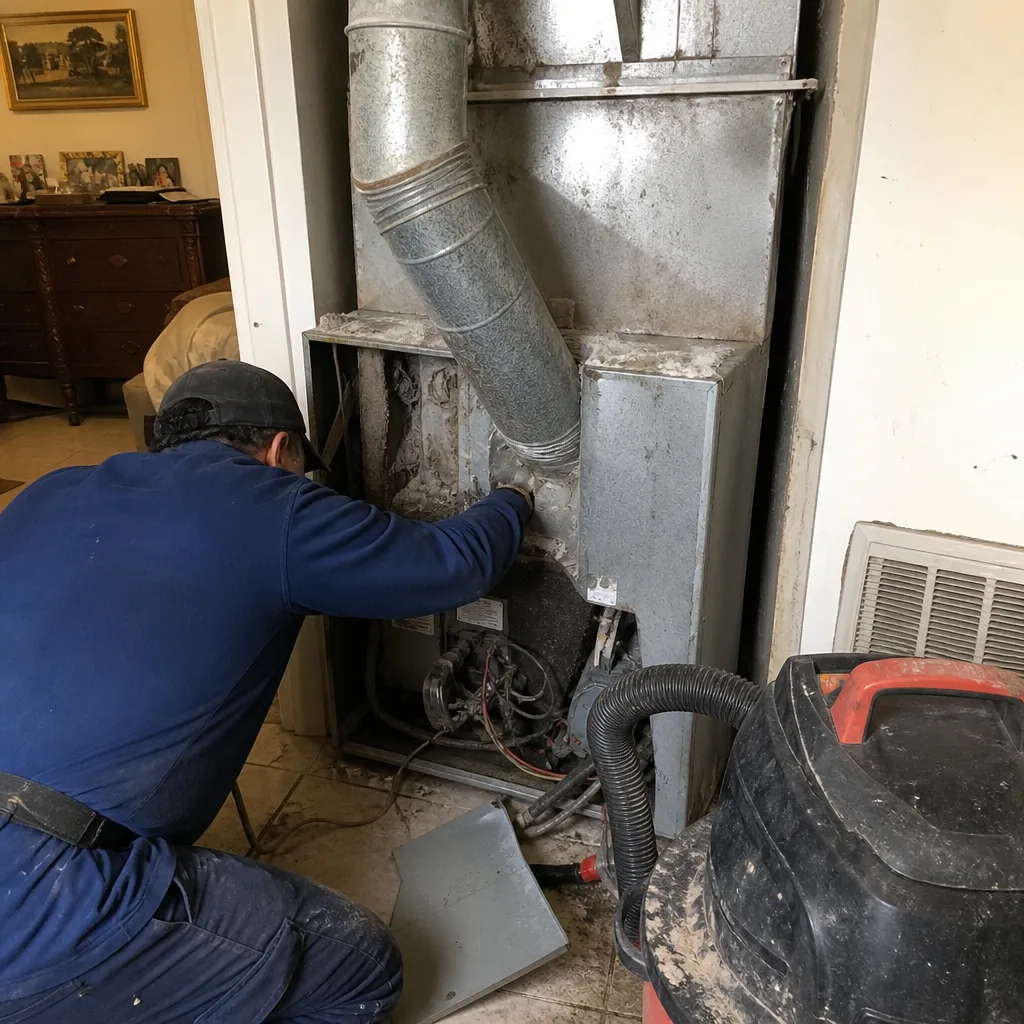
Whole-system duct and dryer vent check with before-and-after photos - you see exactly what came out of your vents
That "$99 whole-house special" is a bait ad - the real number appears once they are in your hallway, or the "clean" is a shop-vac at the register. We photograph the inside of your ducts before and after instead.
Air Duct Cleaning Emergency Preparedness Guide for Fontana Homes
After the 2020 wildfire season, air quality monitors across the Inland Empire recorded PM2.5 levels 10 to 15 times the EPA’s hazardous threshold for multiple consecutive days. Smoke at those concentrations does not simply drift past your windows and leave. It gets pulled into forced-air systems, embeds in duct insulation and liner material, and can continue off-gassing into living spaces long after the AQI outside returns to something breathable. Fontana sits directly in one of California’s highest wildfire smoke exposure corridors, which means this is not a hypothetical scenario for homeowners here. This guide covers what actually happens to your duct system during a smoke emergency, how to assess the damage afterward, and the exact sequence for getting your home’s air back to baseline. For ongoing protection, see our Air Duct Cleaning Maintenance Checklist for Fontana Homeowners.
Styles & brands we work with
- Whole-home duct cleaning
- Dryer vent cleaning
- Camera inspection
- Sanitizing & deodorizing
Quick Answer
After a prolonged wildfire smoke event or heavy Santa Ana dust episode in Fontana, your duct system needs a professional assessment rather than a filter swap alone. Smoke particles under 2.5 microns pass through standard HVAC filters, embed in duct liner and insulation, and off-gas continuously. A post-emergency air duct cleaning in Fontana using contractor-grade negative-air equipment is the only way to remove what a filter change cannot. Begin with a visual inspection of return registers and supply vents, upgrade to a MERV 13 filter for temporary operation, and schedule a full system assessment before running the HVAC continuously again.
Table of Contents
- What Prolonged Smoke Actually Does to a Duct System
- Why Fontana Homes Face Higher Duct Contamination Risk
- The Post-Emergency Inspection Sequence
- Santa Ana Dust Events and Duct Infiltration
- Construction Debris in High-Growth Fontana Neighborhoods
- Why Dryer Vents Need a Separate Check After Ash Events
- What to Tell Your Contractor Before They Arrive
- Common Mistakes to Avoid
- When to Call a Professional
- Frequently Asked Questions
- The Bottom Line
What Prolonged Smoke Actually Does to a Duct System
Wildfire smoke is not one thing. It’s a mixture of gases, water vapor, and particulate matter ranging in size from visible ash down to particles measured in nanometers. The particles that matter most for your duct system are PM2.5 and smaller particles that behave more like a gas than a dust. Standard HVAC filters, even decent pleated ones, are rated to capture a percentage of particles in the 3 to 10 micron range. The sub-2.5 micron fraction sails through.
Once inside the return side of your system, this is what happens:
- Filter bypass: Smoke particles pass through MERV 8 and lower filters almost without interruption. Even MERV 11 filters catch only a portion of the sub-micron fraction.
- Deposition in the return plenum: The first low-velocity zone smoke hits is the return plenum. Particles settle here and coat the interior surface.
- Embedding in liner material: If your ducts are internally lined with fiberglass or acoustic liner, smoke particles work into the porous surface. Liner acts like a sponge for fine particulate.
- Coating on the blower assembly: The blower wheel and motor housing accumulate a fine film of smoke residue. This reduces efficiency and can create a lingering odor source.
- Distribution to every room: The supply side pushes smoke-laden air through branch ducts to every register in the home. That fine gray film you see on vents after a smoke event is only the visible fraction.
The off-gassing issue is real. Volatile organic compounds released during wildfires, including aldehydes and phenols, adsorb onto duct surfaces and release slowly over weeks. That’s why a home can smell like smoke for a month after the outdoor air has cleared. The source is not outside. It’s in the walls.
In our experience working on Duct Cleaning Fontana home systems after major smoke events, the ducts that need the most aggressive cleaning are always the ones with internal insulation liner and long horizontal runs where velocity drops and particulate settles out. Homes with rigid metal duct and no liner fare better, but they still accumulate a residue film that a filter change will not address.
Why Fontana Homes Face Higher Duct Contamination Risk
Fontana’s geography puts it in a tough spot for airborne particulate. The city sits in the western Inland Empire, downwind of the Cajon Pass and the San Gabriel Mountain foothills. When fires burn in the San Bernardino National Forest or the Angeles National Forest, the prevailing westerly and southwesterly winds push smoke directly through the pass and into the Fontana basin. The same topography gives smoke nowhere to disperse, so the concentrations linger.
There are three recurring contamination vectors we see in Fontana specifically:
- Wildfire smoke from the San Bernardino and Angeles National Forests: The 2020 El Dorado Fire, the 2016 Blue Cut Fire, and the 2003 Grand Prix Fire all pushed hazardous-level smoke into Fontana for extended periods. This is a repeating pattern, not a one-off.
- Santa Ana wind dust events: The Santa Anas blow from the northeast through the Cajon Pass with enough force to lift fine desert particulate and agricultural dust into residential areas. These events can push PM10 levels into the unhealthy range even without a fire.
- Construction particulate from high-growth development: Fontana has been one of the fastest-growing cities in San Bernardino County for two decades. New housing tracts, warehouse construction, and road work generate silica dust and construction debris that finds its way into nearby duct systems.
A home in Fontana’s Northgate or Sierra Lakes neighborhoods faces a different particulate profile than one in the older central Fontana grid. Newer construction with tight envelopes and central returns tends to concentrate whatever gets inside. Older homes with leaky ducts pull in particulate from crawl spaces and attics. The common thread is that once fine particulate enters the system, the blower distributes it evenly through every room.
The Post-Emergency Inspection Sequence
After a significant smoke or dust event, you do not need to immediately call for a full duct cleaning. What you need is a sequenced assessment. Here is the step-by-step protocol we recommend to Fontana homeowners:
- Visual check of registers and vents (day 1): Remove two or three supply registers and one return grille. Look for visible gray or brown film. Wipe with a white cloth. If the cloth comes back discolored, particulate entered the system.
- Filter inspection (day 1): Pull the filter and hold it up to a light. If it is loaded with gray or brown residue, that residue also passed the filter in finer form and deposited downstream. This is the telltale sign that cleaning is warranted, not just filter replacement.
- Temporary upgraded filtration (day 1): If you must run the HVAC, install a MERV 13 filter as an interim measure. Note that some older systems have static pressure limits and may struggle with MERV 13. Run the fan in “on” mode during occupied hours to keep air moving through the filter.
- Duct assessment by a professional (day 2 to 5): A technician runs a camera scope through the return and supply runs to document the extent of deposition. This tells you whether you need a full cleaning or just a targeted return-side treatment.
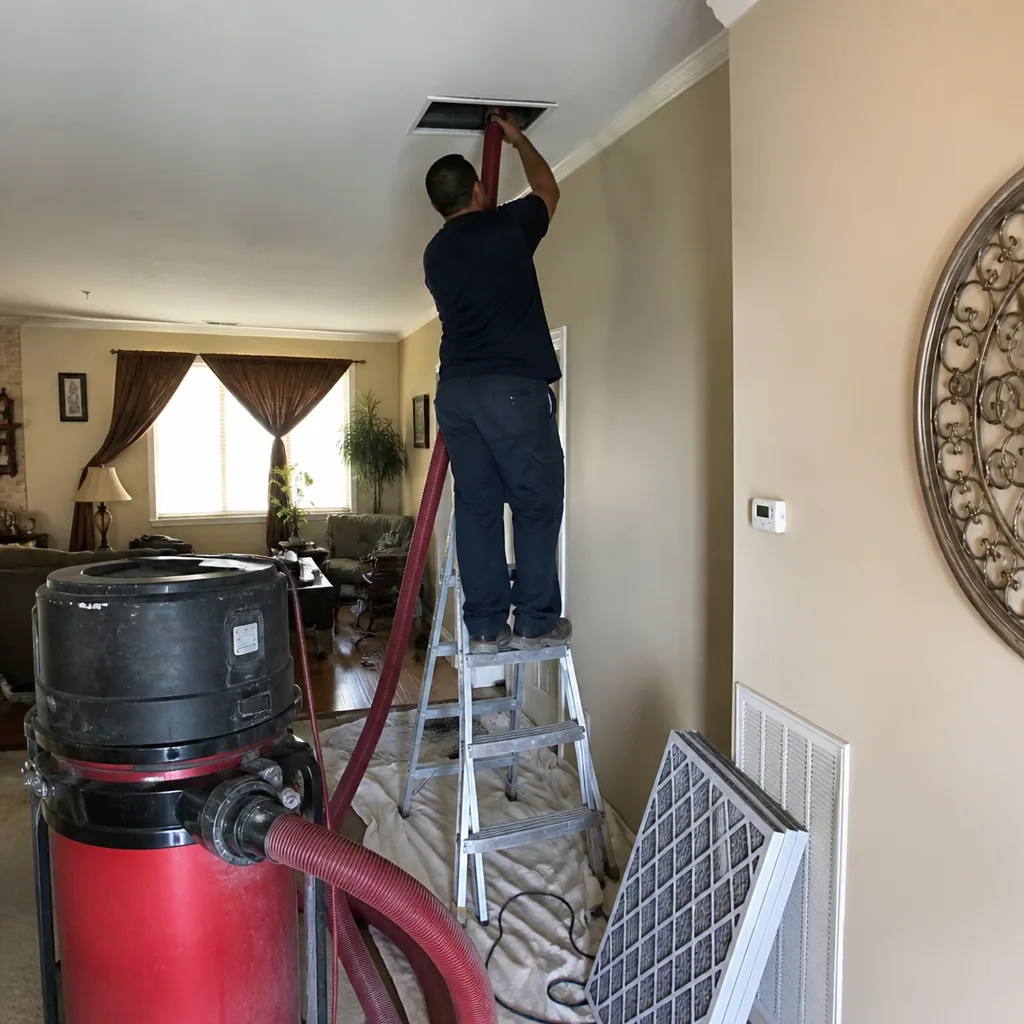
- Full system cleaning if warranted (day 3 to 10): A proper cleaning uses negative-air containment – a vacuum system is attached at the plenum to create negative pressure while agitation tools dislodge particulate from duct walls. This is the part where the equipment matters, because a shop-vac does not create the airflow needed to pull PM2.5 out of a 40-foot branch run.
- Post-cleaning verification (same day): Before-and-after photos of the duct interior should be standard. If a contractor will not show you the inside of your ducts after cleaning, the work probably did not happen the way it should have.
The decision point between “resume operation with upgraded filtration” and “schedule a full cleaning” comes down to the filter inspection. A dusty filter after an event is normal and expected. A filter coated with gray or brown smoke residue, combined with a visible film on supply registers, means the system already has a particulate load that filtration alone will not correct.
Santa Ana Dust Events and Duct Infiltration
Wildfire smoke gets the headlines, but in Fontana the Santa Ana events are actually more frequent. High wind events through the Cajon Pass can push PM10 concentrations into the unhealthy range multiple times per year, and unlike wildfire smoke, the particle profile is different. Santa Ana dust is heavier, more abrasive, and carries silica content that wears on blower bearings and coats duct surfaces with a fine grit.
Here is what a Santa Ana dust event does differently to a duct system:
- Grit loading on the blower wheel: Fine sand and silica particles stick to the blower wheel blades and throw off balance. A blower running out of balance creates noise and premature bearing wear.
- Dust accumulation in horizontal runs: Santa Ana dust is heavier than smoke particulate and settles faster. Long horizontal duct runs in slab foundations collect dunes of fine grit over repeated events.
- Register and grille coating: The visible dust on your supply registers after a wind event is only the coarse fraction. The fine fraction is deeper in the system.
- Filter loading in hours, not days: During a severe Santa Ana event, a standard 1-inch filter can load to capacity in a single day. Once a filter is fully loaded, air bypasses it entirely and carries particulate straight into the system.
For Fontana homeowners, the practical takeaway is this: after any Santa Ana event strong enough to leave visible dust on outdoor surfaces, check your filter. If it is loaded, the ducts took a hit too. Homeowners who schedule an air duct repair in Fontana inspection after these events often find that deteriorated duct sections, disconnected joints, or loose register boots are the entry points where wind-driven dust got in. The cleaning is only half the fix if the system has leaks.
Construction Debris in High-Growth Fontana Neighborhoods
Fontana has been under continuous construction for years. New tract housing in the north, warehouse and logistics development along the 210 and 15 corridors, and road expansion projects all generate airborne particulate that drifts into established neighborhoods. If you live within a quarter mile of active construction, your duct system is collecting what that construction kicks up.
Construction debris in ducts is not the same as household dust. It includes:
- Silica dust from concrete cutting and grinding – abrasive and persistent
- Drywall dust from interior finishing – extremely fine, alkaline, and prone to caking when humidity rises
- Wood and framing debris – larger particles that can lodge in return boots and restrict airflow
- Insulation fibers from open framing – fiberglass and mineral wool strands that irritate respiratory systems
The problem is compounded when construction coincides with home renovation. A kitchen remodel or flooring replacement in your own home generates drywall dust and demolition particulate that gets pulled into the return side and distributed through the entire system. Even with careful containment, the HVAC system is a particulate magnet during any renovation.
If you are in a Fontana neighborhood with active development, the protocol is simple: after any construction project on your own property or heavy activity nearby, change the filter and inspect supply registers. If you see construction dust on the registers, schedule a professional assessment through our Air Duct Cleaning services. Drywall dust in particular will not come out with a basic vacuum pass. It requires agitation tools and negative-air extraction to fully remove.
Why Dryer Vents Need a Separate Check After Ash Events
Your dryer vent is a separate system from your HVAC ducts, and ash-fall events compromise it in different ways. During a wildfire, falling ash collects on the exterior dryer vent hood, and the dryer’s exhaust stream pulls fine ash into the vent run when the dryer operates. Over successive cycles, that ash combines with existing lint to create a dense, flammable layer in the vent pipe.
Here is the sequence we see in Fontana after ash-fall events:
- Ash accumulates at the exterior vent hood: The louvered hood is a catch point for airborne ash. It builds up on the louvers, the hood body, and the surrounding wall surface.
- Dryer cycles pull ash inward: The dryer exhaust creates positive pressure that pushes lint outward, but the vent hood’s backdraft damper does not seal perfectly. Ash makes its way into the first few feet of the vent run.
- Ash and lint form a composite layer: Ash acts as a binder with lint. The combination is denser and more resistant to airflow than lint alone, and it ignites at a lower temperature.
- Reduced airflow leads to overheating: The dryer’s high-limit thermostat cycles more frequently as the vent becomes restricted. Over time, this shortens the life of the heating element and increases fire risk.
There is a reason dryer vent cleaning in Fontana is treated as a fire-safety service, not a convenience add-on. The NFPA has repeatedly identified dryer vents as a leading cause of residential fires, and the addition of wildfire ash to the lint load in the vent makes the risk profile worse. After any ash-fall event in Fontana, the dryer vent should be inspected and cleaned independently of the HVAC system. They are two different systems with two different contamination profiles.
What to Tell Your Contractor Before They Arrive
When you call to schedule a post-emergency duct cleaning, the information you share over the phone changes what equipment the technician brings and how the scope is priced. Here is what matters:
- The event type: Wildfire smoke, Santa Ana dust, construction debris, or a flood/water event. Each requires different agitation and extraction approaches. Smoke residue needs aggressive brush agitation and HEPA-filtered negative air. Construction dust needs high-velocity air washing. Water events require drying assessment before any cleaning happens.
- Duration of exposure: One day of moderate smoke is a different scope than two weeks of hazardous-level particulate. Tell them how long the event lasted and whether you ran the HVAC during it.
- Filter condition: Tell them what the filter looks like right now. A loaded filter with gray or brown residue confirms particulate entered the system and tells them the deposition is likely heavy.
- System type: Flex duct, rigid metal, internally lined, or a mix. Liner requires different agitation than bare metal. Flex duct requires lower-pressure cleaning to avoid damage. If you do not know, that is fine. The technician will identify it on arrival.
- Home age and renovation history: Pre-1990 Fontana homes may have duct systems with internal liner that holds smoke more aggressively. Recent renovations mean drywall dust on top of whatever else is in the system.
- Any respiratory issues in the household: If anyone in the home has asthma, COPD, or allergy sensitivities, tell them. This affects containment choices during the cleaning and whether they recommend upgraded filtration equipment like Aprilaire media cabinets or Honeywell electronic air cleaners as part of the post-event recovery.
Contractors using professional-grade equipment will have specific protocols for post-smoke and post-dust events. The truck should carry negative-air machines, HEPA-filtered extraction, and agitation tools rated for the duct type in your home. Rotobrush and Nikro systems are purpose-built for this work, and the difference between those and a blower-and-shop-vac approach is the difference between removing the contamination and just redistributing it. Ask what they are bringing before you book.
Common Mistakes to Avoid
- Relying on filter changes alone after a smoke event. A MERV 13 filter helps going forward, but it does nothing for the smoke residue already deposited in the duct liner and on the blower. The system stays contaminated until physically cleaned.
- Running the HVAC fan continuously during the event without checking the filter. Once a filter loads to capacity, air bypasses it and you are actively circulating smoke particulate through every room. Continuous fan operation is only helpful if the filter is being changed frequently.
- Hiring a generalist based on price. A $99 whole-house duct “special” from a general handyman or a coupon service typically means a shop-vac on the end of a hose, no negative-air containment, and no before-and-after verification. You get what you pay for, or less.
- Ignoring the dryer vent after an ash event. The HVAC ducts get attention, the dryer vent gets forgotten, and it is the dryer vent that carries the fire risk. These are separate systems and both need assessment.
- Assuming the smoke smell will “air out” on its own. Smoke odor trapped in duct liner and on blower components will off-gas for weeks or months. If the smell persists after outdoor air quality recovers, the source is in the system.
- Cleaning without fixing leaks. If disconnected joints or deteriorated duct sections allowed particulate in during the event, cleaning alone leaves the same entry points open for the next event. Duct repair needs to be part of the scope.
- Not documenting the condition before and after. A legitimate contractor will provide access to before-and-after photos of your duct interior on the same visit. If they cannot or will not, that is a red flag about the depth of the work.
When to Call a Professional
You do not need a professional assessment after every windy day. But after a significant smoke event, a heavy Santa Ana dust episode, any construction project on your own property, or a water event that reaches the duct system, a professional evaluation is the right call. The specific triggers are simple: visible residue on supply registers, a filter loaded with gray or brown particulate, a persistent smoke or dust odor that will not clear, or a dryer that is suddenly running hot and slow. Any one of these signals that the system has a particulate load beyond what a filter change will correct. Duct Cleaning Fontana offers free estimates in Fontana. Call (855) 501-3681 and tell the team what event your system was exposed to so they bring the right equipment for the scope.
Frequently Asked Questions
Post-smoke duct cleaning in Fontana typically runs $450 to $900 for a standard single-system home, depending on the number of runs, duct material, and whether the system has internal liner. Liner requires more aggressive agitation and takes longer. Homes with extensive smoke deposition or multiple systems may run higher. Duct Cleaning Fontana provides a flat price per system agreed before work starts, so the quote you get is the price you pay. Call (855) 501-3681 for an exact quote.
Wait until the outdoor air quality in Fontana has returned to an AQI below 100 for at least 24 hours before scheduling a cleaning. Cleaning during active smoke conditions means pulling contaminated outdoor air into the system while trying to remove contamination from it. That said, do not wait weeks. The longer smoke residue sits in the duct liner, the more it off-gasses into living spaces and the harder it is to fully remove.
A MERV 13 filter catches a meaningful portion of smoke particulate, but it is not a substitute for cleaning after exposure. The filter protects the downstream side of the system to a degree, but the return side, the blower, and everything upstream of the filter still sees full smoke exposure. A MERV 13 filter is a good interim measure during an event. It is not a recovery plan.
Yes. The dryer will continue to function even with a partially restricted vent, but the restriction adds heat stress to the heating element and increases lint-and-ash buildup in the vent run. After any ash-fall event in Fontana, the dryer vent should be inspected and cleaned as a fire-safety measure, independent of the HVAC system.
A professional contractor will provide before-and-after photos of the duct interior taken on the same visit. You should be able to see the difference in the images, not just take someone’s word for it. The equipment matters too. Rotobrush and Nikro systems with negative-air extraction are visible from the truck, and the process takes a few hours, not 45 minutes. If the crew is in and out in under an hour with a shop-vac, you did not get a duct cleaning.
Most Fontana homes should plan for duct cleaning every 3 to 5 years under normal conditions. Homes within a quarter mile of active construction, homes with residents who have respiratory conditions, and homes that have been through a significant smoke event should shorten that interval to every 2 to 3 years. After a major wildfire smoke event, schedule an assessment regardless of when the last cleaning was done.
The Bottom Line
Fontana’s location puts every home here on the receiving end of whatever the wind brings through the Cajon Pass and down from the mountains. Wildfire smoke, Santa Ana dust, and construction particulate all enter your duct system the same way, and none of it leaves on its own. The recovery protocol is straightforward: inspect the filter and registers first, run upgraded filtration only if the filter is being changed frequently, and schedule a professional assessment with a contractor who uses negative-air equipment and shows you before-and-after photos. You can find more guides & resources on our blog. The duct system is the last place in your home that should be an afterthought after an air quality event, because it is the one place that keeps feeding whatever it collected back into the air you breathe.
Written by the team at Duct Cleaning Fontana, serving Fontana since 2017.
See the difference
 Before
 After
 Before
 After
 Before
 After