
Last updated November 2, 2026
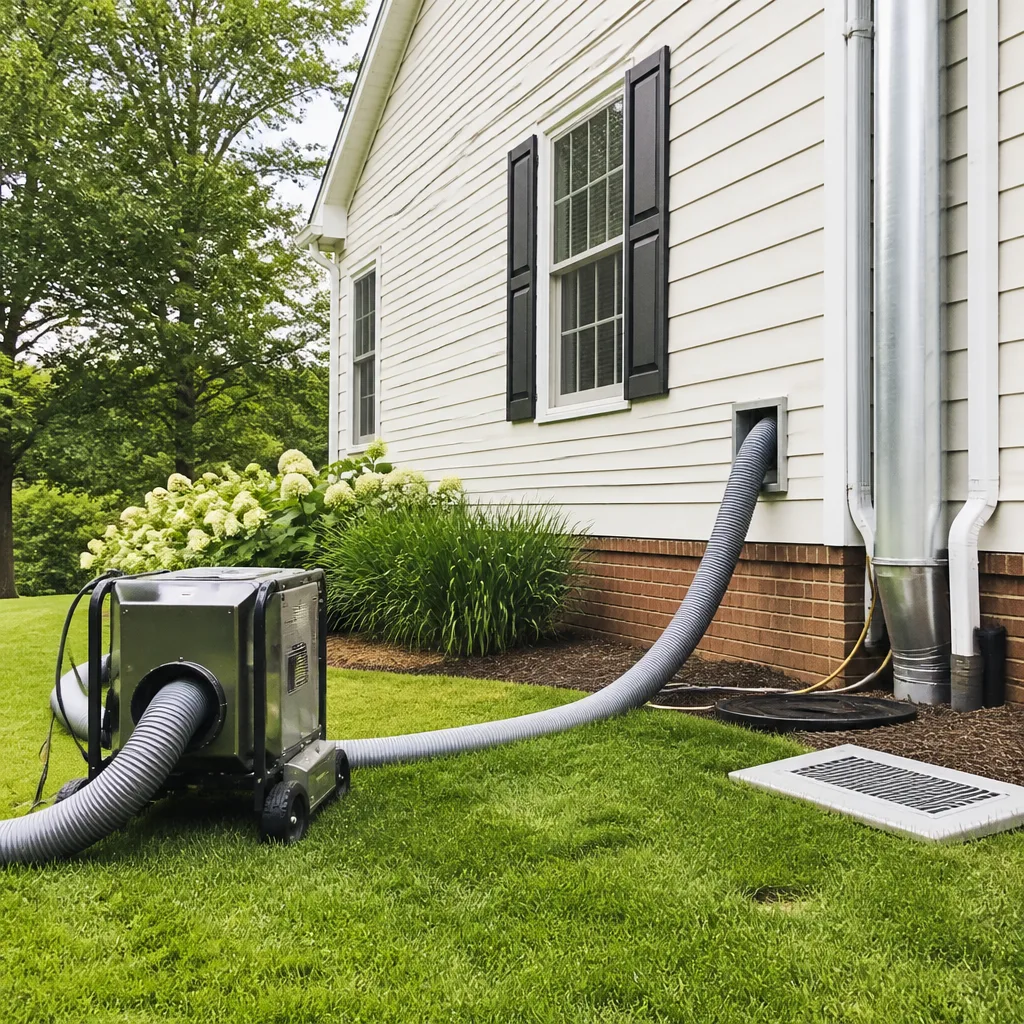 Whole-home duct cleaning
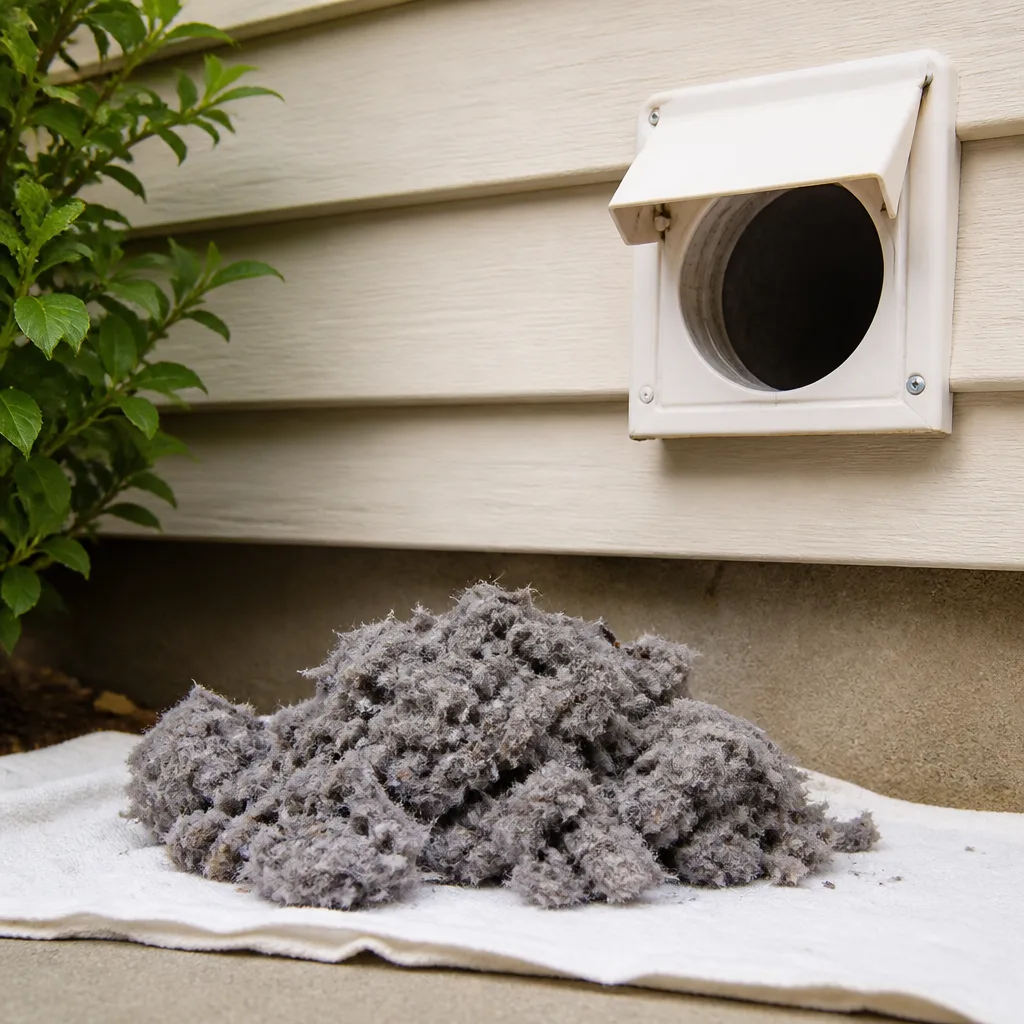 Dryer vent cleaning
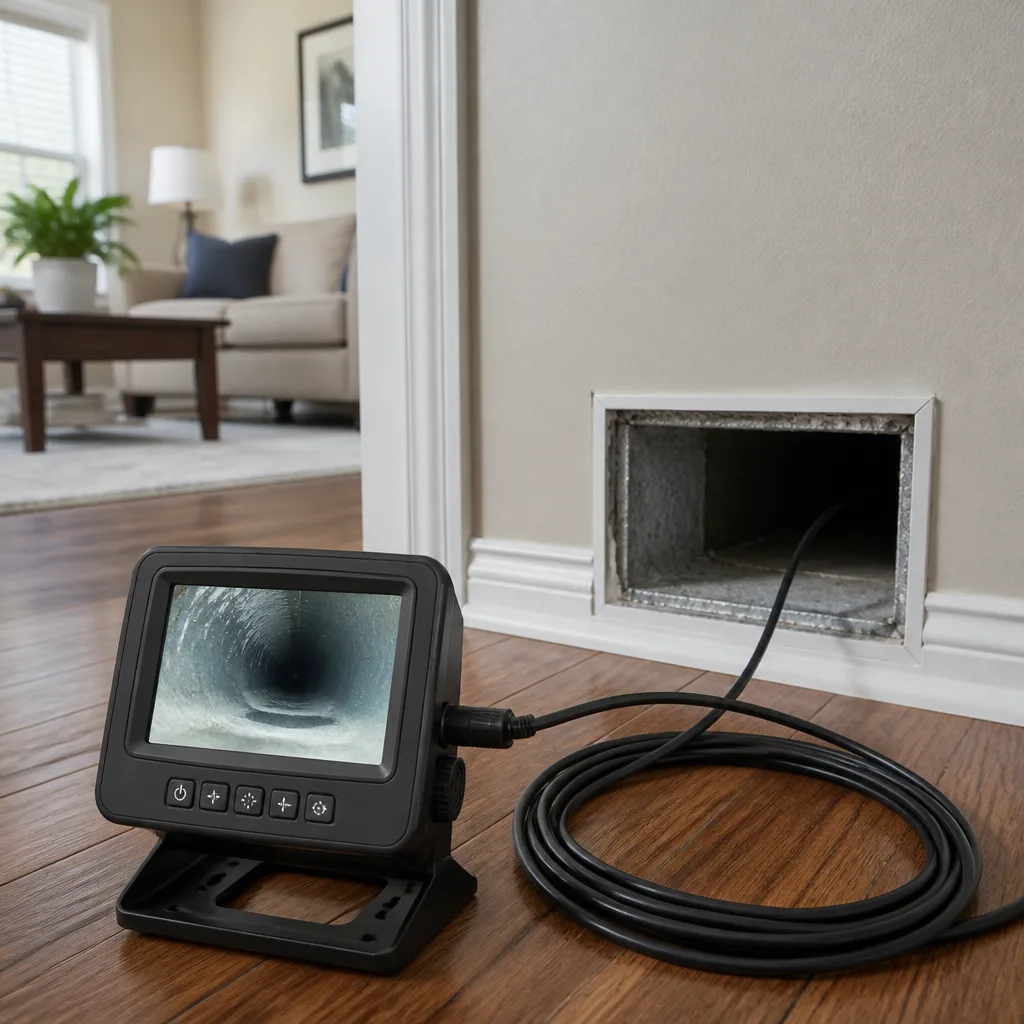 Camera inspection
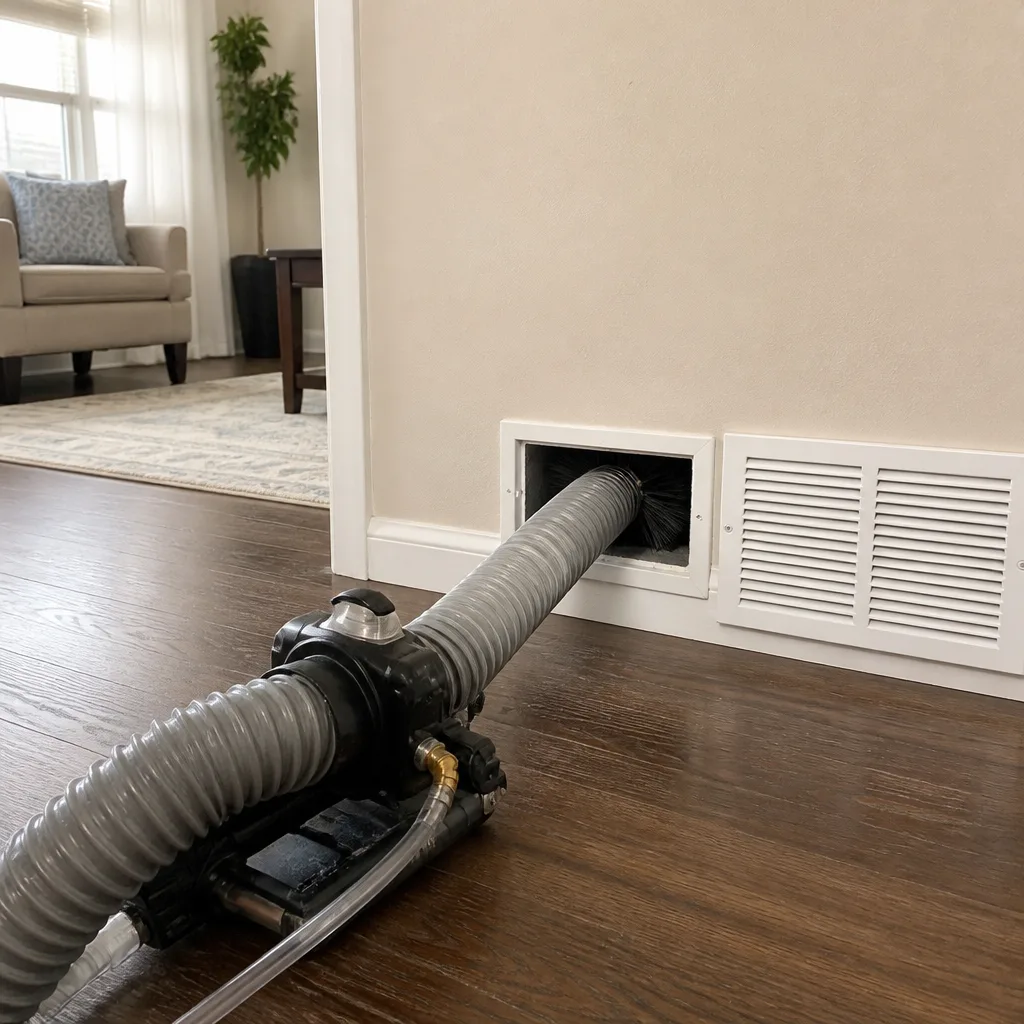 Sanitizing & deodorizing
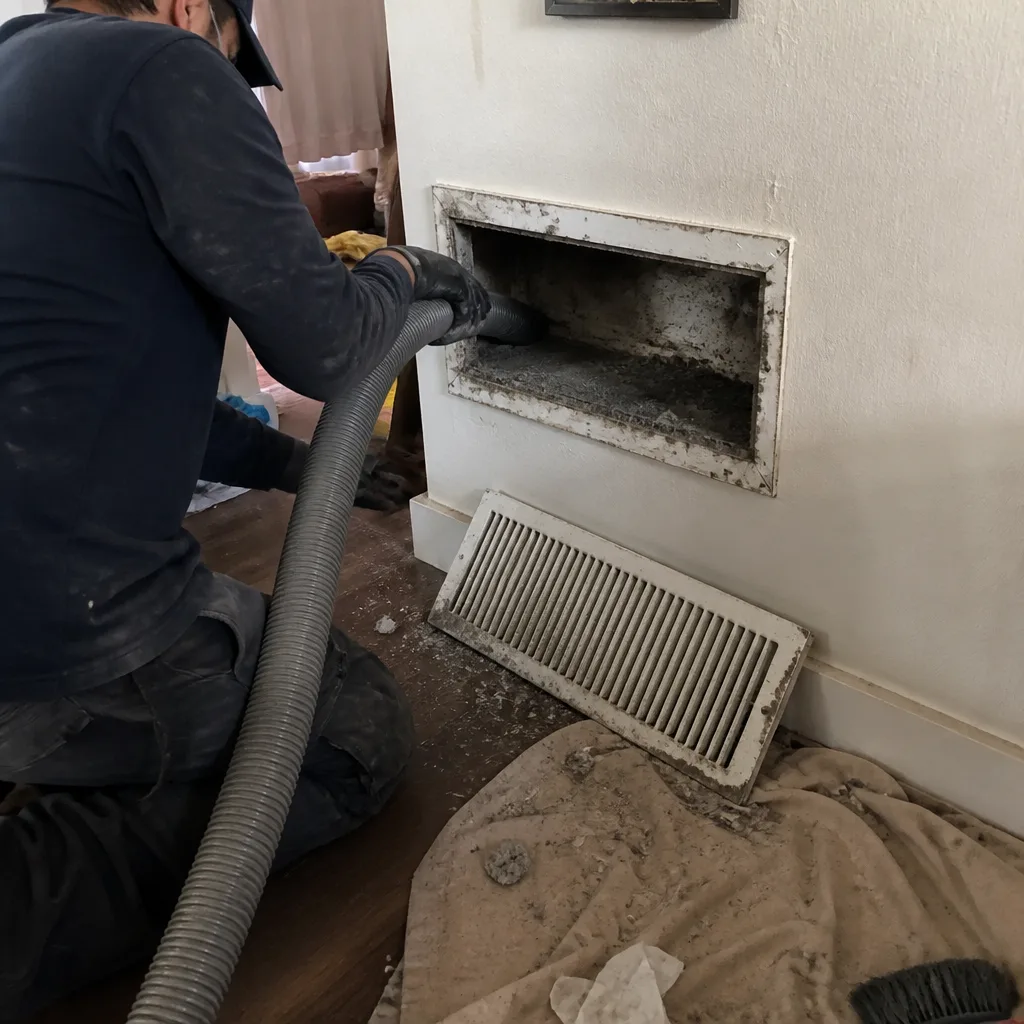
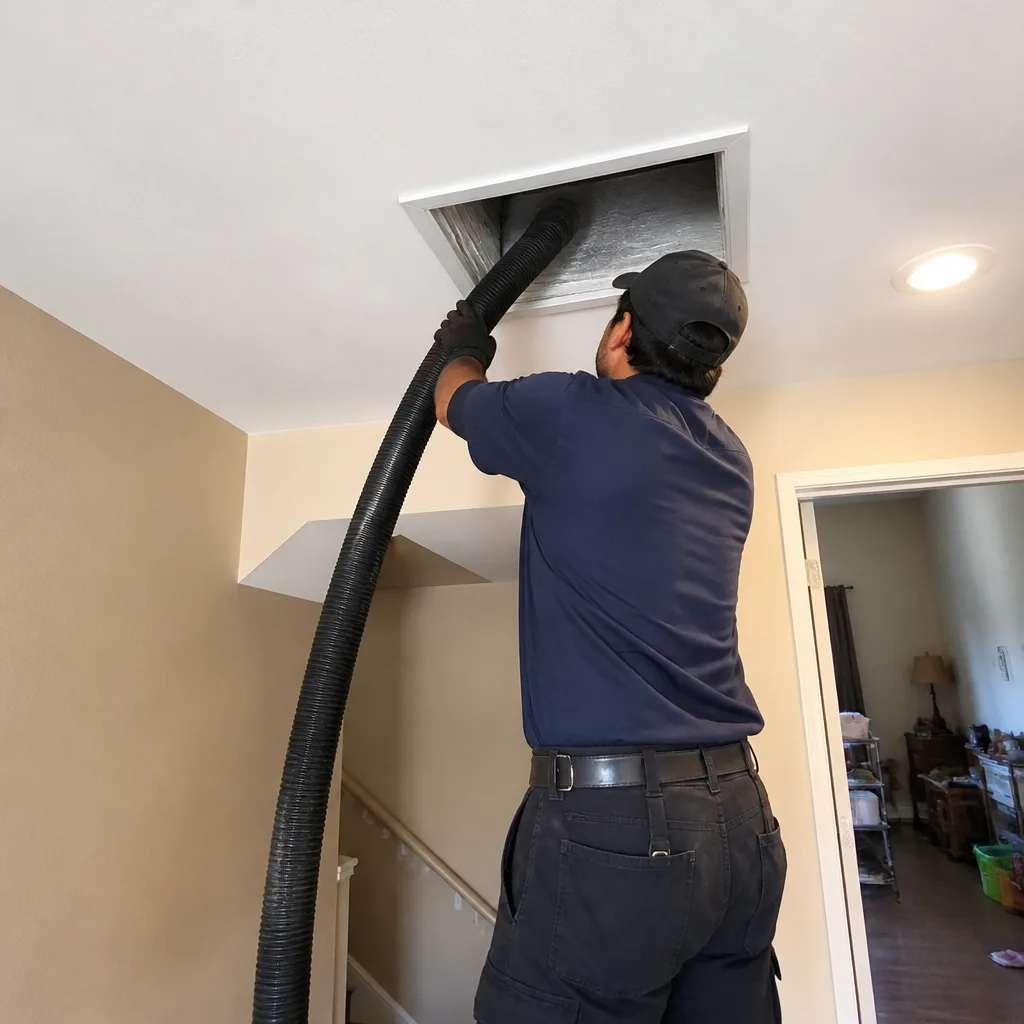
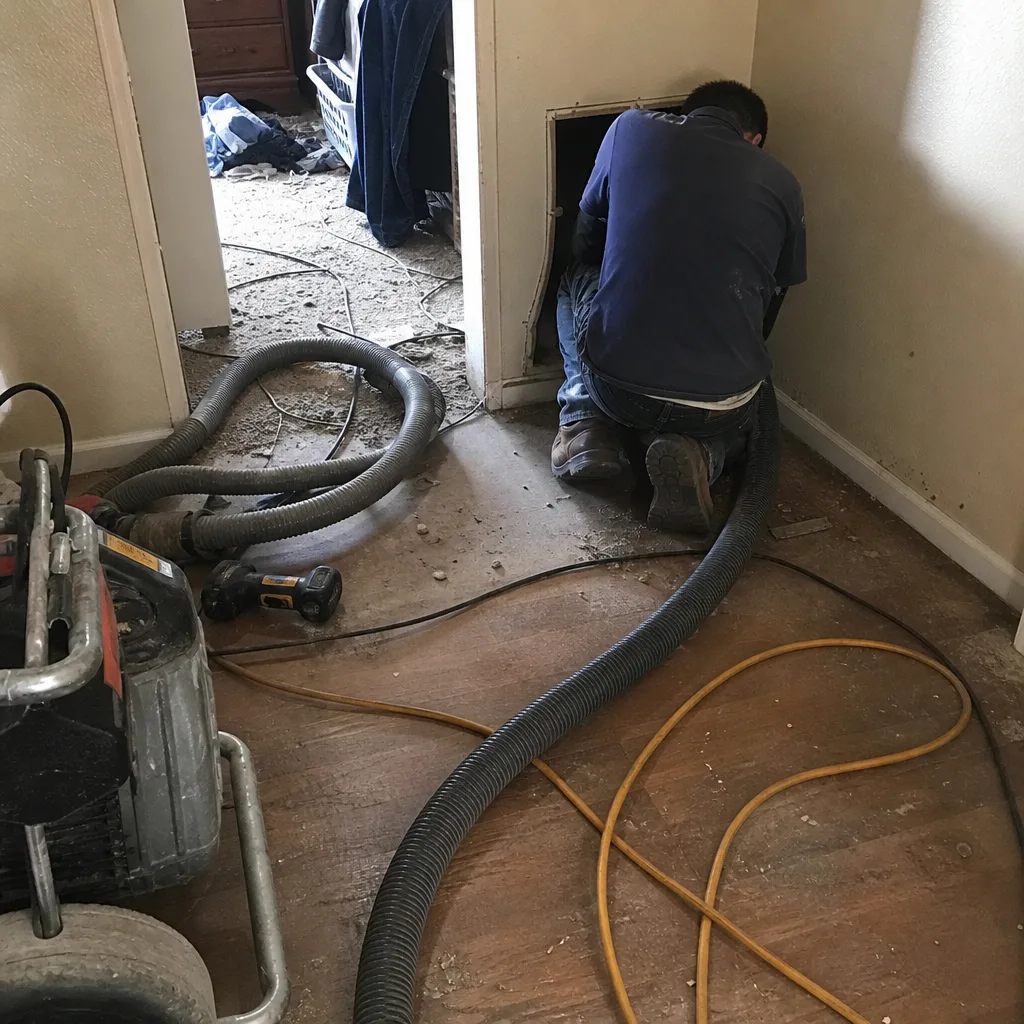
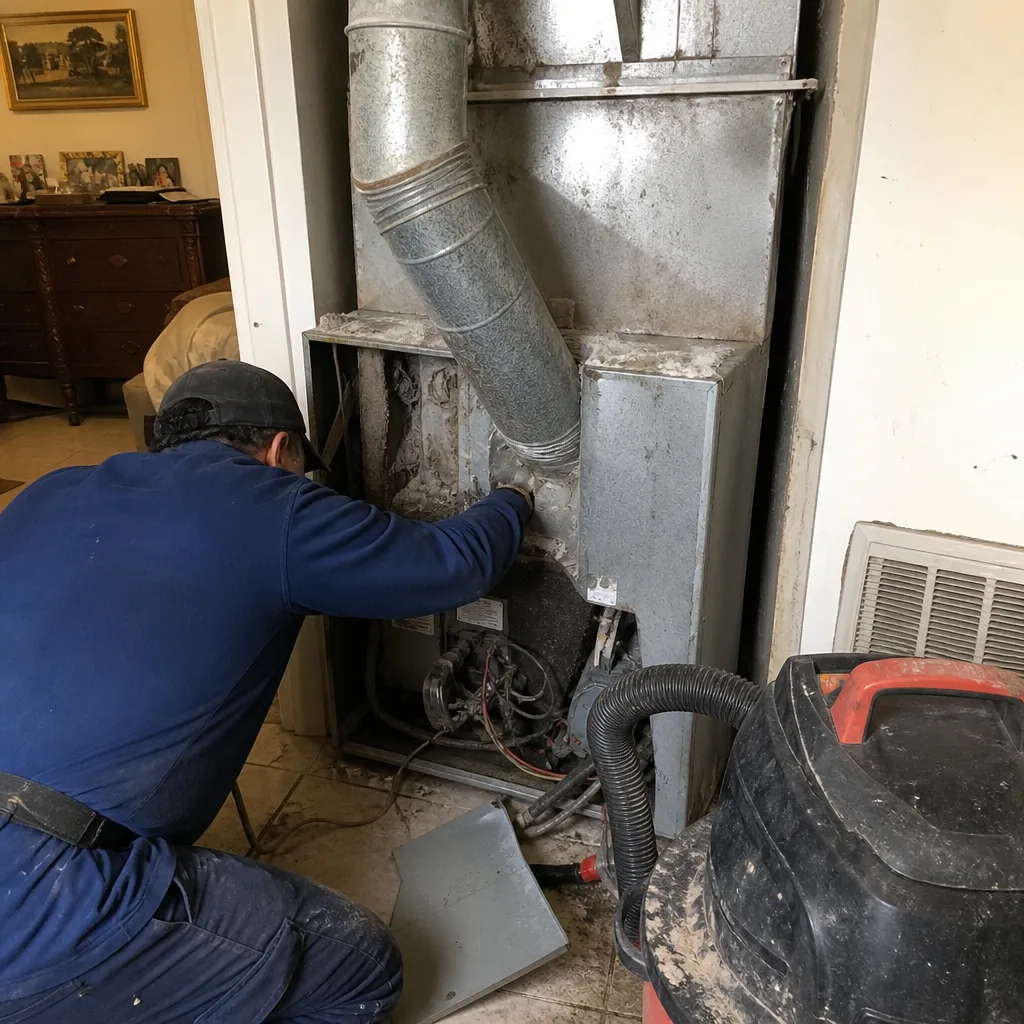
Whole-system duct and dryer vent check with before-and-after photos - you see exactly what came out of your vents
That "$99 whole-house special" is a bait ad - the real number appears once they are in your hallway, or the "clean" is a shop-vac at the register. We photograph the inside of your ducts before and after instead.
Air Duct Cleaning Warning Signs: A Fontana Homeowner’s Reference Guide
By the time you can visibly see dust blowing from your registers, the contamination inside your duct system has usually been building for over a year. That’s the part most Fontana homeowners miss. The early indicators are not the dust clouds and the sneezing fits. They are quieter, performance-based signals: a bedroom that never quite cools down in August, a utility bill that crept up without a change in your thermostat habits, an HVAC system that cycles on and off more often than it did two summers ago. This guide covers those subtle warnings, plus the obvious ones, and explains which problems call for cleaning versus which ones call for repair. If you own a home in Fontana, where summers push HVAC systems to their limits and Santa Ana winds deliver fine particulate into homes, you need to know the difference.
Quick Answer
The most reliable early signs you need air duct cleaning in Fontana are performance-based: rooms that won’t reach the setpoint temperature, rising energy bills during weather conditions identical to previous years, and an HVAC system cycling more frequently than its normal baseline. Visible dust at registers and persistent odors usually appear only after contamination has been building for months or longer. Dryer vent warnings, like longer dry times and a hot dryer exterior, should be treated separately because they carry fire risk.
Styles & brands we work with
- Whole-home duct cleaning
- Dryer vent cleaning
- Camera inspection
- Sanitizing & deodorizing
Table of Contents
- Performance Signals That Precede Visible Dust
- The Dusty Register Face vs. Actual Duct Contamination
- Fontana-Specific Warning Triggers: Wind, Ash, and Wildfire Season
- Odor Signals: What Different Smells Actually Mean
- Dryer Vent Warning Signs Are a Separate Category
- Cleaning or Repair: How to Tell Which One You Need
- What Your Filter Replacement Habits Reveal
- Common Mistakes to Avoid
- When to Call a Professional
- Frequently Asked Questions
Performance Signals That Precede Visible Dust
In Fontana, we’ve learned to read HVAC behavior as a diagnostic tool. Dust and debris inside ductwork don’t just sit there looking ugly. They restrict airflow. That restriction changes how your system behaves long before you notice anything on your furniture. Here are the performance signals that show up earliest.
Rooms that won’t reach setpoint temperature. If your thermostat says 74 but your upstairs bedroom sits at 79 every afternoon, something is restricting airflow to that zone. It could be a damper issue, but it’s often a duct run that’s partially blocked by accumulated debris. Fontana homes built in the 1980s and 1990s, particularly in neighborhoods like Southridge and the older sections north of Foothill Boulevard, often have duct runs that were undersized from the start. Add a layer of dust and pet hair to an already tight run, and airflow drops measurably.
Rising utility bills during identical weather. Southern California Edison rates change, but you can compare usage, not cost. Look at kilowatt-hours used in July of this year versus July of last year, assuming similar weather patterns. If you’re using 15 to 20 percent more electricity to cool the same square footage, airflow restriction is a likely culprit. Your system runs longer to move the same volume of conditioned air through dirty ducts.
HVAC cycling more frequently than baseline. Every system has a normal cycle pattern for a given outdoor temperature. You’ll notice it changes over time if you pay attention. Short cycling, where the system kicks on and off every few minutes, indicates the blower is working against resistance. That resistance often comes from a clogged evaporator coil, but the duct system downstream contributes as well. Longer run times to achieve the same temperature drop tell the same story from a different angle.
None of these signals proves duct contamination on its own. A professional air duct cleaning in Fontana includes inspecting the system to determine whether restricted airflow is coming from debris, from a collapsed duct section, or from equipment issues. But when these three signals appear together, in our experience, the duct system is usually involved.
The Dusty Register Face vs. Actual Duct Contamination
Here’s a distinction that saves people money and frustration. A dusty register face, that thin coating of gray fuzz you see on the outside of the vent cover, is usually just surface debris. It accumulates from room air moving across the register. It wipes off with a damp cloth. It is not, by itself, evidence that your duct system needs cleaning.
Actual duct contamination looks different. You’ll be able to see the difference if you know what to look for.
How to Check for Real Duct Contamination
- Remove one register cover and look past the opening with a flashlight. You’re looking at the inside surface of the duct boot, the square transition piece right behind the register.
- Run your finger along the interior surface. If you pull back a thick, greasy, or fibrous coating, that’s accumulated debris, not surface dust.
- Look deeper into the duct run if it’s a straight section. In many Fontana ranch-style homes, you can see several feet down a supply duct from a floor register.
- Check multiple registers. Contamination that’s present at every register indicates a systemic issue. Debris at one register only suggests a local problem.
- Inspect the return side. Pull the return grill and check the filter and the area around it. Debris bypassing the filter accumulates on the return side first and gets redistributed through the supply side.
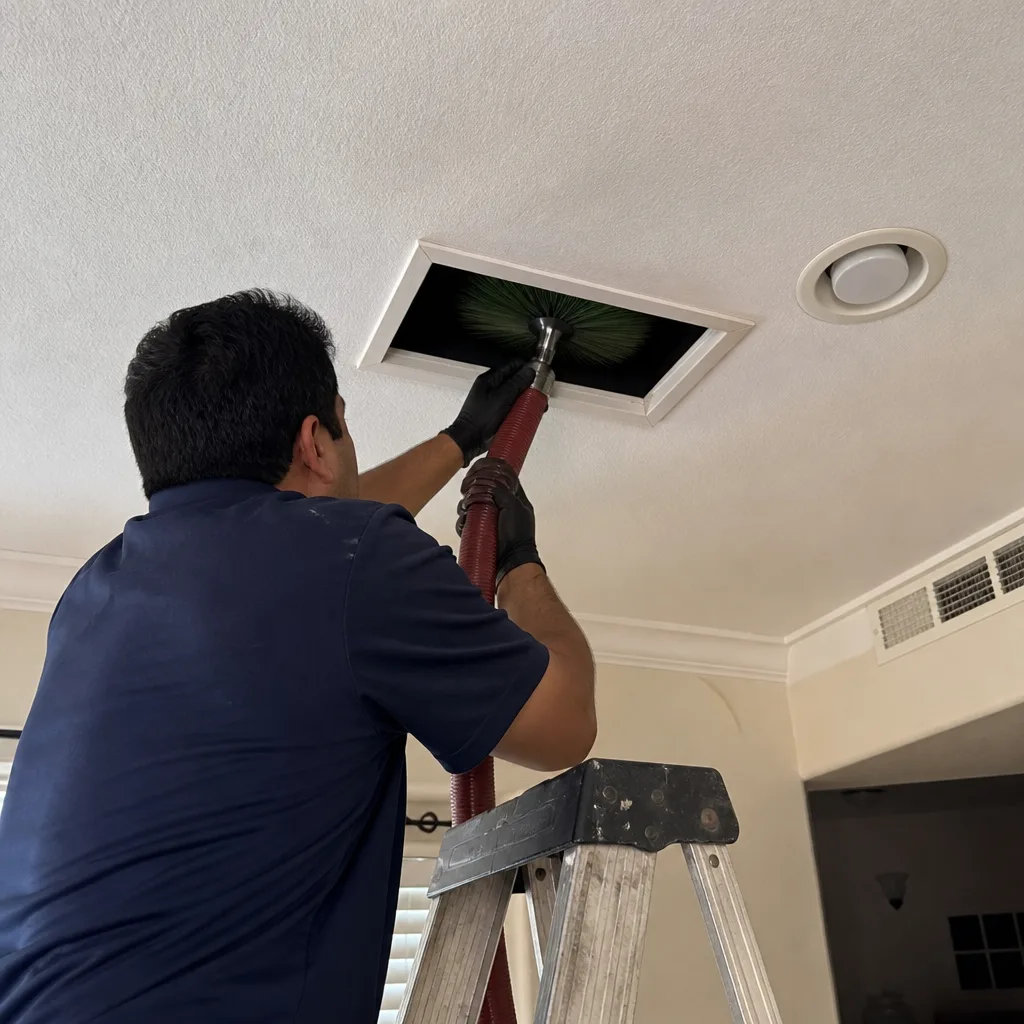
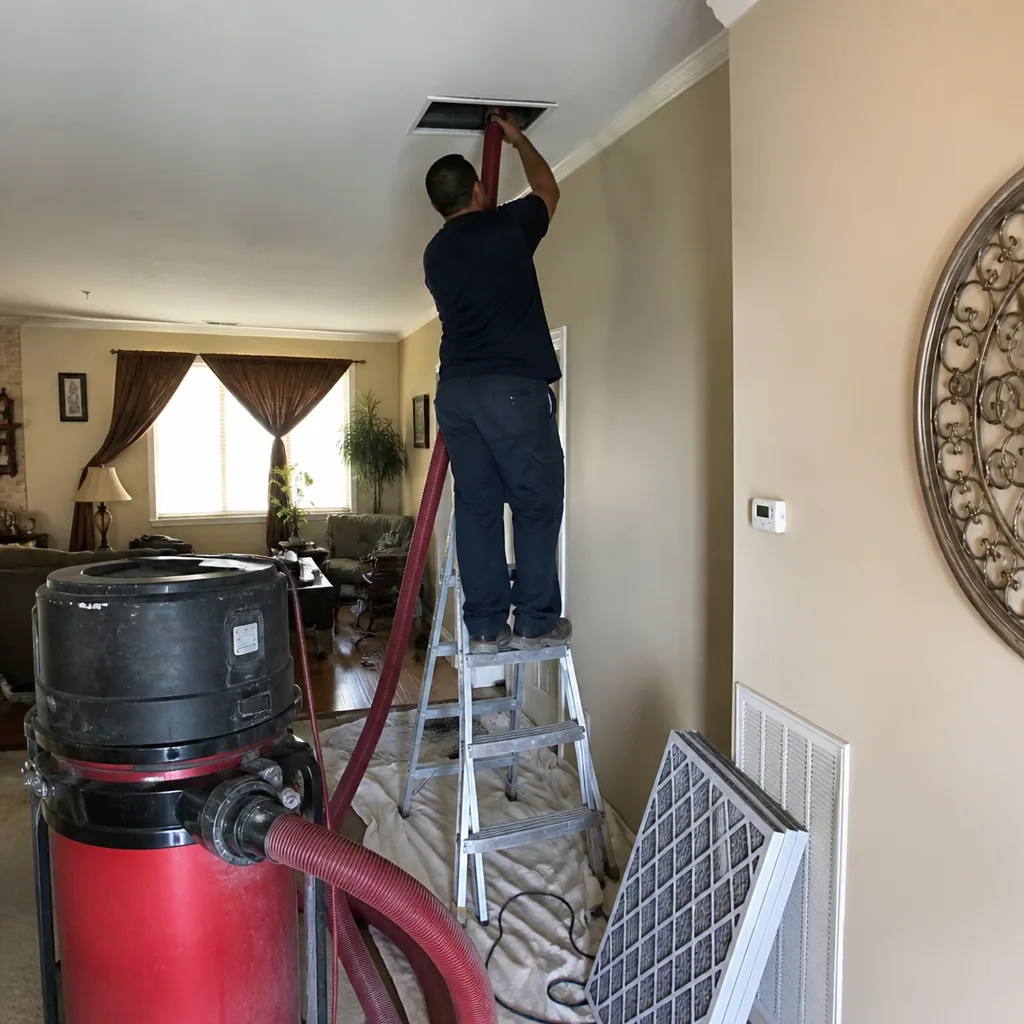
We run a Rotobrush and Nikro system through the full duct run, not just the first visible foot, because what you can see from the register tells you very little about what’s packed into the middle of a 30-foot supply run. Professional-grade equipment, not a shop-vac and a ladder, is the difference between cleaning the first two feet and cleaning every linear foot. Most Fontana homes have between 15 and 40 individual duct runs. The ones you can’t see from any register are the ones that matter.
Fontana-Specific Warning Triggers: Wind, Ash, and Wildfire Season
Fontana sits in a unique position. The Cajon Pass funnels Santa Ana winds directly into the city, and those winds carry fine particulate from the high desert and, during fire season, ash from wildfires in the San Gabriel and San Bernardino mountains. If you’ve lived here through a bad fire season, you know the smell of smoke hanging in the air for days. What you might not know is how much of that particulate finds its way into your duct system.
Here are the Fontana-specific warning triggers to watch for:
- Post-wildfire odor that persists indoors after outdoor air clears. If the smoke smell outside is gone but your house still smells like a campfire two weeks later, the odor is coming from your duct system. Particulate matter settled inside the ducts and is being redistributed every time the blower runs.
- Visible ash or fine particulate at supply registers after a wind event. After a strong Santa Ana, check your registers. If you see a fine gray dusting on the wall or floor immediately around a supply register, that’s material that came through the system, not surface dust from the room.
- Increased sneezing, coughing, or eye irritation during HVAC operation, not just during outdoor exposure. If symptoms spike when the air conditioning kicks on, the system is recirculating irritants that settled inside.
- Window screen and filter evidence. If your window screens are coated with fine desert dust after a wind event, some of that same dust entered your home through doors, windows, and the outdoor air intake for your HVAC system. Your house filter catches some of it. The rest goes into the ducts.
During our Duct Cleaning Fontana home service, we run Abatement Technologies air filtration equipment during the cleaning process. That’s a contamination-containment standard used in professional remediation work. It means the particulate we dislodge from your ducts doesn’t get redistributed into the air you’re breathing during the service. For Fontana homeowners who’ve dealt with smoke intrusion from the Line Fire or the Blue Cut Fire, this matters because the fine ash from those events is exactly the kind of particulate that hangs suspended for hours and resettles everywhere.
Odor Signals: What Different Smells Actually Mean
Smell is the sense most directly connected to duct-system condition, but the different odor signatures point to different problems. Learning to distinguish them tells you what you’re dealing with before you pay for a service call.
Musty or earthy odor when the system runs. This is almost always organic material, typically fungal growth or decomposing organic debris, inside the duct system. It concentrates in the evaporator coil area during cooling season because that’s where moisture collects. In Fontana’s dry climate, this odor is less common than in humid regions, but any home with a history of condensation issues or a clogged condensate drain can develop it. Musty odor that appears only during cooling season and disappears in winter points to coil-area contamination rather than duct-run contamination.
Burnt or dusty smell when the furnace kicks on for the first time each fall. This one is normal for a day or two. Dust settles on the heat exchanger during the summer, and the first heating cycle of the season burns it off. If the smell persists for more than three days of regular use, the system is pulling accumulated debris through the heat exchanger constantly, and the duct system needs cleaning.
Rodent or animal odor. This is distinct and urgent. Rodent activity in ductwork leaves urine, droppings, and nesting material. The odor is sharp and persistent. This is not a cleaning-only problem. Any duct system with confirmed rodent activity needs cleaning to remove contamination and repair to close the entry points, which is where air duct repair in Fontana comes in, because cleaning alone won’t stop the next rodent from moving in.
Chemical or solvent odor. If you’ve recently done renovation work, painted, or refinished floors, the HVAC system can pull those volatile organic compounds into the ducts and redistribute them for weeks. Cleaning after renovation removes construction debris and reduces the odor reservoir. This is a common request from Fontana homeowners who’ve completed remodels of their 1970s and 1980s homes and found that the “new house smell” they were enjoying is actually just dust and solvent residue blowing through the registers.
Dryer Vent Warning Signs Are a Separate Category
Your clothes dryer vent does not connect to your HVAC duct system. It is a separate run that carries hot, moist air and lint from your dryer to the outside of your home. The warning signs here are different because the risk profile is different. A clogged dryer vent is a fire hazard. The National Fire Protection Association has identified dryer vent fires as a leading cause of home structure fires, and the root cause is nearly always lint accumulation.
In Fontana, where the dry desert air makes lint drier and more combustible than it would be in a humid climate, this risk deserves your attention.
Here are the warning signs that your dryer vent needs cleaning:
- Clothes take longer than one full cycle to dry. If your dryer used to finish in 45 minutes and now takes 70 minutes for the same load, airflow through the vent is restricted. Lint accumulation is the usual cause.
- The dryer exterior feels unusually hot to the touch. Heat that can’t escape through the vent backs up into the dryer cabinet. A hot dryer is a symptom of restricted airflow, not a sign that your dryer is “working harder.”
- The exterior vent flap doesn’t fully open when the dryer runs. Go outside and check. If the flap opens only partially or not at all, vent pressure is too low, which means blockage somewhere in the run.
- Lint accumulates around the dryer area. Lint on the floor, on the wall behind the dryer, or around the connection point indicates that lint is escaping because it can’t move through the vent. The connection may be loose, or the vent may be packed solid.
- A burning smell while the dryer runs. Lint that’s caught near the heating element or inside the vent run can smolder. This is an immediate stop-and-inspect condition.
Our dryer vent cleaning in Fontana service treats this as a fire-safety job, not an afterthought. It’s a distinct specialty within our three-service menu, and we run the same professional-grade approach to it that we run on HVAC ducts: full-length cleaning of the vent run, verification of airflow at the exterior termination, and replacement of the vent flap if it’s not operating properly. If you’ve lived in your Fontana home for more than two years and have never had the dryer vent cleaned, it’s overdue.
Cleaning or Repair: How to Tell Which One You Need
This is where a lot of generalist HVAC companies fall short. They’ll sell you a cleaning, run a brush through the system, take your money, and leave. But if your real problem is a collapsed flex duct section or a disconnected joint, the cleaning does nothing. The air is still leaking into your attic or crawlspace, and the room at the end of that run is still going to be hot in August.
We repair what others only clean around. Here’s how to tell which problem you have before you call anyone.
Signs That Point to Repair, Not Cleaning
- One specific room consistently underperforms while the rest of the house is fine. If three bedrooms cool properly and the fourth doesn’t, the problem is usually isolated to that duct run. It may be disconnected, crushed, or separated at a joint. Cleaning the whole system won’t fix a run that’s no longer connected.
- Visible damage in accessible ductwork. If you can see a flex duct hanging down in your attic, kinked at a sharp angle, or showing a tear in the outer jacket, that’s a repair issue. The inner liner is likely compromised.
- Debris or insulation blowing from one register only. If one register is blowing out fiberglass particles or attic insulation, that run has a breach somewhere. The system is pulling attic air into the duct and delivering it to your living space.
- You hear rattling or metallic banging when the system starts and stops. That’s a physical connection issue, not a contamination issue. A loose joint or a section that’s slipped out of position makes noise as pressure changes.
- You’ve already had the system cleaned recently and performance didn’t improve. If a cleaning didn’t solve the problem, the problem wasn’t contamination. Don’t pay for another cleaning in the same year.
A proper air duct cleaning in Fontana should include an inspection of accessible duct sections as part of the job. If the technician finds a disconnected run, they should tell you and recommend repair, not just clean around it and move on. That’s the difference between a company that’s invested in the full scope of duct system health and one that’s only running a machine through your registers.
What Your Filter Replacement Habits Reveal
Your filter habits tell you more about your duct system than you might expect, and most homeowners read the signal backward.
If your HVAC filter is loaded with debris after just three or four weeks of use, the conventional assumption is that the filter is “doing its job.” That’s partially true. But it also means that a lot of particulate is moving through your return air system, and some of it is getting past the filter. No residential filter catches everything. The finer particles pass through, enter the blower assembly, and deposit throughout the supply side of the system.
Here’s how to interpret what you’re seeing:
- Filter heavily loaded at 30 days. Your home has a high particulate load, either from pets, from outdoor intrusion (common in Fontana during wind events), or from duct contamination that’s recirculating. The filter is catching some of it. The rest is settling in the ducts. Replace the filter and have the system inspected.
- Filter clean at 90 days. Either your home is remarkably clean and well-sealed, or your filter is not doing anything because the return air is bypassing it. Check for gaps around the filter frame and for return duct leaks. A clean filter after three months is not a badge of honor if the filter doesn’t fit properly.
- Filter edge loaded, center clean. This pattern tells you the air is channeling through the center of the filter and bypassing the edges. The filter doesn’t fit the frame properly, or the return duct sizing is wrong. Replace the filter with the correct size and seal the frame.
- Filter shows gray or black sooty deposits. In Fontana, this often means wildfire smoke residue or outdoor combustion particulate from nearby freeway traffic. If the I-10 or I-15 traffic plumes are part of your daily air, you’re pulling diesel particulate into your return air. This is a strong argument for a better filter, ideally one compatible with Honeywell or Aprilaire whole-home filtration systems, and for regular duct cleaning to remove what’s already accumulated.
We service systems that are integrated with Honeywell and Aprilaire whole-home air quality products. Those filtration platforms extend well beyond what a one-inch fiberglass filter can do. When we clean ducts connected to those systems, we’re cleaning the full air pathway from return grill to supply register so the filtration system can do its job without fighting against years of accumulated debris downstream.
Common Mistakes to Avoid
- Waiting until you see dust blowing from registers. By the time dust is visibly exiting the supply registers under normal operation, the accumulation inside the duct system is severe. Performance signals show up months earlier. If you wait for the dust show, you’ve let the problem compound.
- Assuming a dusty register face means dirty ducts. We covered this above, but it’s worth repeating because it leads to unnecessary spending. Surface dust on a register cover is normal. Wipe it off and look inside before you call anyone about a cleaning.
- Skipping the inspection and going straight to cleaning. A disconnected flex duct, a crushed section, or a torn joint will not be fixed by cleaning. If the company you’re considering doesn’t include inspection in their scope, they’re not giving you the full picture. You’ll pay for a cleaning and still have the same problem.
- Using a cheap single-visit coupon service. In the duct cleaning industry, the low-price coupon is often a loss leader for aggressive upsells, or it’s a blow-and-go operation that cleans the first few feet of duct and calls it done. In Fontana, where the summer heat makes HVAC performance a real quality-of-life issue, that’s a losing bet. Professional-grade equipment, not a shop-vac and a ladder.
- Assuming your dryer vent is fine because the dryer still “works.” A dryer vent that’s 60 to 70 percent blocked will still dry clothes, just slowly. The heat buildup and lint accumulation are the problem. A dryer that takes 80 minutes per load is telling you something. Listen to it before the thermal fuse fails or, worse, before lint ignites.
- Ignoring post-renovation duct cleaning because you “didn’t do any major demolition.” Drywall dust, paint overspray, and floor sanding debris are finer than household dust and move deeper into the duct system. Even a bathroom remodel generates dust that settles into the return ducts. If you’ve done any renovation work on a Fontana home, budget for duct cleaning afterward.
- Clean ducts once and assume the job is permanent. Duct systems get dirty again. This is a maintenance item, not a one-time repair. In Fontana, where wind-driven particulate from the Cajon Pass and occasional wildfire smoke intrusions are part of the climate, every three to five years is a reasonable cleaning interval for most homes.
When to Call a Professional
Call a professional when you see multiple warning signs showing up at the same time; for help selecting the right provider, see our buyer’s guide. A single register with surface dust is not an emergency. But a bedroom that won’t cool, combined with a utility bill that’s trending up, combined with a filter that’s loaded at four weeks, is a system telling you it needs attention. If you’ve gone through a Fontana wildfire season and the smoke smell lingers indoors for weeks afterward, that’s a call too. Dryer vent symptoms should be addressed as soon as they appear, because the risk profile is different. A dryer that’s hot to the touch and slow to dry is not going to fix itself. Duct Cleaning Fontana offers free estimates in Fontana, call (855) 501-3681.
Frequently Asked Questions
Air duct cleaning in Fontana typically costs between $350 and $650 for a standard single-family home with one HVAC system, depending on the number of duct runs, the level of contamination, and whether the system has been cleaned before. Homes with two systems, or homes with significant construction debris, run higher. Call (855) 501-3681 for an exact quote, estimates are free.
Most Fontana homes benefit from air duct cleaning every three to five years. The interval shortens if you have pets that shed heavily, if you live in a high-wind area that receives significant dust intrusion, if you’ve had wildfire smoke exposure, or if anyone in the home has significant allergy or respiratory sensitivity.
Yes. Debris accumulation restricts airflow, which forces the blower motor to work harder to move the same volume of air. The system runs longer to satisfy the thermostat, and that directly increases electricity consumption. Comparing kilowatt-hour usage during identical weather seasons is the most reliable way to see the effect.
The three most reliable signs of a clogged dryer vent are clothes taking longer than one cycle to dry, the dryer exterior feeling unusually hot to the touch, and the exterior vent flap not opening fully while the dryer runs. Any one of these justifies an inspection. All three together means the vent needs cleaning now.
Duct cleaning removes debris and contamination from the interior surfaces of the duct system. Duct repair fixes physical problems like disconnected sections, crushed flex duct, torn jackets, or leaking joints. A system with a physical defect will not perform correctly after cleaning alone, because the air leak or structural problem will remain.
We provide before-and-after photos of the duct interior so you can verify the work was actually performed. The photos show the condition of the duct surfaces at the start of the job and the same locations after cleaning. This is standard practice, not an optional upgrade.
The Bottom Line
Your duct system talks to you long before it’s visibly dirty. The performance signals come first: rooms that won’t hold temperature, utility bills that climb without explanation, HVAC cycles that run longer and more frequently. The visible dust and persistent odors show up later, after contamination has been building for months. Fontana adds its own triggers to the list: Santa Ana wind events, wildfire smoke season, and the fine desert dust that moves through the Cajon Pass. Reading these signals correctly means knowing whether you need cleaning or repair, distinguishing between a dusty register face and actual duct contamination, and taking dryer vent symptoms seriously as the fire hazard they are. For more guides & resources on maintaining your home’s air quality, explore our blog. When the signs line up, call (855) 501-3681 for a free estimate.
Written by the team at Duct Cleaning Fontana, serving Fontana since 2017.
See the difference
 Before
 After
 Before
 After
 Before
 After