
Last updated November 2, 2026
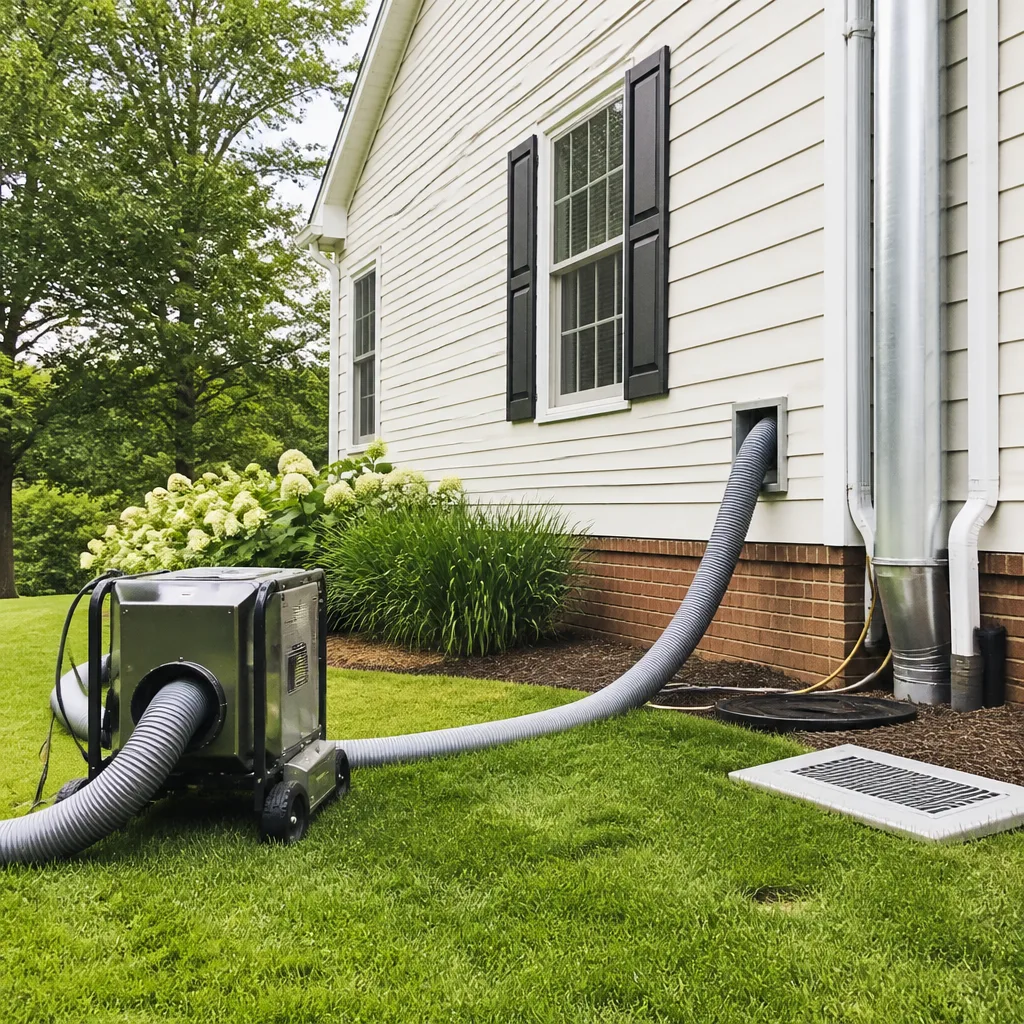 Whole-home duct cleaning
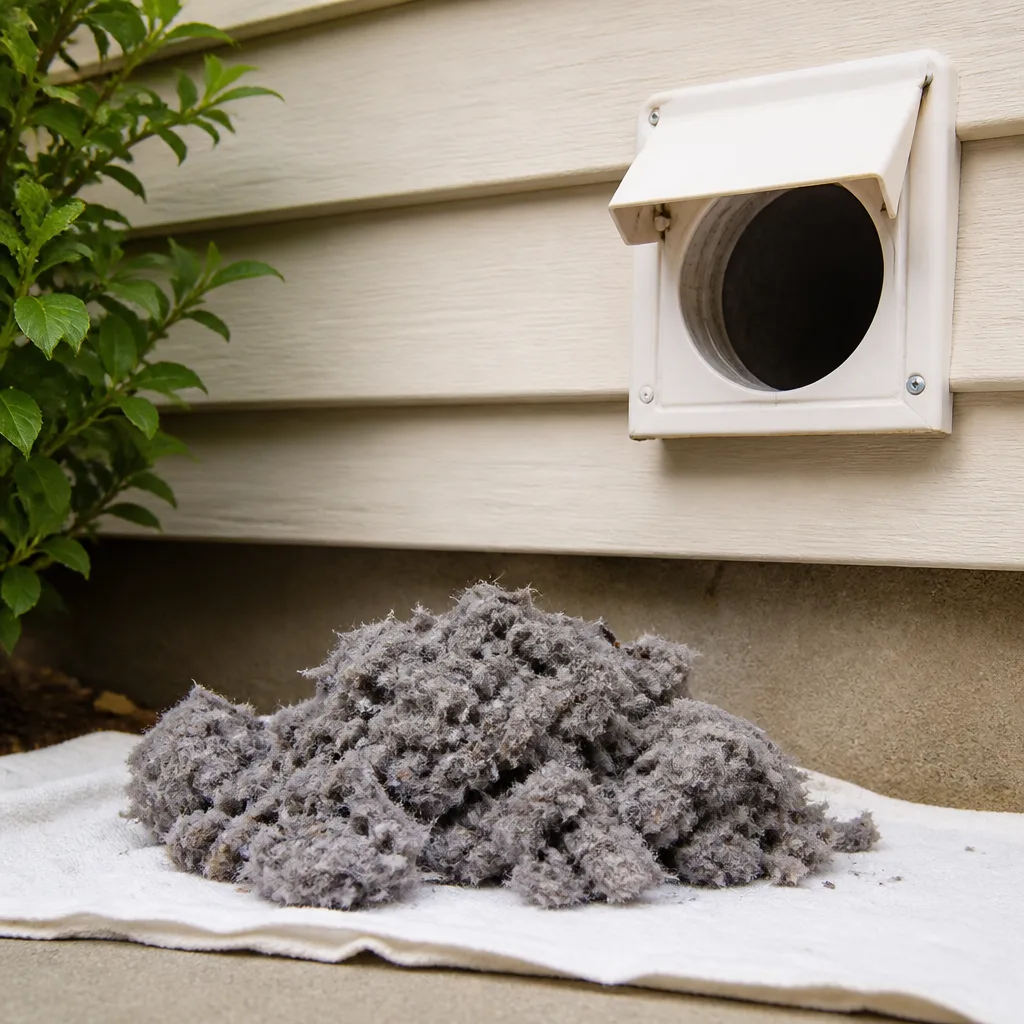 Dryer vent cleaning
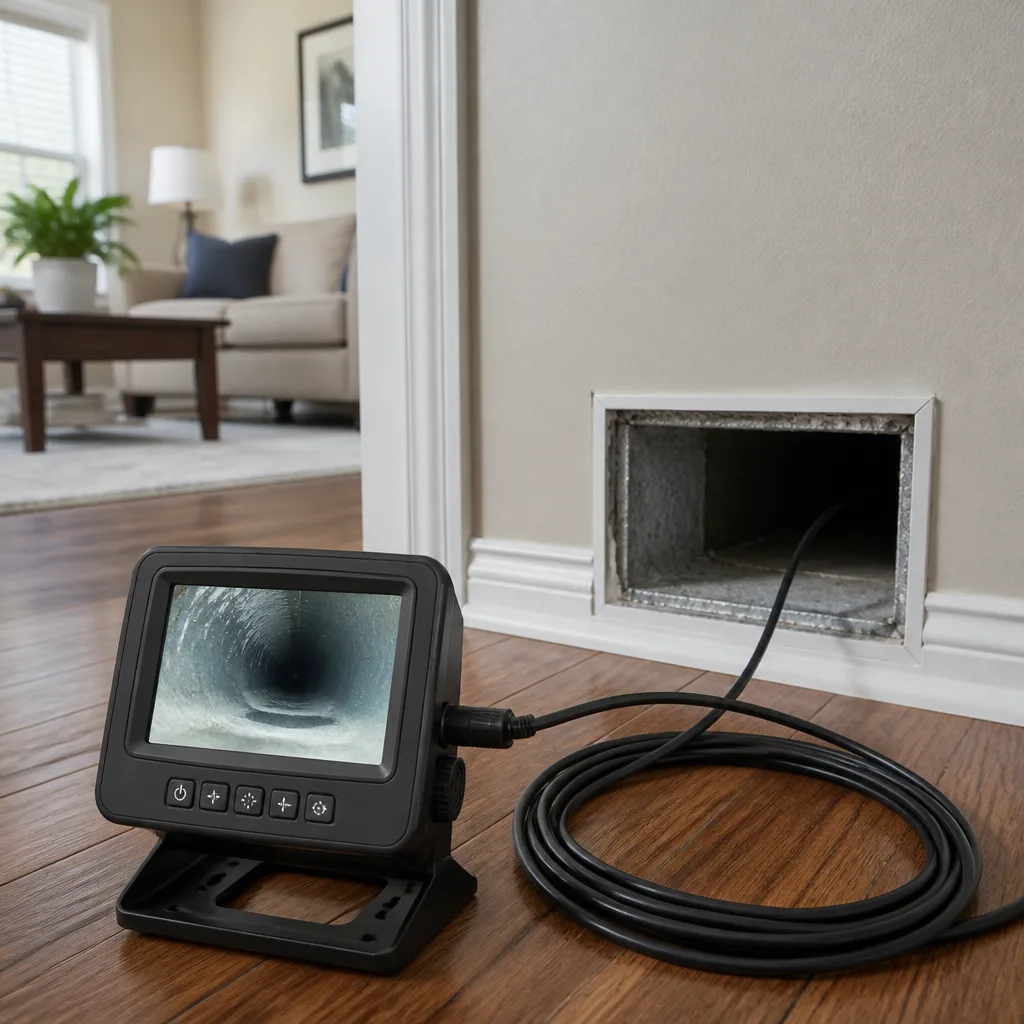 Camera inspection
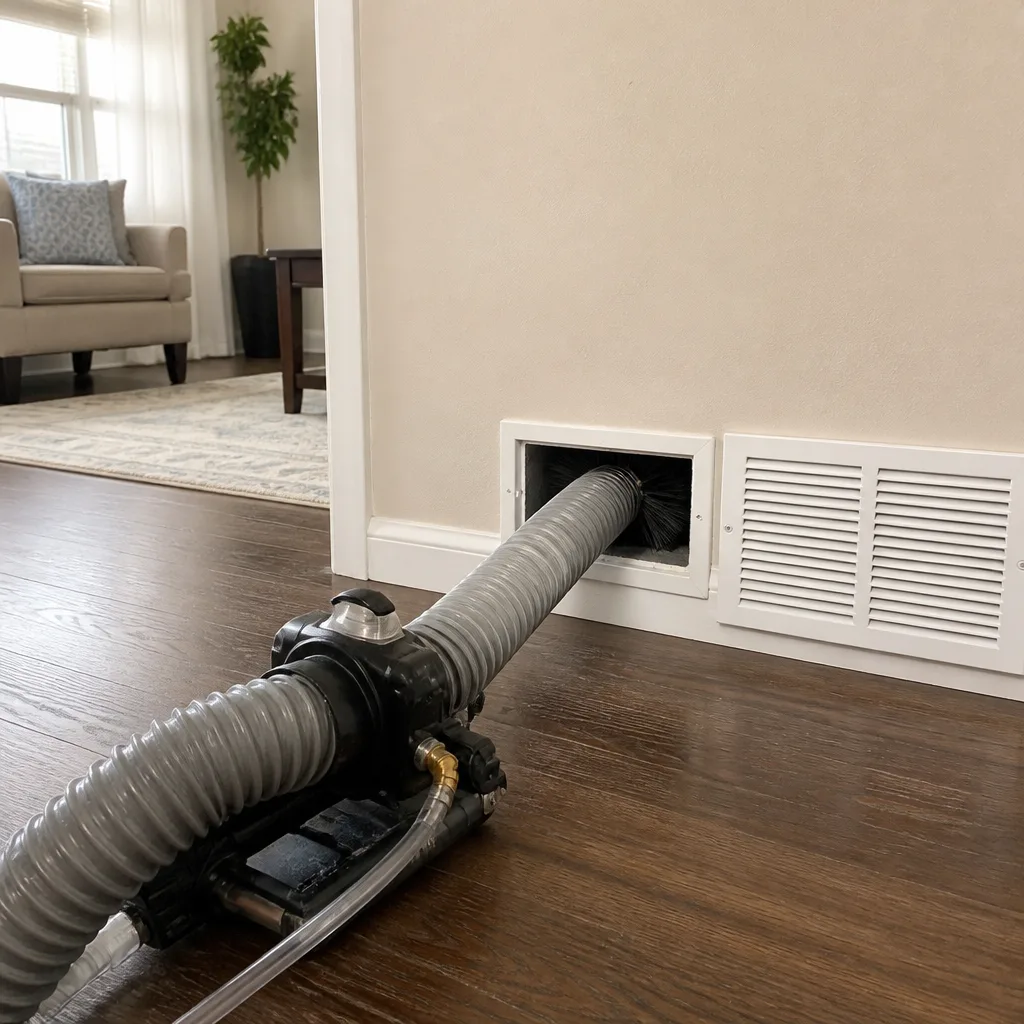 Sanitizing & deodorizing
Whole-system duct and dryer vent check with before-and-after photos - you see exactly what came out of your vents
That "$99 whole-house special" is a bait ad - the real number appears once they are in your hallway, or the "clean" is a shop-vac at the register. We photograph the inside of your ducts before and after instead.
Air Duct Cleaning Permits, Codes & Inspections in CA: What You Need to Know
Most Fontana homeowners assume a duct cleaning visit is just a thorough vacuum job with no paperwork attached. What surprises them is finding out that a technician who “fixes” a disconnected duct or replaces a crushed section during that same visit has just crossed a legal line that requires a permit. Even more surprising: California’s Title 24 energy code applies to duct modifications made inside existing walls, and the failure to pull a permit for that work can surface years later at escrow when an appraiser checks the home’s permit history. This guide explains exactly where the permit line sits, what Title 24 requires, and how to protect yourself before you ever pick up the phone to schedule Air Duct Cleaning services.
Quick Answer
Air duct cleaning itself requires no permit in California. Air duct repair or replacement, however, can require a building permit when structural changes are made to the duct system, and any modification to ductwork in an existing home triggers Title 24 energy code requirements for sealed, insulated, and tested connections. If you’re only having ducts cleaned, no city inspection is needed; if a contractor proposes to alter or rebuild any section, ask whether a City of Fontana permit and HERS verification will be part of the job. For related reading, see our Air Duct Cleaning Warning Signs: A Fontana Homeowner’s Reference Guide.
Styles & brands we work with
- Whole-home duct cleaning
- Dryer vent cleaning
- Camera inspection
- Sanitizing & deodorizing
Table of Contents
- Cleaning vs. Repair: Where the Permit Line Actually Sits
- Title 24 and Duct Modification: What Applies to Existing Fontana Homes
- Working with the City of Fontana Building Department
- What “Inspection” Means in the Duct Context: HERS Rater vs. Walkthrough
- The Escrow Problem: When Unpermitted Duct Work Surfaces at Sale
- Insurance Claims and Unpermitted Duct Work
- How to Verify a Contractor’s Duct Repair Is Legitimate Before It Starts
Cleaning vs. Repair: Where the Permit Line Actually Sits
Under the California Mechanical Code, a routine air duct cleaning is classified as maintenance, not construction. You do not need a permit from the City of Fontana to have dust, debris, and accumulated particulate removed from your duct system. A professional cleaning using negative-air equipment such as a Rotobrush system or a Nikro vacuum collection unit falls squarely on the “no permit” side of the line.
The line moves the moment a technician does more than clean. Disconnecting a duct run to access it and then reconnecting it without changing the run’s path is typically still maintenance. But the following actions cross into territory governed by Chapter 3 of the California Mechanical Code, which regulates air distribution systems:
- Replacing a section of rigid duct or flex duct that has collapsed, torn, or separated
- Cutting new supply or return openings in the trunk line
- Rebuilding a plenum or altering the duct layout to fix airflow problems
- Installing new duct sections to serve a room that was previously unserved or under-served
- Patching a duct with materials that change the system’s air leakage characteristics beyond a simple mastic seal
Any of these actions is a repair or alteration, and in Fontana, that generally means the work must be done under a building permit. The City of Fontana Building Division follows the California Mechanical Code and the California Energy Code, both of which classify duct replacement and significant alteration as regulated work. A technician who tells you “we don’t need a permit for this” may be right if they’re simply cleaning, but wrong the moment they start cutting, rebuilding, or replacing duct sections.
We’ve seen this scenario play out across Fontana neighborhoods from Southridge to Hunter’s Ridge: a homeowner schedules a cleaning, the technician discovers a disconnected return duct in the attic, and rather than stopping to discuss permits, the technician “reconnects” it with tape and calls it done. The homeowner now has unpermitted duct work they didn’t ask for and didn’t know occurred. Our position is simple: we repair what others only clean around, but we also tell you when that repair requires a permit before any work begins. For help diagnosing issues before they escalate, check our Air Duct Cleaning Troubleshooting: Common Problems and How to Fix Them.
Title 24 and Duct Modification: What Applies to Existing Fontana Homes
California’s Title 24 energy code is the single most overlooked compliance obligation in the duct repair business. Most Fontana homeowners have heard of Title 24 in the context of new home construction or HVAC replacement, but they don’t realize it also governs alterations to duct systems in existing homes. Section 150.0 of the California Energy Code requires that whenever ductwork is installed, altered, or replaced, the work must meet specific sealing and insulation standards, and the results must be verified.
Here’s what that means in practical terms for a Fontana homeowner whose duct system has a collapsed section that needs replacement:
- Sealing standard: All joints in the new or replaced duct section must be sealed with mastic, mastic plus embedded mesh tape, or UL-listed duct tape, not standard cloth tape. The seal must be visible and durable.
- Insulation standard: Supply ducts in unconditioned space (attics in most Fontana homes, where summer attic temperatures regularly exceed 140°F) must have a minimum insulation value of R-6.0, while return ducts in attics require R-4.2. The old R-4.2 supply standard is gone for new work.
- Leakage verification: The energy code requires that duct systems in altered homes be tested for air leakage by a HERS rater or other approved third-party verifier, unless the alteration is of a limited scope that qualifies for an exemption.
- Documentation: The HERS verification must be registered with a HERS provider, which creates a record that follows the home. That record is what a buyer’s appraiser or home inspector will look for.
The Fontana climate makes Title 24 compliance particularly relevant. Inland Empire summers push attic temperatures to extremes that degrade duct insulation faster than coastal climates. A duct repair done in January without proper insulation and sealing will cost the homeowner money by August, when cooled air leaks into a 150-degree attic before it ever reaches the living room. Title 24 exists precisely because California’s energy code recognizes that a leaky duct system is a measurable energy loss, not just a comfort issue.
If you’re having ducts cleaned only, none of this applies. If you’re having ducts repaired or replaced, all of it applies, and we recommend asking your contractor to show you the Title 24 compliance paperwork before you sign a final check.
Working with the City of Fontana Building Department
The City of Fontana Building Division is the authority having jurisdiction for duct repair permits within city limits. If your contractor determines that a permit is required for your duct work, the permit application must be submitted to the city, and the work must be performed under that permit. The inspection process includes a rough inspection (looking at the duct work before it’s concealed) and, depending on the scope, a final inspection after the system is complete.
Here’s how to verify whether duct repair work on your Fontana home was actually pulled with the city:
- Ask the contractor for the permit number. No permit number, no permit. The City of Fontana issues permits with a clear record number that can be verified online through the city’s permit portal.
- Check the city’s online permit lookup tool. Fontana provides public access to permit records. You can search by your property address and see every permit ever pulled for the home, including the date, the scope of work, and the contractor of record.
- Confirm the work description matches. If a permit was pulled for “mechanical repair” but the work involved replacing an entire duct run, the description should say so. A vague or mismatched permit description is a red flag.
- Verify the inspector’s sign-off. A permit that was pulled but never finaled is almost as bad as no permit at all. The final inspection record proves the work was actually completed to the inspector’s satisfaction.
Some repair scopes fall below the threshold that triggers a full building permit. The California Mechanical Code exempts certain minor repairs, such as replacing a single duct fitting or repairing a small hole with an approved patch, from the permit requirement. The key phrase is “minor.” If the repair involves replacing a significant length of duct, altering the system layout, or changing duct sizes, the city will likely require a permit. When in doubt, call the City of Fontana Building Division and ask. A two-minute phone call can save you a five-figure escrow surprise later.
What “Inspection” Means in the Duct Context: HERS Rater vs. Walkthrough
Homeowners hear the word “inspection” and picture a city official walking through the house with a clipboard. In the duct world, that’s only half the story. There are actually two very different types of inspection that apply after duct work is performed, and confusing them leads to real problems at sale time.
The first is the city building inspection, performed by an inspector from the City of Fontana Building Division. This inspection verifies that the duct work conforms to the California Mechanical Code: proper materials, correct sizing, adequate support, and appropriate fire-rated construction where required. The city inspector checks the work visually and signs off on the permit if everything meets code. This is the inspection most homeowners think of when they hear the word.
The second is HERS verification, which is an energy code requirement, not a building code requirement. HERS stands for Home Energy Rating System, and a HERS rater is an independent third-party verifier certified by the California Energy Commission. Under Title 24, when a duct system is altered or replaced, the homeowner must have the duct leakage measured by a HERS rater using a duct blaster test. The rater measures how much air leaks from the system under pressure and records the result.
Here’s the critical difference: a city building inspector will never perform a duct leakage test. That’s not their role. A HERS rater will never issue a building permit. That’s not their role either. Both are required for a fully compliant duct repair in an existing Fontana home, and neither one substitutes for the other.
There is also a third type of “inspection” that is not an inspection at all: the contractor’s own post-job walkthrough. When a duct cleaning company finishes a job and shows you before-and-after photos of the inside of your ducts, that’s a workmanship verification, not a code inspection. It’s valuable, and it proves the cleaning work was actually performed, but it carries zero legal weight for permit compliance or Title 24. Any contractor who implies otherwise is blurring a distinction that matters.
The Escrow Problem: When Unpermitted Duct Work Surfaces at Sale
Fontana’s housing market has seen heavy turnover in recent years, and with that turnover comes a pattern we’ve watched play out repeatedly. A homeowner lists their property. A buyer makes an offer. Escrow opens. And then, during the due diligence period, the buyer’s appraiser or home inspector pulls the city’s permit history and finds… nothing for the duct work that was clearly replaced in 2019. The seller now has to explain why there’s no record of a permit for work that clearly required one.
The liability lands on the homeowner, not the contractor. That’s the part most people don’t understand until it’s too late. The contractor who performed unpermitted duct work may be long gone, may have closed their business, or may simply deny having done the work. The homeowner is left holding the bag: either they reduce the sale price, pay for retroactive permitting (which may require opening walls to inspect duct work that’s already closed up), or lose the sale entirely.
Here’s what unpermitted duct work typically triggers at escrow:
- The buyer’s appraiser flags the home’s permit history gap and orders a supplemental inspection
- The buyer’s lender may refuse to fund the loan until the permit status is resolved
- The seller may be forced to pay for an as-built evaluation, which involves cutting inspection holes into ceilings or walls to expose the duct work
- The retroactive permit process can take weeks and cost several thousand dollars, depending on what the inspection reveals
The single most effective protection is also the simplest: verify the permit status of any duct work before it begins. If your contractor says a permit is required, get the permit number in writing and confirm it with the City of Fontana before the first cut is made. If they say no permit is required, ask them to put that in writing too, with the specific code section they’re relying on. Contractors who are unwilling to document their permit determinations are a risk you don’t need to carry.
Insurance Claims and Unpermitted Duct Work
Escrow is not the only scenario where unpermitted duct work comes back to haunt homeowners. Insurance claims involving duct systems are another flashpoint. If a homeowner files a claim for water damage caused by a leaking AC condensate line that was tied into a duct system modified without a permit, the insurance company has a legitimate basis to scrutinize the work.
Here’s how that typically unfolds:
- The insurer sends an adjuster to assess the damage
- The adjuster notes that the duct work appears to have been modified and asks for the permit history
- The homeowner can’t produce a permit because none was pulled
- The insurer may deny the claim on the basis that the unpermitted modification contributed to the loss
Even if the claim isn’t denied outright, the existence of unpermitted duct work in the claim area gives the insurer leverage to reduce the payout. A $12,000 water damage claim might settle for $7,500 because the homeowner can’t prove the duct system was legally installed. The homeowner’s only recourse is to argue that the unpermitted work didn’t cause the loss, which is a difficult argument to win when the work involved the exact system that failed.
The interplay also applies to dryer vent work. A dryer vent that was routed into an interior wall cavity or terminated underneath the home, both of which violate the California Mechanical Code, is a fire-safety issue as well as a permit issue. If a fire starts in a dryer vent that was installed without a permit, the homeowner’s insurance company will almost certainly investigate the vent’s installation history. The fact that dryer vent cleaning is a fire-safety service, not an afterthought, is precisely why we treat it as its own distinct specialty.
How to Verify a Contractor’s Duct Repair Is Legitimate Before It Starts
Hiring a contractor for duct work in Fontana requires a level of due diligence that most homeowners never consider. The good news is that verification is straightforward if you know what to ask. The bad news is that most contractors count on you not asking.
Here is a step-by-step verification process you can complete in under half an hour:
- Ask for the contractor’s California contractor license number. Duct repair work performed by a contractor requires a C-20 (warm-air heating, ventilating, and air-conditioning) license. Verify the number is active on the Contractors State License Board website. A contractor who hesitates to provide this number is not licensed.
- Ask whether the proposed work requires a City of Fontana building permit. If the answer is yes, the contractor should be able to tell you the exact permit process, the approximate fee, and the inspection sequence. If the answer is no, ask for the specific code section that exempts the work.
- Ask whether Title 24 compliance applies to the work. If the work involves replacing or altering duct sections, the answer is almost certainly yes. The contractor should be able to explain what sealing standards, insulation values, and HERS verification will be required.
- Ask how the contractor handles the HERS verification process. Will they schedule the HERS rater, or will you? Who pays for the verification? Will the results be registered with a HERS provider?
- Get everything in writing before work starts. The scope of work, the permit status, the Title 24 compliance plan, and the total price should all be documented. A contractor who won’t put these items in writing is telling you something important about how they’ll behave when problems arise.
If you’re scheduling a duct cleaning only, this process is simpler: verify the contractor’s license, ask about the equipment they use (a company using Rotobrush or Nikro systems with Abatement Technologies containment equipment is operating at a professional grade, not a “shop-vac and a ladder” operation), and confirm that the scope is cleaning, not repair. If the technician finds damaged duct sections during the cleaning, the conversation should stop, the findings should be documented with photos, and the permit discussion should happen before any repair work begins.
Our scope across the Fontana area is three services: air duct cleaning in Fontana, dryer vent cleaning in Fontana, and air duct repair in Fontana. That’s the full duct-system lifecycle, and it means we don’t have to improvise when a cleaning turns up damage that needs repair. We already know the permit line, we already know Title 24, and we already know the City of Fontana’s process.
Common Mistakes to Avoid
- Assuming any contractor who says “no permit needed” is right. Some contractors say this because they don’t want the delay or cost of pulling a permit. Others say it because they genuinely don’t know the code. Either way, the homeowner carries the liability, not the contractor. Get the determination in writing.
- Treating a duct cleaning company the same as a duct repair company. Most cleaning companies don’t hold a C-20 license and are legally barred from performing repair work. If the technician finds damaged duct work during a cleaning, they should scope the work for a licensed contractor, not fix it themselves.
- Using a handyman for duct repair. Handymen can’t legally pull a mechanical permit in California, which means any duct repair they perform is automatically unpermitted. The discount isn’t worth the escrow exposure.
- Ignoring Title 24 until it’s too late. Homeowners routinely dismiss Title 24 as “that new-home thing.” It applies to alterations in existing homes too, and a HERS verification that was never performed is a compliance gap that will surface at sale.
- Confusing a contractor’s walkthrough with a city inspection. A satisfied walkthrough is good workmanship verification, not code compliance. The city inspector’s sign-off and the HERS rater’s test results are the documents that matter.
- Failing to save permit paperwork. Permits, inspection sign-offs, HERS verification reports, and contractor invoices should all go into a permanent home file. In Fontana’s resale market, that file is worth money.
See the difference
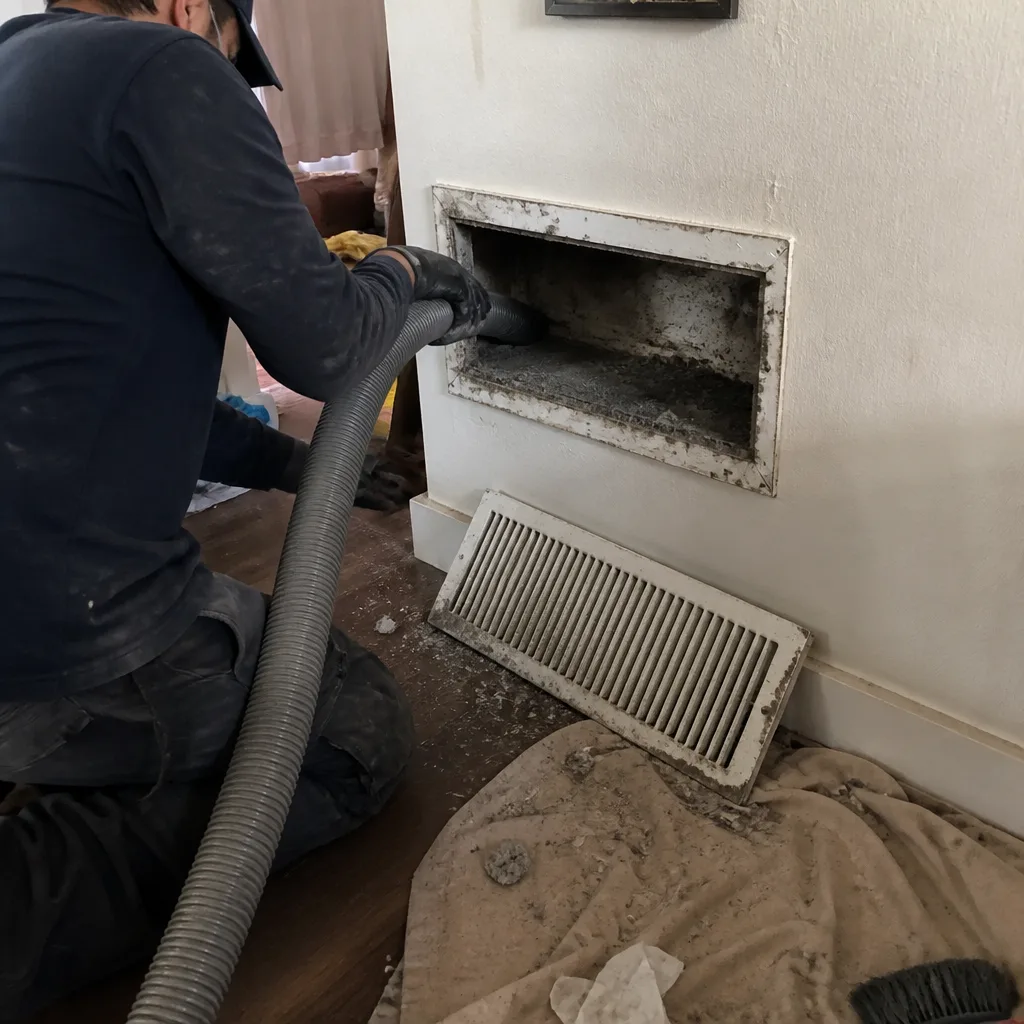 Before
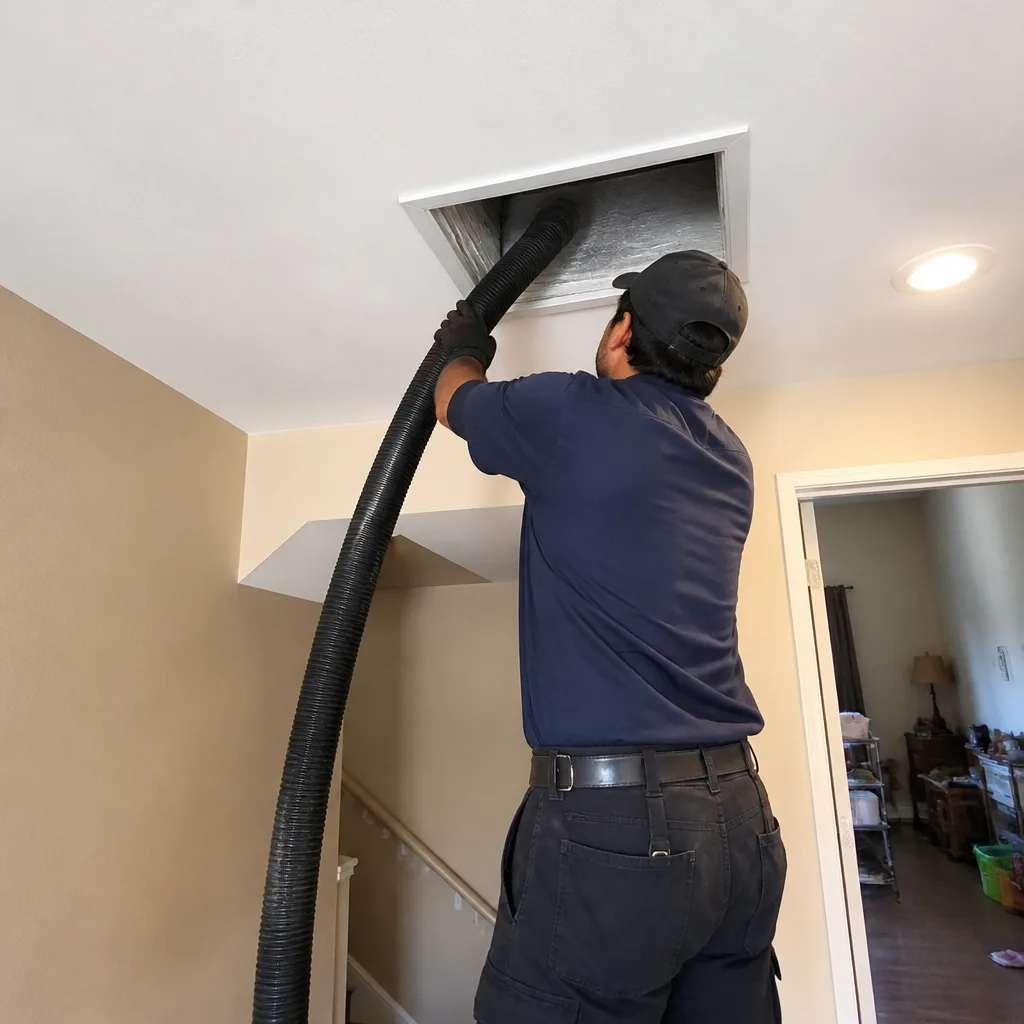 After
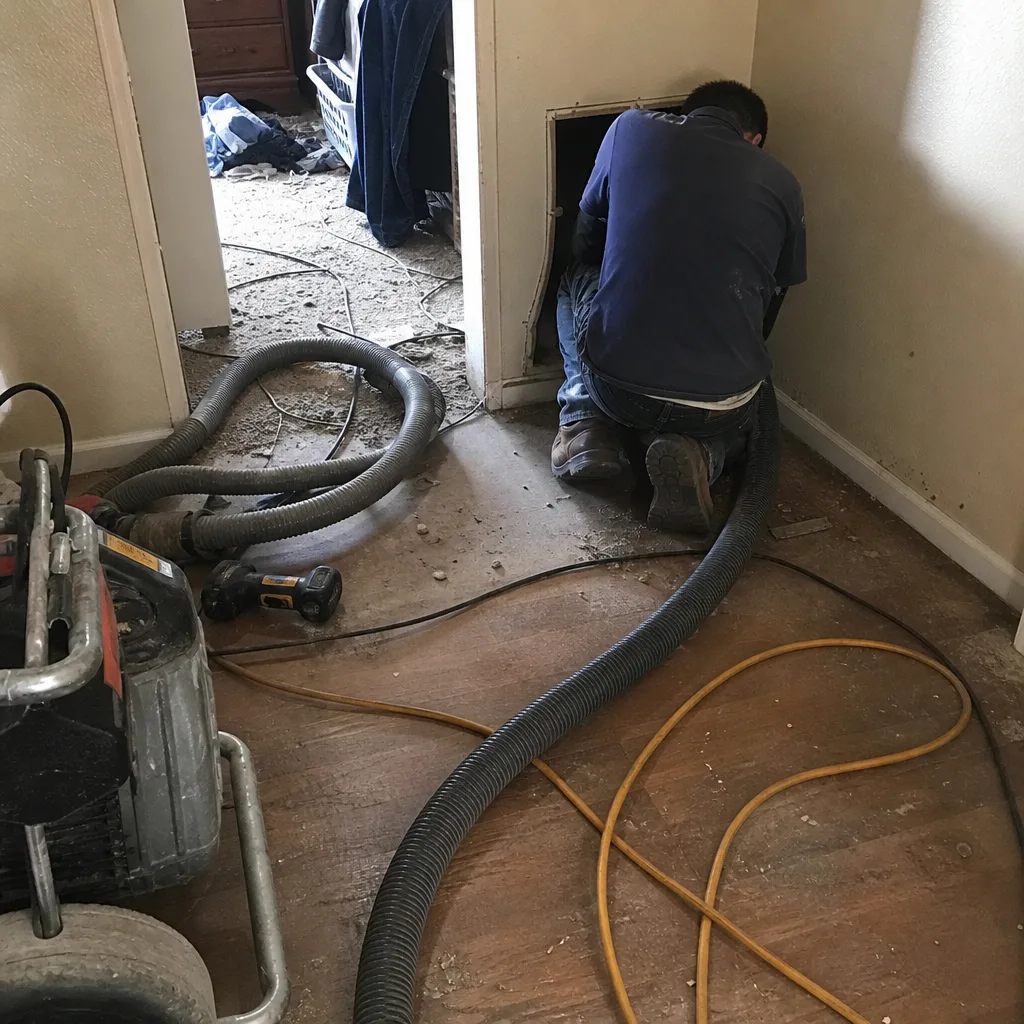 Before
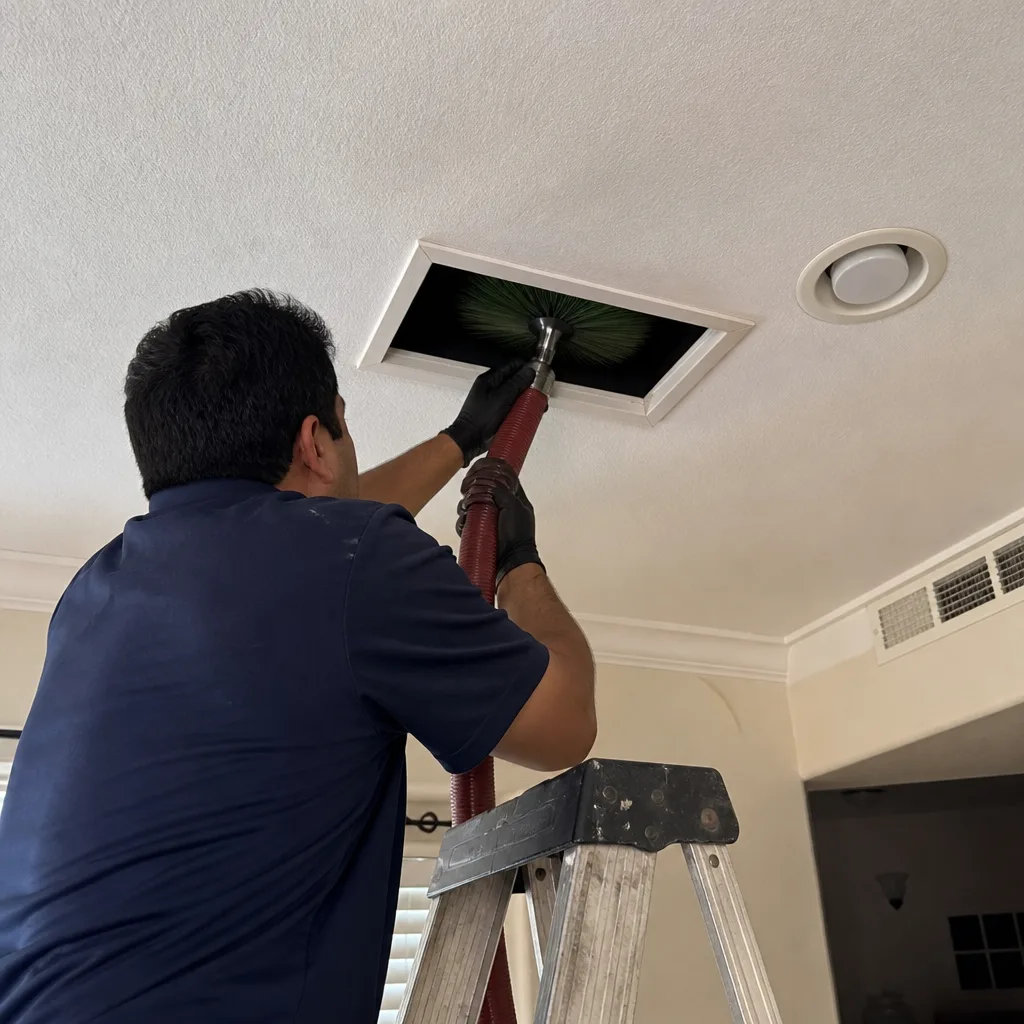 After
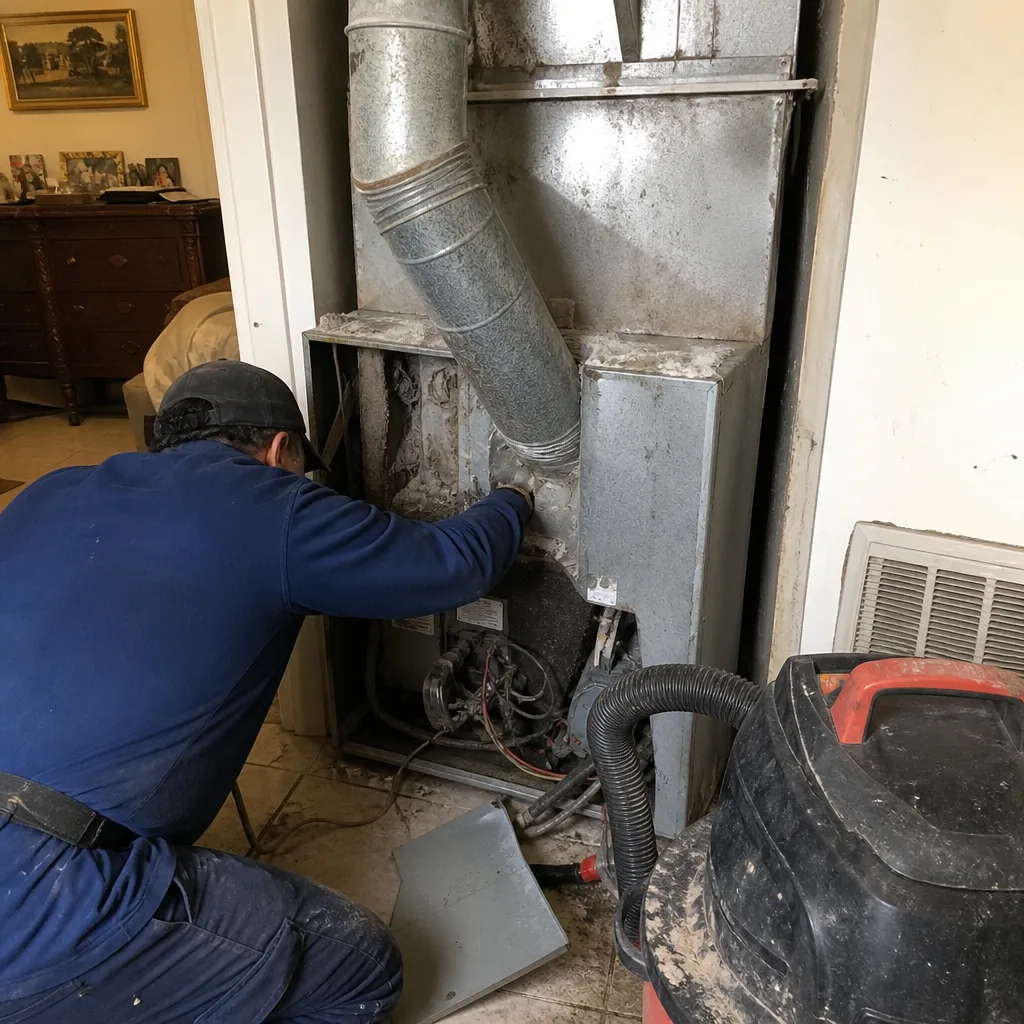 Before
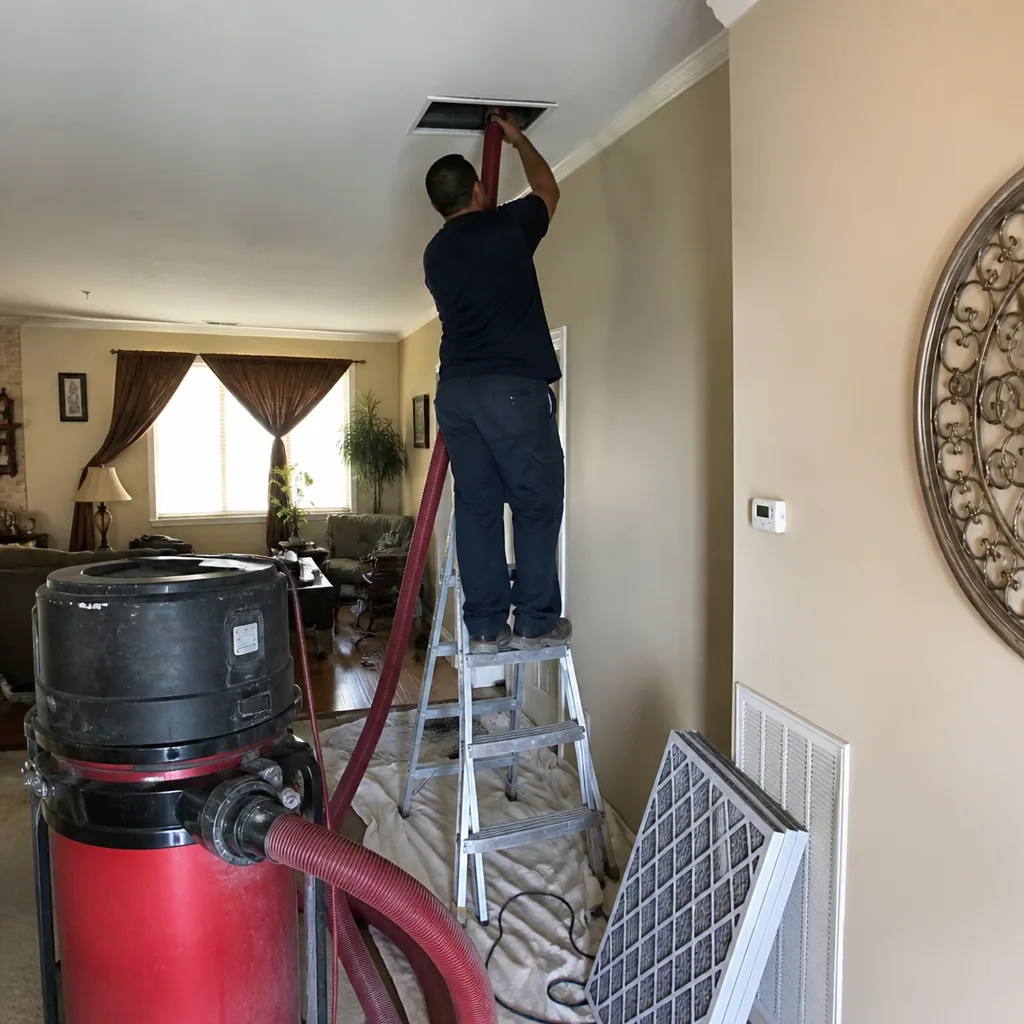 After
When to Call a Professional
If you’ve discovered damage to your duct system during a cleaning, if you’re selling your Fontana home and can’t produce permit records for duct work you know was done, or if you’re planning a renovation that will alter duct runs, call a licensed professional before you proceed. The scenarios that require professional attention are also the scenarios where getting it wrong carries the highest cost. Duct Cleaning Fontana offers free estimates in Fontana – call (855) 501-3681 to discuss your specific situation, whether it’s a cleaning, a repair with permit planning, or a dryer vent that needs fire-safety attention. Explore more guides & resources on our blog.
Frequently Asked Questions
No, you do not need a permit to have your air ducts cleaned in Fontana, because duct cleaning is classified as maintenance under the California Mechanical Code, not construction or alteration. The permit requirement is triggered only when the work involves repairing, replacing, or altering duct sections, and a reputable contractor will stop and discuss the permit requirement with you before doing any repair work during a cleaning visit.
Air duct cleaning in Fontana typically runs between $350 and $750 for a single-system home, depending on the number of registers, the linear footage of ducting, and the level of contamination. Homes with two systems or extensive flex duct runs in the attic can run higher, and the presence of post-renovation debris or pet contamination will also affect the price. For an exact quote on your specific home, call (855) 501-3681 – estimates are free.
Title 24 is California’s Energy Code, and it requires that any duct system alteration in an existing home meet specific sealing standards (mastic or UL-listed tape), insulation requirements (R-6.0 for supply ducts in attics), and leakage verification by a HERS rater. The requirement applies retroactively when duct sections are replaced or altered, even in older Fontana homes that were built long before Title 24 existed. Skipping the HERS verification creates a compliance gap that will surface at sale time.
Cheaper duct cleaning quotes usually reflect a shorter service time, less powerful equipment, and a “blow-and-go” approach that knocks loose debris into the air stream rather than extracting it under negative pressure. Professional duct cleaning requires contractor-grade equipment – Rotobrush, Nikro, or equivalent – plus containment practices that protect the surrounding home environment. A $99 whole-house special cannot cover the time and equipment required to clean a full duct system properly, which means the “bargain” leaves most of the contamination in place. Call (855) 501-3681 for an honest, fixed quote based on your actual system.
You know the duct work was done correctly when you can produce three documents: the City of Fontana permit with the inspector’s final sign-off, the HERS verification report showing the duct leakage test results, and before-and-after photos of the duct sections that were cleaned or repaired. A contractor who can’t produce all three, or who offers a walkthrough as a substitute for code documentation, has not fully complied with California’s requirements. Ask for the paperwork, not just the pitch.
In Fontana, air duct cleaning should be done every three to five years for most homes, but more frequently if you have pets, have completed renovation work, or live in a high-dust neighborhood near the 15 freeway or the foothill wind corridors. The Inland Empire’s dry climate and occasional Santa Ana winds contribute to dust accumulation faster than coastal areas. If you can see visible dust around registers or notice a musty odor when the system starts, you’re due. Call (855) 501-3681 for a professional assessment of your specific system.
The Bottom Line
Air duct cleaning itself is a permit-free maintenance service in California. Air duct repair and replacement are not. The distinction matters because a cleaning visit that turns into a “minor fix” can leave you with unpermitted work, a Title 24 compliance gap, and a liability that surfaces at the worst possible moment: escrow. The protection is straightforward. Verify your contractor’s license before work starts. Get permit determinations in writing. Insist on Title 24 compliance and HERS verification for any duct alteration. And keep every piece of paperwork in a permanent file. Cleaning is simple. Repair requires a process. Knowing the difference is the whole ballgame.
If you’re in Fontana and want a duct cleaning company that understands the permit line, uses professional-grade equipment like Rotobrush and Nikro systems, and will tell you honestly when a repair requires the City of Fontana’s involvement, we’re here. Duct Cleaning Fontana is a dedicated air-duct specialist serving the Inland Empire. Call (855) 501-3681 for a free estimate, and we’ll walk you through what your specific system needs – and what the code requires of anyone who touches it.
Written by the team at Duct Cleaning Fontana, serving Fontana since 2017.