
Last updated November 2, 2026
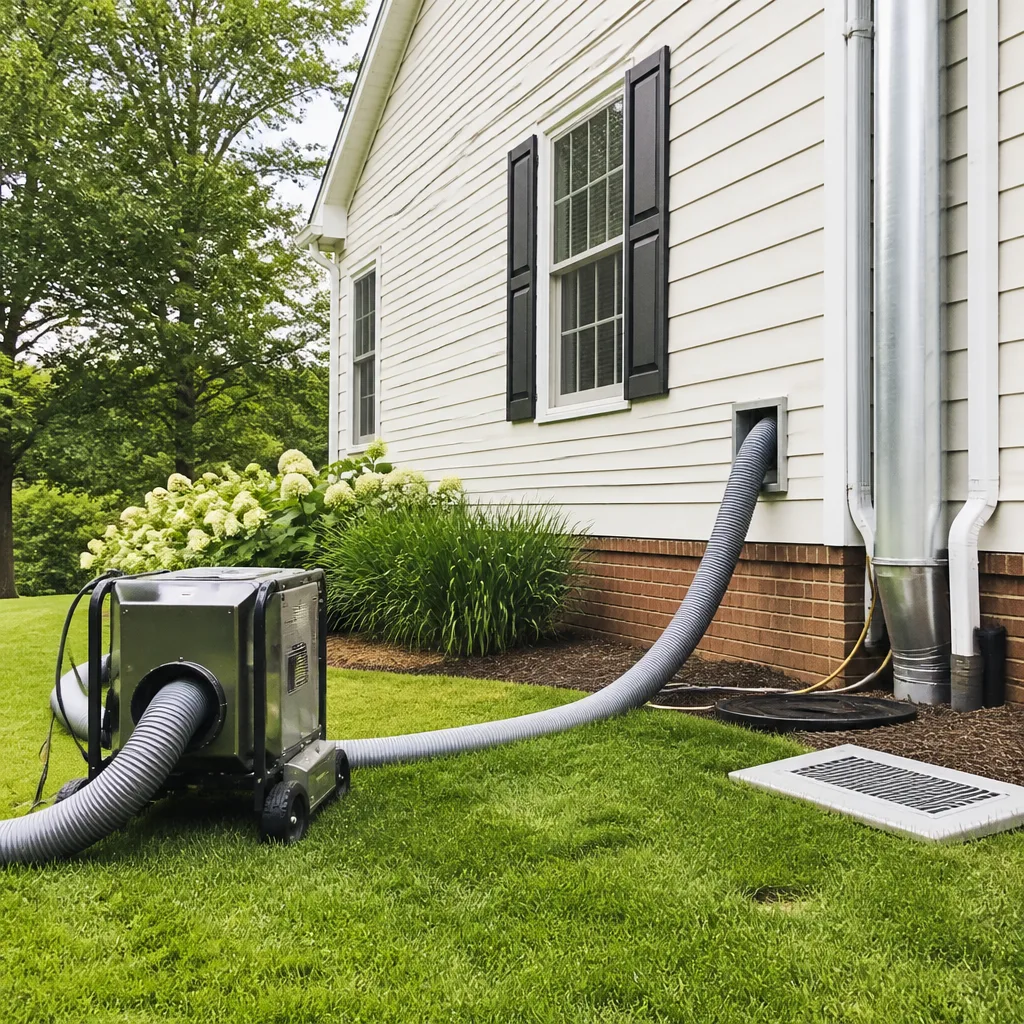 Whole-home duct cleaning
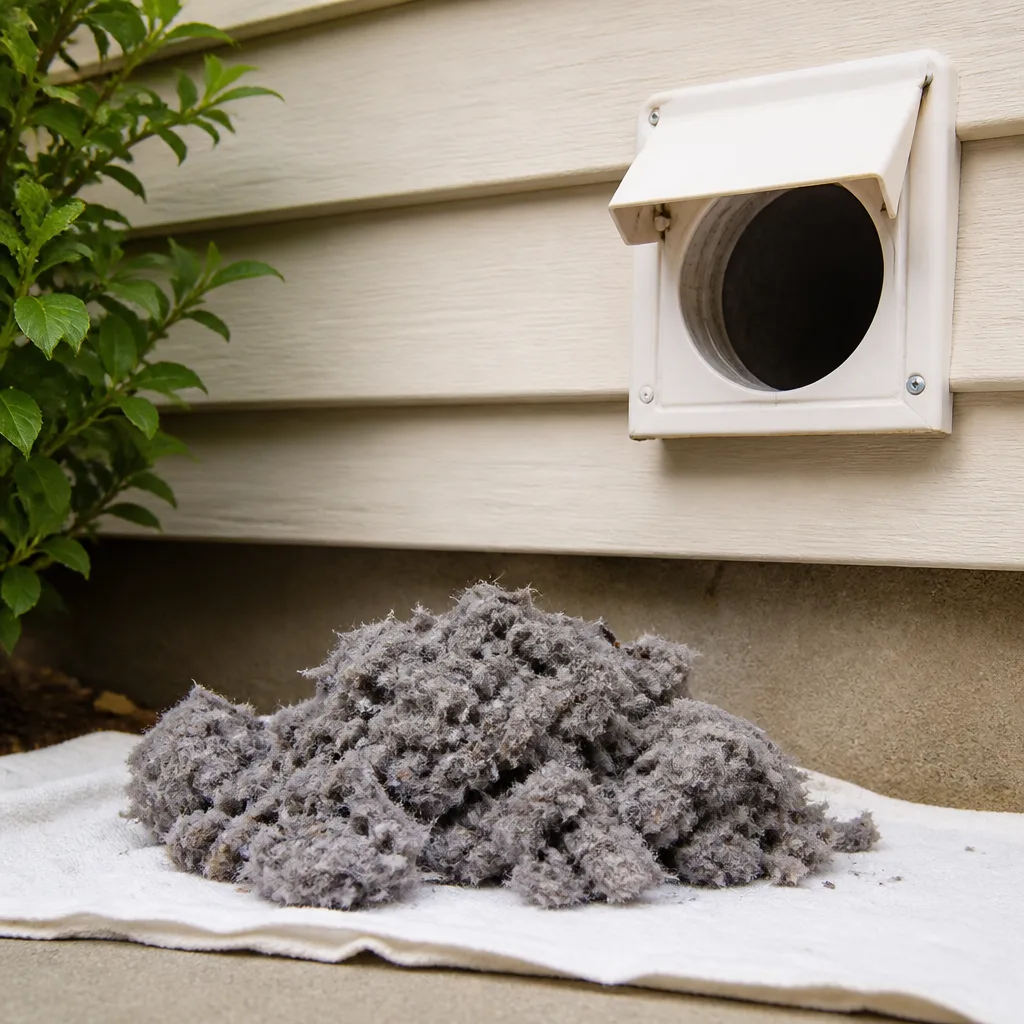 Dryer vent cleaning
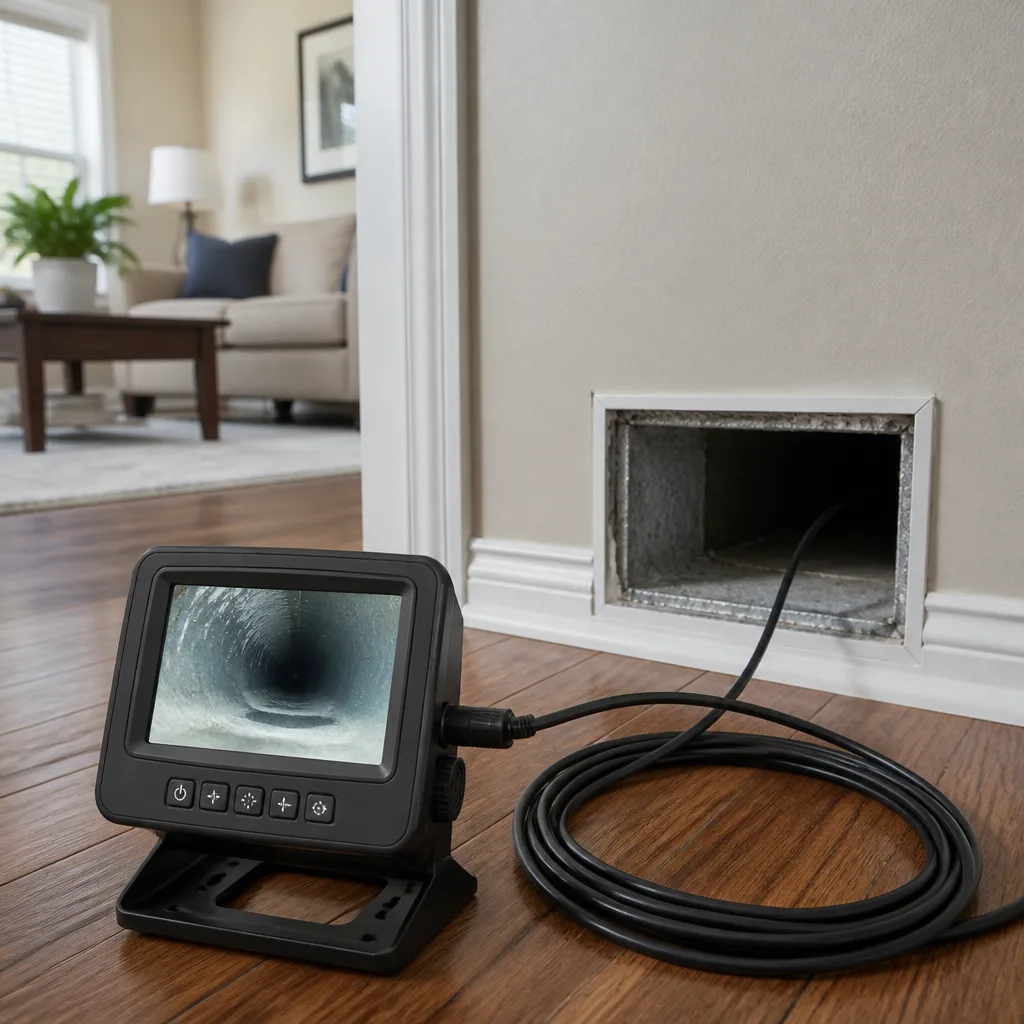 Camera inspection
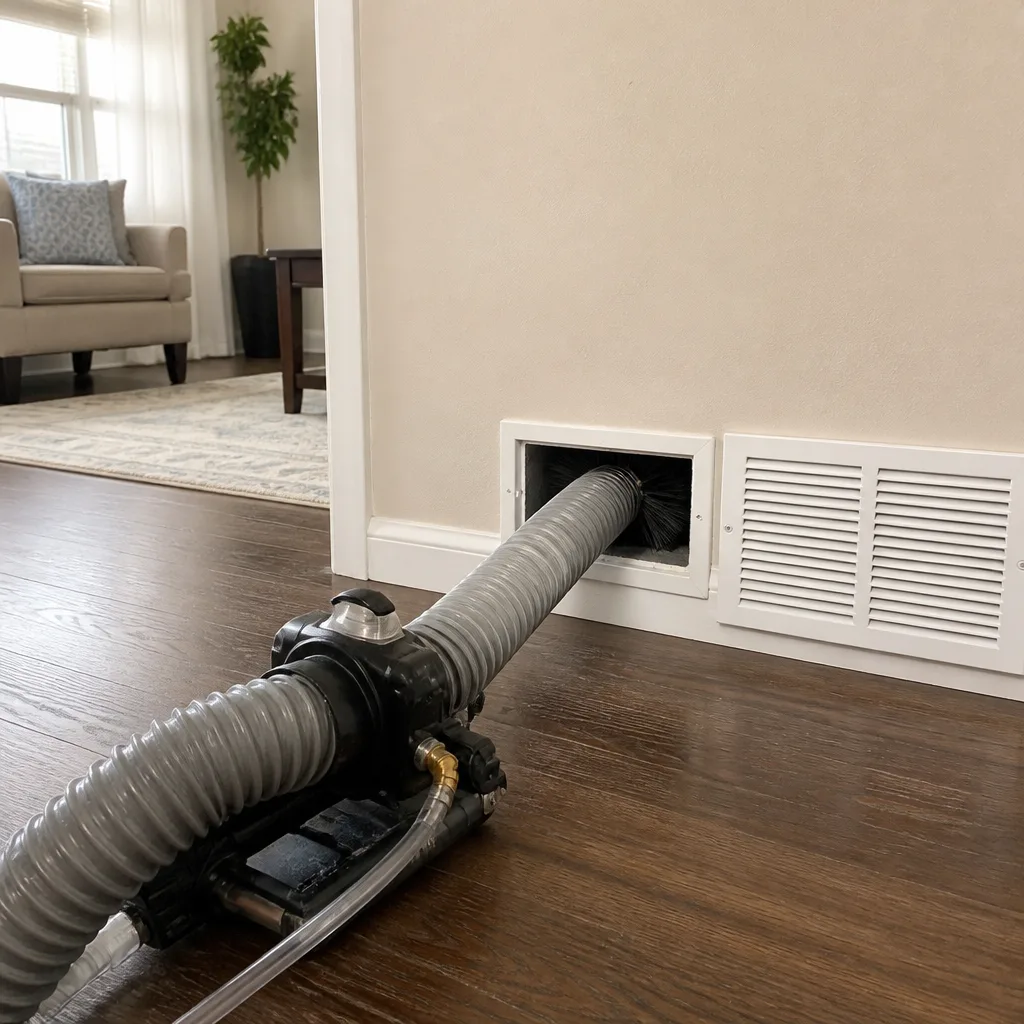 Sanitizing & deodorizing
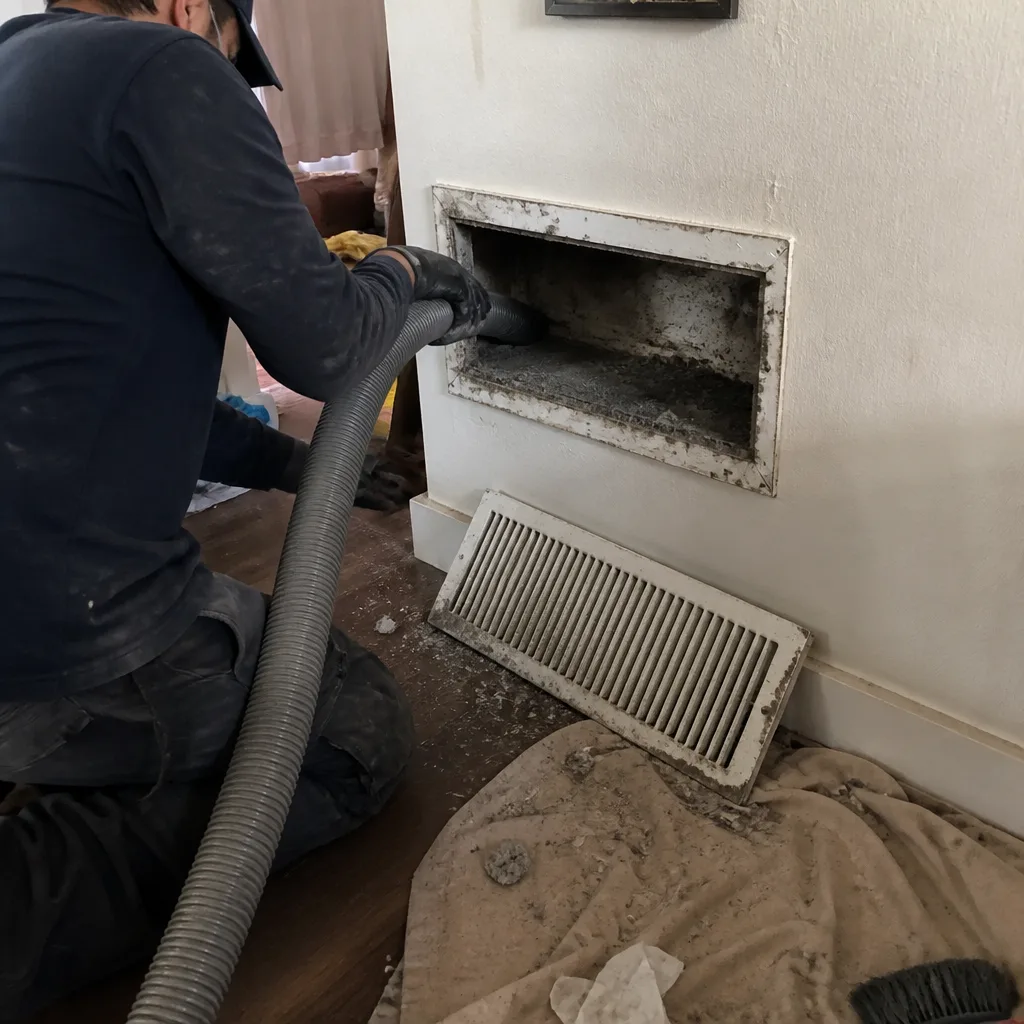
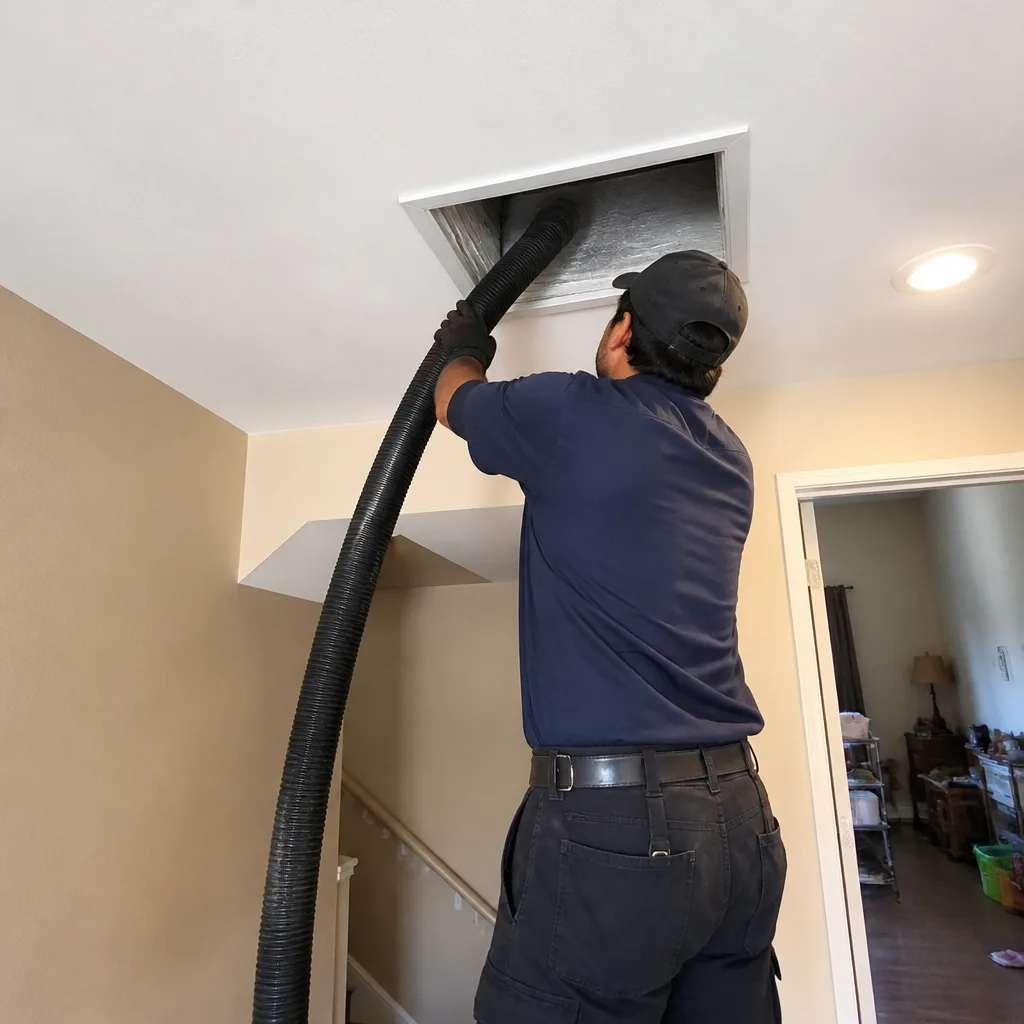
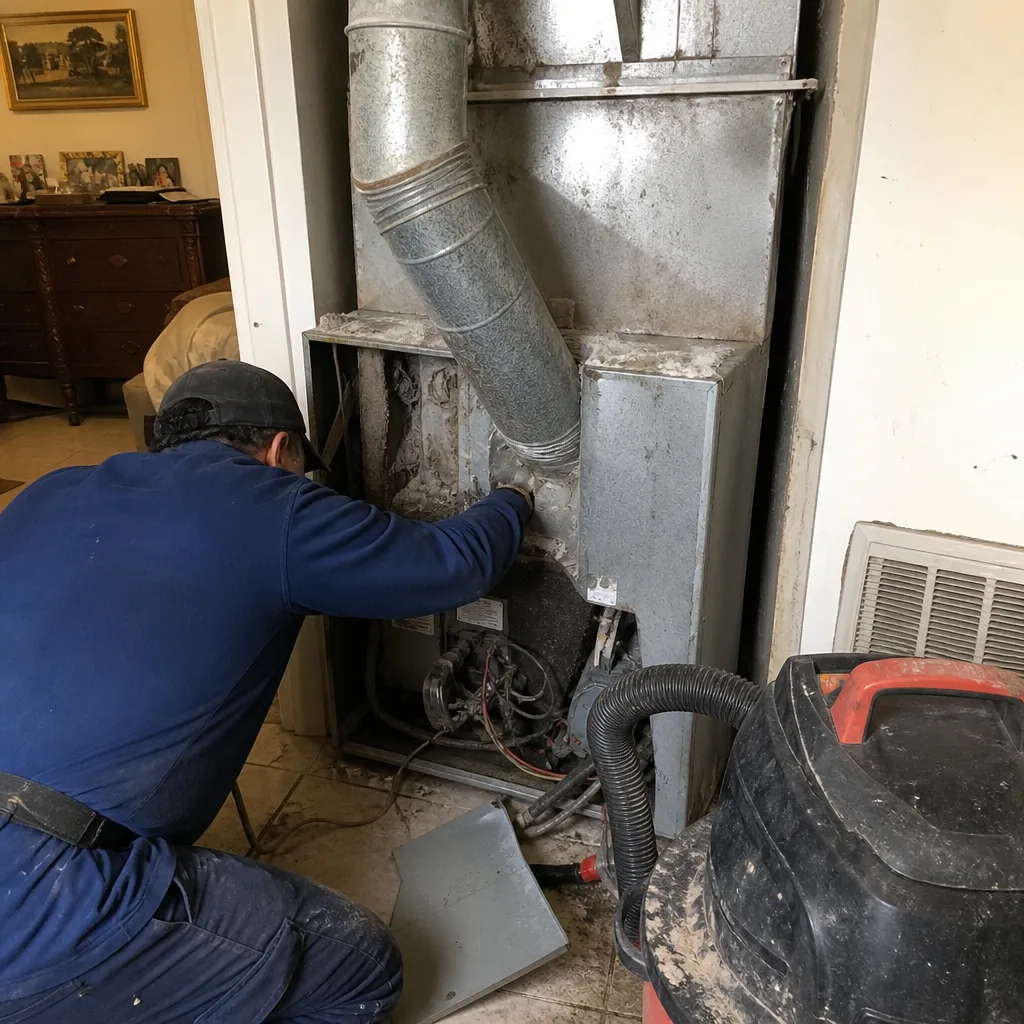
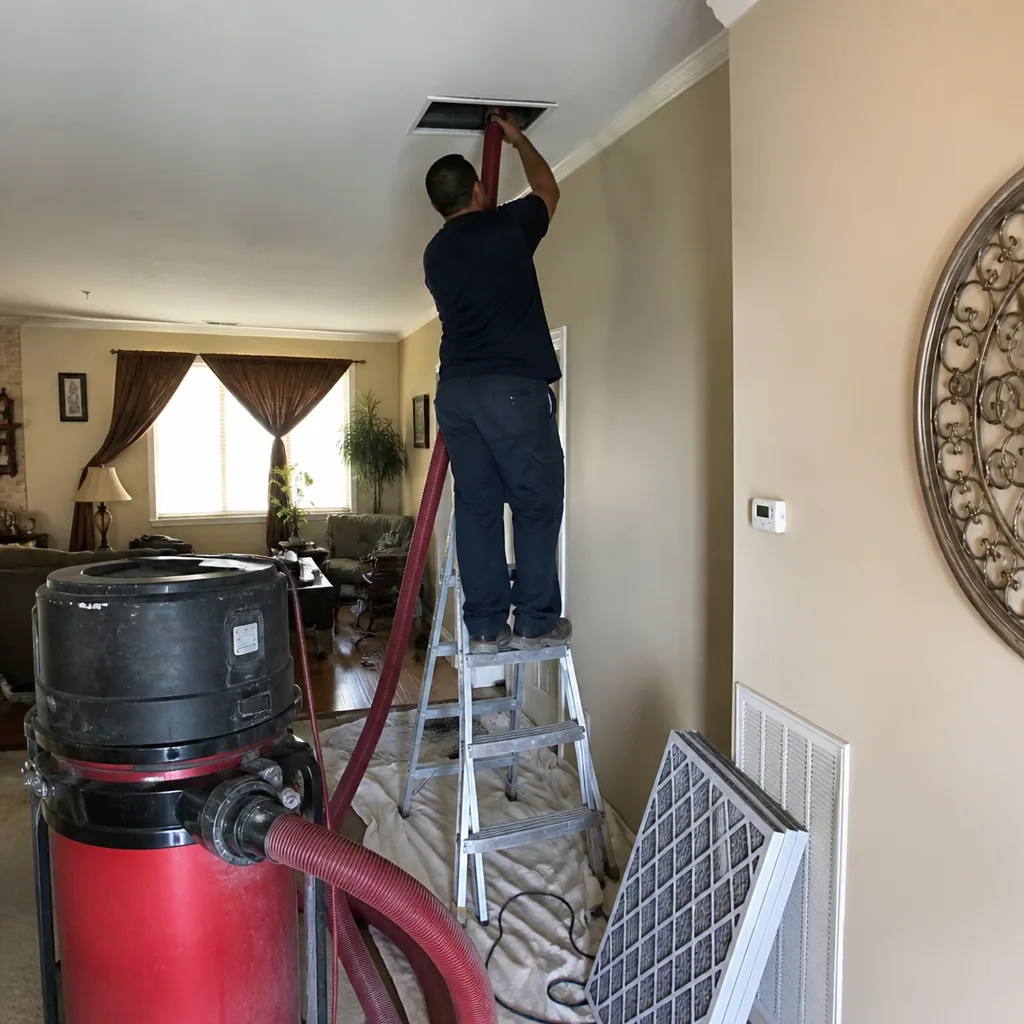
Whole-system duct and dryer vent check with before-and-after photos - you see exactly what came out of your vents
That "$99 whole-house special" is a bait ad - the real number appears once they are in your hallway, or the "clean" is a shop-vac at the register. We photograph the inside of your ducts before and after instead.
Air Duct Cleaning Troubleshooting: Common Problems and How to Fix Them
If cleaning your ducts didn’t fix your dust problem, it’s almost certainly because cleaning wasn’t the actual problem. No amount of re-cleaning will solve a leaking duct, a failed filter bypass, or a contaminated coil. We see this pattern constantly across Fontana homes: residents call us for a second cleaning when what they really need is a repair, a filter correction, or a service call to a completely different component of their HVAC system. This guide walks through the five diagnosable conditions behind most duct complaints, how to identify which one you have, and what actually fixes each.
Styles & brands we work with
- Whole-home duct cleaning
- Dryer vent cleaning
- Camera inspection
- Sanitizing & deodorizing
Quick Answer
Most homeowners who suspect a duct problem actually have one of five conditions: lingering contamination, a leaking duct run, a filter bypass, an air-handler issue, or a previous low-quality cleaning. The right first step is identifying which condition applies to your system, because the fix for each is completely different. Start by checking your filter seating and MERV rating, then inspect visible duct sections for gaps, then consider whether the symptom is dust, odor, or airflow. If you’re in Fontana and want a professional diagnosis, Duct Cleaning Fontana home can inspect your system and tell you exactly what’s wrong.
Table of Contents
- The Five Conditions Behind Most Duct Complaints
- When Cleaning Didn’t Fix the Dust: Leakage vs. Contamination
- The Filter Bypass Diagnostic: The Problem Nobody Checks First
- Odor Troubleshooting: Musty vs. Burning vs. Chemical Smells
- When a Second Cleaning Is Warranted vs. When You Have a Structural Problem
- Post-Cleaning Red Flags: Signs the Previous Contractor Did a Poor Job
- What You Can Check Yourself vs. What Needs Professional Equipment
- Fontana-Specific Duct Issues: Climate, Construction, and Code
- Common Mistakes to Avoid
- When to Call a Professional
- Frequently Asked Questions
- The Bottom Line
The Five Conditions Behind Most Duct Complaints
In our experience across Fontana and the surrounding Inland Empire, nearly every duct-related complaint falls into one of five categories. The important part isn’t the list itself; it’s that each condition has a different fix, and treating the wrong one wastes money and leaves the real problem untouched.
1. Residual Contamination (Needs Cleaning)
This is the condition most people assume they have: years of accumulated dust, pet dander, construction debris, or pest activity inside the duct runs. Symptoms include visible dust blowing from registers when the system kicks on, gray or black soiling around vent covers, and allergy symptoms that worsen when the HVAC runs. The fix is professional Air Duct Cleaning in Fontana using contractor-grade agitation and extraction equipment, not a shop-vac and a ladder.
2. Leakage or Disconnection (Needs Repair)
A leaking duct pulls attic or crawlspace air into the system and pushes conditioned air out. The symptom is often dust that never goes away after cleaning, because the dust isn’t inside the ducts anymore; it’s being pulled in from outside the duct envelope. This requires Air Duct Repair in Fontana, not another cleaning. We repair what others only clean around.
3. Filter Bypass (Needs Correction)
A poorly seated filter or one with the wrong MERV rating lets unfiltered air short-circuit the entire system. This deposits debris downstream of the filter, on the blower motor, the evaporator coil, and into the supply ducts. Cleaning removes the debris, but the bypass keeps replacing it. The fix is filter correction first, then cleaning.
4. Air Handler or Coil Problem (Needs HVAC Service)
Sometimes the ducts are fine and the problem lives in the air handler: a blower wheel caked with debris, a coil that’s never been cleaned, or a condensate pan that’s grown biological material. These are HVAC service items, not duct cleaning issues. A competent duct specialist will tell you when the problem isn’t in the ducts.
5. Low-Quality Previous Cleaning (Needs Redo)
A fast, negative-pressure-only cleaning that never agitates debris, never cuts proper access holes, and never documents before/after results often leaves the system as dirty as it started. This is the “cleaned but still dusty” scenario we hear about all the time in Fontana, especially from homeowners who paid a coupon price.
Here’s the decision tree in summary:
- Dust blows from registers immediately after cleaning? Check for leakage or a previous low-quality job.
- Dust returns within weeks of cleaning? Check the filter bypass and the coil.
- Odor, not dust, is the complaint? Jump to the odor section below; the cause determines everything.
- Airflow is weak in specific rooms? Consider a disconnected or collapsed duct run.
- System has never been cleaned, home is 10+ years old? A first professional cleaning is probably due.
When Cleaning Didn’t Fix the Dust: Leakage vs. Contamination
This is the question behind the search “air duct cleaning not working still dusty.” The first step is separating leakage from contamination, because the symptoms overlap but the fixes are completely different.
Contamination: Dust Lives Inside the Duct Wall
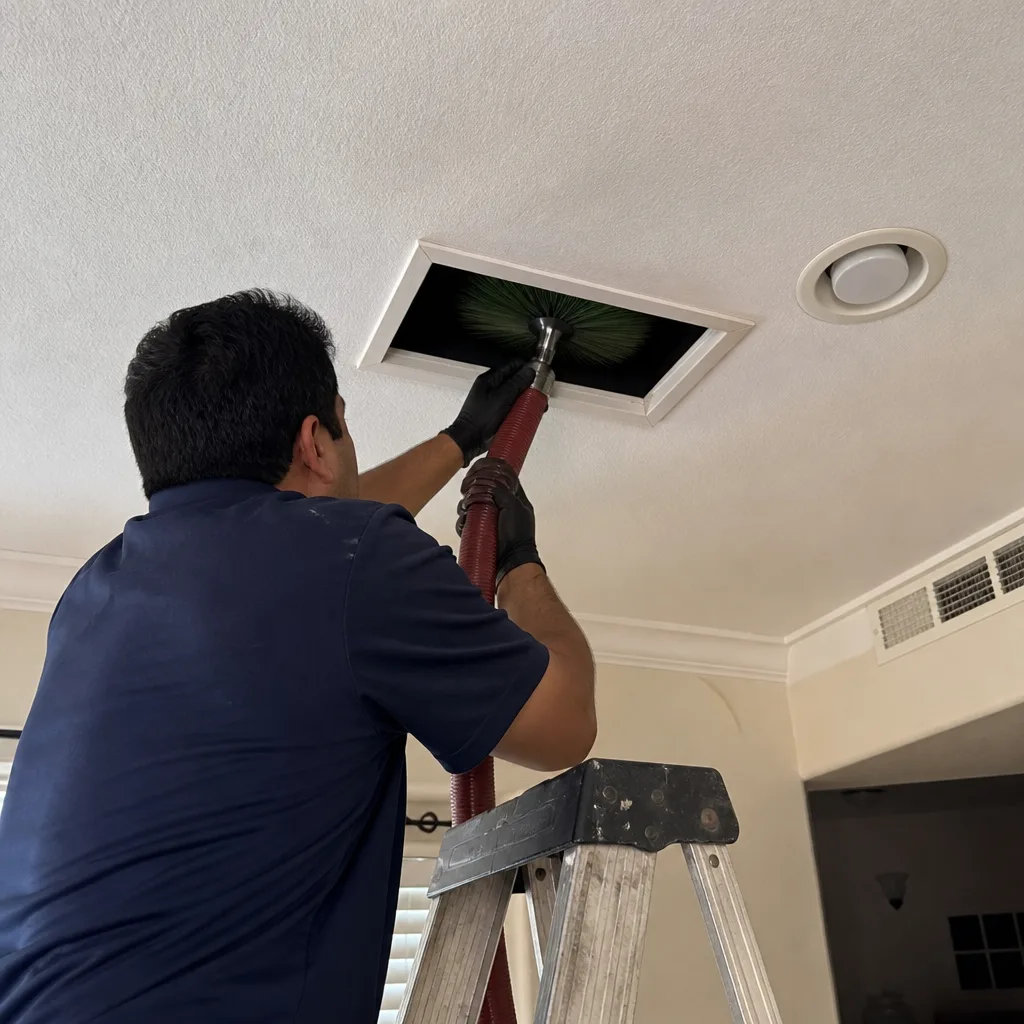
Contamination means debris is physically adhered to or accumulated inside the duct run itself. The duct envelope is intact, but its interior has years of buildup. Professional cleaning with agitation removes this. Rotobrush and Nikro systems that reach every linear foot of your duct run are designed for exactly this job: mechanical agitation to dislodge debris, paired with high-CFM negative pressure to extract it without spreading it through the house.
Leakage: Dust Comes From Outside the Duct Wall
Leakage means the duct envelope has gaps, separated joints, or sections that have pulled apart. When the system runs, the pressure differential pulls attic insulation, drywall dust, pest droppings, or crawlspace soil into the airstream. Cleaning the interior of the ducts doesn’t stop this; the dust source is outside the pipe.
How to Distinguish Between the Two
- Age of the home and ducts: Duct tape loses adhesion after 10 to 15 years in Fontana’s heat. If your system is older, gaps are likely.
- Type of dust: Gray, fibrous dust that looks like insulation points to leakage. Dark, sooty dust that’s been there for years points to contamination.
- Location of registers: If only certain rooms are dusty, suspect a leak or disconnection in that specific branch line, not a system-wide cleaning issue.
- Visual inspection: In accessible attic or crawlspace sections, look for separated joints, hanging flex duct, or visible gaps. You may not be able to see every foot, but any gap you can see confirms the diagnosis.
- Cleaning history: If the system was professionally cleaned within the last 12 months and dust levels are unchanged, leakage is the more likely culprit.
The right next step for leakage is duct sealing or section replacement, which is why we offer Air Duct Repair in Fontana as a standalone service. Closing the gap competitors leave when they clean ducts but won’t fix deteriorated or disconnected sections.
The Filter Bypass Diagnostic: The Problem Nobody Checks First
Before you schedule anything, check your filter. We can’t count how many Fontana homes we’ve visited where the “duct problem” was actually a filter problem, and the fix took two minutes and a $15 filter.
What a Filter Bypass Looks Like
A bypass happens when air travels around the filter instead of through it. This occurs when the filter is the wrong size for the slot, installed backward, or missing entirely. It also happens when someone uses a high-MERV filter in a system not designed for that pressure drop, which can cause the filter to bow, the cabinet to flex, and air to slip around the edges. Every particle that bypasses the filter lands downstream: on the blower, on the coil, and into the supply ducts. Cleaning removes that debris, but if the bypass remains, the debris comes right back.
Step-by-Step Filter Check
- Locate your filter slot. It’s typically in the return grille, the air handler cabinet, or a dedicated filter rack near the furnace.
- Remove the filter and check for gaps. The filter should fit snugly against all four edges of the slot. Any visible gap is a bypass path.
- Check the size printed on the filter frame. It should match the dimensions of the slot. A filter that’s an inch too short or half an inch too narrow is bypassing air.
- Check the airflow arrow. The arrow on the filter frame should point toward the blower motor, which is usually toward the air handler or furnace. Installing it backward presses the filter media against the frame and can bow it away from the seal.
- Check the MERV rating. If you installed a MERV 13 or higher filter in a system that was rated for MERV 8, you may have restricted airflow enough to alter system pressure and worsen any existing leak points. A Honeywell media filter cabinet installed as part of a whole-home filtration system is designed for higher MERV; a standard 1-inch filter slot may not be.
- Look at the duct upstream of the filter. If you see dust accumulation on the return side before the filter, that’s normal. If you see dust on the supply side after the filter, the filter is bypassing or ineffective.
If your filter setup checks out and dust continues to appear downstream, the problem is either leakage in the return duct run (pulling unfiltered air into the system before it reaches the filter) or a cleaning issue. A professional inspection can pinpoint which.
Odor Troubleshooting: Musty vs. Burning vs. Chemical Smells
Odor complaints are a different diagnostic tree entirely. The type of smell tells you which component is involved.
Musty or Damp Odor
A musty smell that’s strongest when the system first kicks on usually points to microbial growth on the evaporator coil, in the condensate pan, or on the interior surfaces of ducts that have been exposed to moisture. In Fontana’s summer humidity stretches, a condensate pan that doesn’t fully drain can become a biological reservoir. The odor is most noticeable at startup because the blower pushes air across the wet surface before the coil cools sufficiently to condense more water. Duct cleaning alone won’t solve this; the moisture source and the affected component need direct attention. If the growth is in the ducts themselves, professional cleaning with proper containment, not just household vacuuming, is required. Using Abatement Technologies air filtration and containment during service protects the surrounding home environment.
Burning or Hot Dust Smell
A burning odor when the heat runs for the first time in fall is common and usually harmless: it’s months of accumulated dust on the heat exchanger burning off. This smell should clear within a few hours. If it persists beyond a day, or if it appears during normal operation, treat it seriously. Persistent burning smells can indicate a blower motor that’s overheating, wiring that’s degrading, or debris lodged against the heat exchanger. Shut the system down and get a professional diagnosis. This is an HVAC service call, not a duct cleaning.
Chemical or Vinyl Smell
A chemical or vinyl odor, especially in newer duct installations, can come from off-gassing insulation lining, adhesives, or sealants. Flexible duct manufactured with certain types of plasticizer can release odor when new or when exposed to high temperatures. Some spray-on duct sealants also off-gas for a period after application. In most cases, the odor fades over days or weeks. If it doesn’t, the material may need replacement, which falls under duct repair, not cleaning. If the smell is accompanied by soot or staining at the registers, eliminate the possibility of a cracked heat exchanger, which is a combustion safety issue requiring immediate HVAC attention.
Rodent or Decomposition Odor
An unmistakable dead-animal smell from the vents usually means a rodent or bird entered the duct system and died. The fix requires locating and removing the carcass, then cleaning the affected duct section, then identifying and sealing the entry point. The entry point repair is duct repair work; the cleanup is duct cleaning. Both need to happen or the problem recurs.
When a Second Cleaning Is Warranted vs. When You Have a Structural Problem
Not every repeat cleaning is wasted money. The key question is whether the source of the symptom remains inside the ducts or whether it lives elsewhere in the system.
When a Second Cleaning Makes Sense
- The first cleaning was incomplete. You can tell by checking registers for debris within days of the service, finding access holes that were never cut, or receiving no before/after photos from the contractor. A proper cleaning with agitation and extraction should last years, not weeks.
- Construction or renovation occurred after the first cleaning. Post-renovation debris is a real problem, especially in Fontana neighborhoods where homeowners are finishing attics or adding rooms. Drywall dust, insulation particles, and sawdust migrate into open duct runs during construction.
- A pest intrusion happened after the last cleaning. Rodents re-enter through the same unsealed gaps. If the entry point wasn’t closed, a re-cleaning plus a repair is the correct sequence.
- Several years have passed. Under normal conditions, ducts benefit from professional cleaning every three to five years. If it’s been that long, a second cleaning is just routine maintenance.
When a Second Cleaning Won’t Help
- The ducts were properly cleaned but dust returns within weeks. That points to leakage or filter bypass, not contamination. More cleaning will not close a gap.
- Airflow is weak in specific rooms regardless of cleaning. That points to a collapsed flex duct, a disconnected branch, or a damper that’s stuck closed. These are repair items.
- Odor persists after cleaning. If the smell is musty, burning, or chemical, revisit the odor section above. The source is likely the coil, the heat exchanger, or the duct material itself.
- You have humidity problems. Ducts don’t cause humidity. Check the condensate drainage, the overall HVAC sizing, and whether the home’s vapor barrier or attic ventilation is adequate.
The honest question to ask before scheduling a follow-up cleaning: what changed since the last one? If nothing changed and the symptom is the same, the diagnosis was wrong the first time.
Post-Cleaning Red Flags: Signs the Previous Contractor Did a Poor Job
Fontana has no shortage of blow-and-go operators running coupons that sound too good to be true, because they are. Here’s what a low-quality cleaning looks like after the fact.
Debris at Registers Within Days
If you wipe down a register and find a new layer of dust within a week of cleaning, the system wasn’t cleaned properly or the debris was never actually removed from the duct runs. A competent cleaning should leave the supply registers clean and free of immediate re-accumulation. This is the most common complaint we hear from Fontana homeowners who tried a cheap service first.
No Access Holes Cut
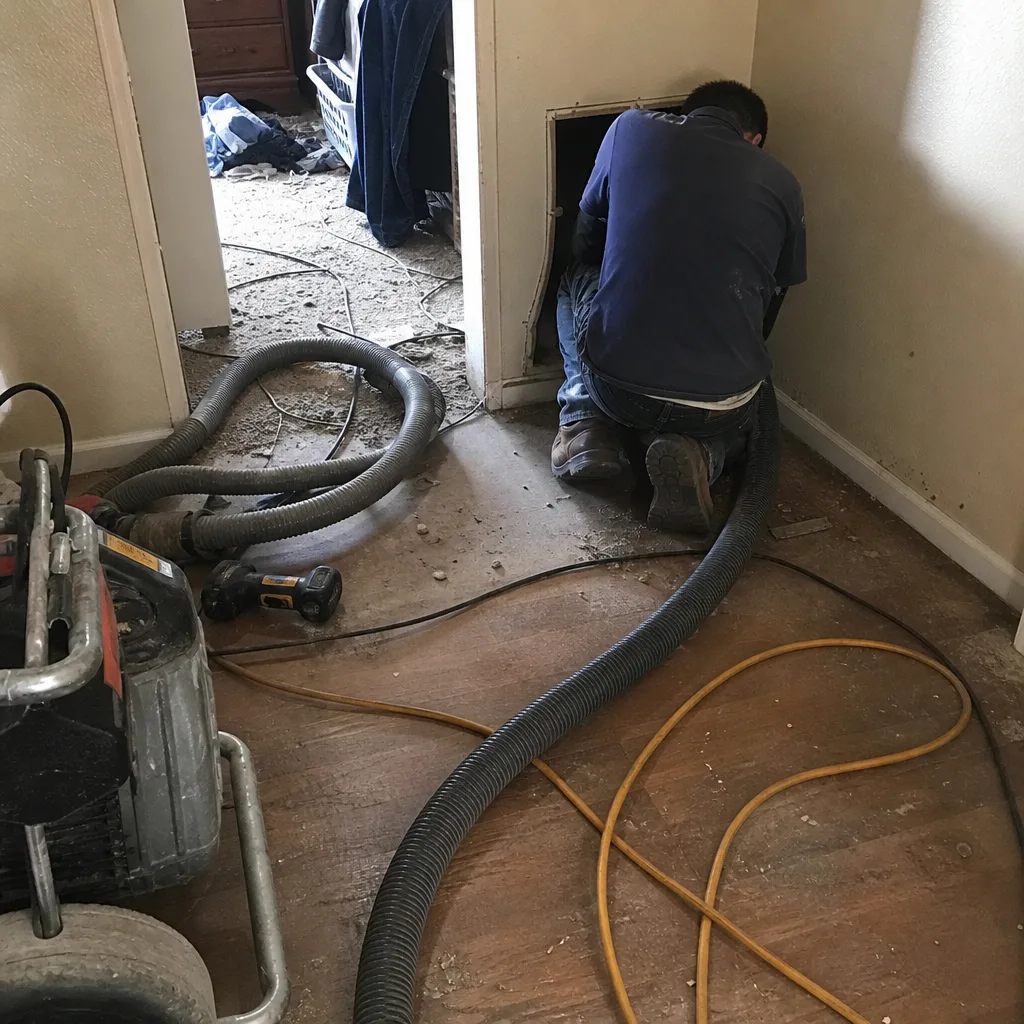
Negative-pressure cleaning without agitation requires access to the interior of the duct at strategic points. If the previous contractor only hooked a vacuum to one register and called it done, the cleaning was cosmetic at best. We cut proper access holes, agitate with rotating brush systems, and patch the holes cleanly when the work is complete. If you can’t find any evidence of patched access holes after a cleaning, ask where the contractor actually accessed the duct interior.
No Before/After Documentation
A professional duct cleaning should include photographic proof of the before condition and the after result. If the contractor can’t show you what the inside of your ducts looked like before and after, you have no way to verify the work was done. We document every job because the proof is the point.
Register Grilles Left Dirty
A thorough cleaning includes the register covers. If the grilles came off the wall dirty and went back on dirty, the contractor skipped a basic step. That’s a reliable tell about everything else they skipped.
No Surface Protection During Service
Professional equipment means hoses, agitation tools, and filtration units moving through your home. Guardsman-grade surface protection practices during in-home work protect floors, furniture, and registers. If the previous contractor left scuff marks, dirty footprints, or hose residue on your flooring, that’s your signal about their overall standard of care.
The Price Was a Coupon
We’ll be direct: a whole-system duct cleaning for a flat $99 or a per-vent teaser price is not a real cleaning. Real duct cleaning requires a contractor-grade truck-mounted or portable negative-air machine, rotating agitation brushes, containment controls, access hole cutting and patching, and documented before/after verification. That costs real money. We quote one flat price per system, agreed before work starts, no per-vent pricing, and before-and-after photos of your own ducts.
What You Can Check Yourself vs. What Needs Professional Equipment
Some parts of this diagnosis you can do with your eyes and hands. Other parts require equipment a homeowner won’t have. Here’s the line.
What You Can Check Yourself
- Filter inspection: Remove, inspect, and replace your filter. Check seating, sizing, orientation, and condition. This takes five minutes and costs nothing.
- Register inspection: Remove a few register covers and look at the visible portion of the duct with a flashlight. Check for dust accumulation, visible gaps at the boot, or debris you can reach.
- Visible duct runs: In attics, crawlspaces, or garages, visually inspect accessible duct sections. Look for separated joints, collapsed flex duct, hanging sections, or visible dust trails at connection points.
- Coil visibility through the access panel: If you can safely open the air handler access panel, visually inspect the coil’s upstream face for dust or biological growth. If you’re not comfortable with this, skip it; it’s not worth a shock or a refrigerant leak.
- Baseline documentation: Take photos of registers, visible ducts, and the filter before any professional service. These become your comparison points.
What Needs Professional Equipment
- Interior duct inspection beyond the first few feet: A visual inspection of the full run requires a borescope camera. We use this to document interior conditions before proposing a cleaning.
- Mechanical agitation and extraction: Reaching every linear foot of duct run requires rotating brush systems and high-CFM negative pressure. Rotobrush and Nikro systems that reach every linear foot of your duct run are not something you can rent at a home center.
- Leak quantification: Measuring leakage rates requires duct blaster equipment and pressure differential testing. This determines whether sealing is needed and where the worst leaks are.
- Post-fire or post-rodent contamination: If the contamination involves biological material or fire residue, containment and filtration are mandatory. Abatement Technologies air filtration equipment is what professional remediation contractors use, and it’s what we bring when the job calls for it.
- Repairs to the duct envelope: Sealing gaps, replacing collapsed sections, reconnecting separated joints, and patching damaged runs require tools and materials beyond what a homeowner typically has. These are Air Duct Repair in Fontana jobs.
Fontana-Specific Duct Issues: Climate, Construction, and Code
Fontana’s climate and construction patterns create a distinct set of duct problems that differ from coastal Southern California or colder climates. Cleaner air starts inside your walls, not just at the filter, and in Fontana that means dealing with what the heat and the housing stock create.
Heat and Flex Duct Fatigue
Fontana summers push attic temperatures well past 130°F. Flexible duct with a plastic inner liner and wire coil degrades faster here than nearly anywhere else in California. The liner becomes brittle, the insulation jacket separates from catastrophic heat cycling, and the duct tape adhesives that hold connections together break down. Homes in Southridge, Etiwanda, and northern Fontana neighborhoods where attics are hot and tight see this most. The failure pattern isn’t dramatic; it’s gradual sagging, small gaps opening at joints, and dust seeping in over time.
Construction Dust at Move-In
Fontana’s new-construction volume is significant in areas like Morningside Ranch and the developments north of Summit Avenue. We see a recurring pattern: builders run HVAC during construction to keep crews comfortable, which pulls drywall dust, sawdust, and insulation fibers into the duct system before the homeowner ever takes possession. A new home often needs a professional duct cleaning before it needs its first filter change. Builders don’t clean ducts before turnover, and the evidence shows up as fine white dust on surfaces within the first month.
Dryer Vent Specifics for Fontana Homes
Dryer vents in Fontana often run long distances from laundry rooms on interior walls to exterior terminations. The longer the run, the more lint accumulates, and the hotter the dryer runs. We provide Dryer Vent Cleaning in Fontana as a fire-safety service, not an afterthought. Annual cleaning is the recommendation for most Fontana homes, and more often if the run exceeds 15 feet or has multiple elbows. A dryer that’s running hot and slow is usually a vent obstruction, not a dryer malfunction.
Barometric Pressure and Dust Settlement Patterns
Fontana sits in a valley inversion zone where air stagnation episodes concentrate particulate matter. That’s outdoor air quality, but it matters for indoor systems because the return ducts pull whatever outdoor air is available when doors and windows open. Homes near the 210 and 15 freeways see more automotive particulates in return ducts. Homes near the gravel operations and the old Kaiser Steel site deal with legacy dust patterns that settle into every return plenum. Your filter catches what comes through it; your ducts hold what bypasses it.
Code Notes for Duct Work in Fontana
Fontana enforces the California Energy Code (Title 24) and the California Mechanical Code for duct work. The key provisions relevant to this guide: all duct connections must be sealed with mastic or UL-listed tape, not standard cloth duct tape; duct leakage limits for new installations are set by the code and tested with specific equipment; and any duct repair that replaces or substantially modifies a run requires a permit through the City of Fontana. Homeowners doing small sealing work themselves don’t need a permit, but if you’re replacing entire branch lines, talk to your contractor about permit requirements before work starts.
Common Mistakes to Avoid
- Re-cleaning a leaking duct system. If the dust keeps coming back after a proper cleaning, the ducts are leaking. More cleaning won’t stop it. Get a leak inspection and repair before spending on another cleaning.
- Using a high-MERV filter in a system designed for a low-MERV filter. A MERV 13 filter in a standard 1-inch slot can create enough pressure drop to worsen existing leaks and reduce airflow. Match the filter to the system’s design specifications.
- Ignoring the filter entirely. A missing, mis-sized, or backward filter bypasses the entire filtration system and deposits debris downstream. Check this before calling anyone.
- Hiring the cheapest coupon service and expecting a real cleaning. Fontana’s coupon duct cleaning market thrives on homeowners who don’t know what proper equipment looks like. If the price is less than the cost ofrenting professional equipment, the service can’t be professional.
- Assuming all odors come from the ducts. Musty, burning, and chemical smells each point to different components. The ducts may be incidental to the actual problem, which could be the coil, the heat exchanger, or the duct material itself.
- Skipping the post-service documentation. If your contractor can’t provide before/after photos and a description of what was found, you paid for a service you can’t verify. Insist on documentation.
- DIY cleaning attempts with a shop vac. A household vacuum doesn’t have the pressure or airflow to extract debris from a full duct run. It can actually dislodge debris and push it further into the system. Professional equipment exists because this job requires it.
When to Call a Professional
Call a professional when the symptoms point beyond what you can see or fix. That includes: dust that persists after checking the filter and visible duct sections; any burning odor that doesn’t clear within a few hours of first seasonal startup; a musty odor that persists after checking the condensate pan; airflow that’s weak in specific rooms; any sign of pest activity in the ducts; or a previous cleaning that left you with no documentation and no confidence the work was done. If you’re in Fontana, Duct Cleaning Fontana home offers free estimates – call (855) 501-3681 and tell us what you’re seeing. We’ll tell you whether the problem is in the ducts, in the filter, or elsewhere in the system, and we’ll quote one flat price per system before any work begins.
Frequently Asked Questions
In Fontana, a professional whole-system duct cleaning typically runs between $350 and $650 for an average single-family home, depending on the number of vents, the size of the system, the number of access holes required, and whether the contamination is normal dust or something more involved. We quote one flat price per system, agreed before work starts, with no per-vent pricing and no add-ons discovered at the door. Call (855) 501-3681 for an exact quote on your home – estimates are free.
Cheaper quotes usually come from contractors using portable household vacuums or single-point negative pressure without agitation. They can’t reach the full duct run, they don’t cut proper access holes, and they don’t document before/after results. The price difference reflects the equipment and process, not the quality of the same service. Air duct work is all we do, and we bring the tools to prove it: Rotobrush and Nikro agitation systems with high-CFM extraction, not a shop-vac and a ladder.
You should receive before and after photos from inside your ducts taken during the service. We document every job with borescope and camera evidence showing the condition before cleaning and the result after. You should also be able to see patched access holes where the contractor entered the duct system. If the contractor can’t show you either of these, the work was likely superficial.
For most Fontana homes, every three to five years is the realistic interval, depending on occupancy, pets, renovation history, and whether the home is near freeways or industrial zones. Homes with large dogs, recent construction, or residents with respiratory sensitivities may need cleaning more often. Dryer vents, by contrast, need annual cleaning for most households. If you’re unsure whether your system is due, the inspection will tell us what’s actually in the ducts – call (855) 501-3681 to schedule one.
No. A household vacuum lacks the airflow and pressure to extract debris from the full length of a duct run, and DIY agitation can dislodge contaminants into the living space. Professional cleaning requires negative-pressure extraction matched with mechanical agitation, along with containment controls for the debris being removed. This is why contractors use purpose-built equipment like Rotobrush and Nikro systems, not consumer tools.
Duct cleaning removes contamination from inside the duct system. Duct repair fixes the duct envelope itself: sealing leaks, replacing collapsed sections, reconnecting separated joints, and patching damage. Cleaning can’t fix a leak, and repair doesn’t clean. We offer both as separate services because they solve different problems, and the honest diagnosis sometimes tells you that you need one and not the other.
The Bottom Line
Most duct complaints in Fontana fall into five conditions: contamination, leakage, filter bypass, air-handler problems, or a previous low-quality cleaning. Each has a different fix, and treating the wrong one wastes money. Start with the filter check, because it’s free and it’s the most common culprit. Then look at visible duct sections, then consider the type of symptom: dust, odor, or airflow. If the evidence points to leakage or structural failure, that’s duct repair. If it points to debris inside the system, that’s professional cleaning. If it points to the coil or blower, that’s an HVAC service call. And if you paid for a cleaning and got no documentation, no access holes, and dirty registers within a week, call a contractor who does this work properly. Air Duct Cleaning in Fontana is a focused trade, and the companies that do it well are the ones that show their equipment and their proof. Call (855) 501-3681 for a free estimate and a straight diagnosis.
Written by the team at Duct Cleaning Fontana, serving Fontana since 2017.
See the difference
 Before
 After
 Before
 After
 Before
 After